Release of Korea’s First Telus Mental Health Index (MHI) Report
Providing Customized Solutions Using AI Based on MHI Index and Big Data
"I want to lower the barriers to mental care services and achieve improvements in mental health."
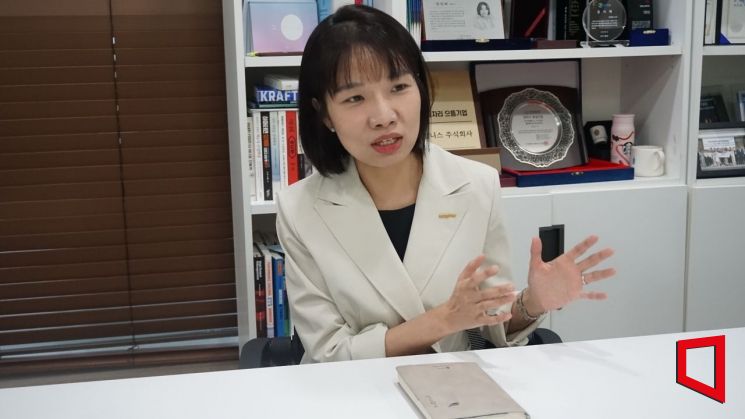
Kang Minjae, CEO of G&Wellness, expressed this ambition in an interview with Asia Economy on July 15, 2025. G&Wellness is a mental healthcare company established in 2015 with the goal of promoting the Employee Assistance Program (EAP). EAP refers to services provided by companies to support employees with psychological, emotional, mental health, legal, and financial issues.
Currently, G&Wellness offers psychological counseling, organizational diagnostics, and healing workshop programs to around 1,000 companies in Korea and abroad. In September 2024, the company was acquired by Telus Health, a global leader in the wellness sector based in Canada, and is expected to serve as a hub for expansion into the Asian market.
Last month, G&Wellness released Korea's first Telus Mental Health Index (MHI) report, developed by Telus Health. The MHI is published quarterly and measures and tracks mental health, well-being indices, and productivity trends among workers in countries around the world.
According to the MHI scores of workers by country for the second quarter of 2025, the United States ranked highest at 69.9 points, followed by the United Kingdom (64.7 points), Canada (63.1 points), Australia (63.0 points), Singapore (62.9 points), the European Union (62.4 points), and New Zealand (60.6 points). Korea scored 56.1 points. This survey was conducted online from March 14 to March 27, 2025, with 1,000 respondents.
The MHI is calculated by dividing the total response score by the maximum possible score and converting it to a 100-point scale. The index scores are classified as follows: high risk (0-49 points), needs attention (50-79 points), and good (80-100 points).
Kang stated, "There have been ongoing calls for improvements in the mental health of Korean workers, but there have been no practical measures implemented." He added, "We plan to survey the MHI index every quarter and use the data to improve mental care programs."
He also explained that it is possible to provide personalized mental care programs based on data. This is achieved through the AI technology of the healthcare platform 'HappyMint,' which is built on the MHI index and big data accumulated over more than 10 years.
Kang said, "According to a study in the United States, for every dollar spent on mental health support services like EAP, organizational productivity increases by about three times the cost," adding, "This can promote both individual worker happiness and increased corporate productivity."
© The Asia Business Daily(www.asiae.co.kr). All rights reserved.
![Clutching a Stolen Dior Bag, Saying "I Hate Being Poor but Real"... The Grotesque Con of a "Human Knockoff" [Slate]](https://cwcontent.asiae.co.kr/asiaresize/183/2026021902243444107_1771435474.jpg)















