Large-Scale Investments for Japan's Semiconductor Revival
Focus on Strengthening the Materials, Components, and Equipment Supply Chain
Korea Needs Practical, Customized, and Policy Support
The Korea Trade-Investment Promotion Agency (KOTRA) announced on July 14 that it has published a report titled "Trends and Implications of Japan's Semiconductor Industry Policy."
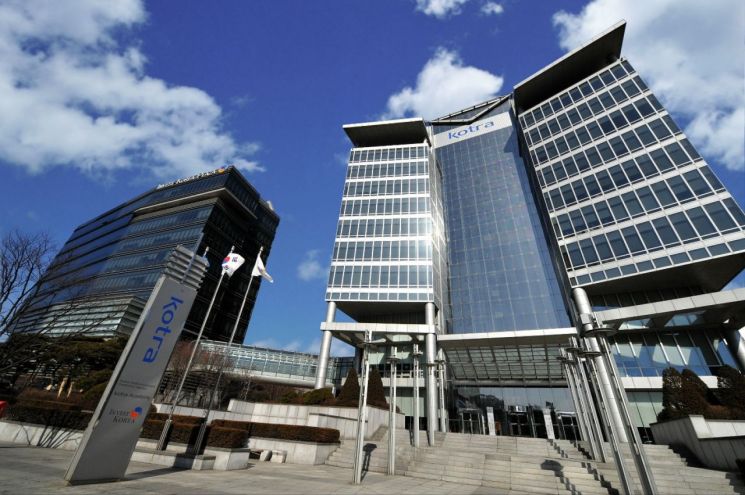
The report analyzes how Japan has managed to overcome the decline of its semiconductor industry and pursue a resurgence amid a global environment marked by supply chain restructuring, technological hegemony competition, and economic security issues. Through this analysis, the report aims to draw implications necessary for the Korean government and companies.
Japan led the global semiconductor market until the 1990s, but its market share fell below 10% due to the collapse of the bubble economy, inadequate response to technological transitions, and policy gaps. In response, the Japanese government has redefined semiconductors as "the rice of industry" and "a core item for economic security," and is promoting industrial reconstruction as a national strategy. Centered on the "Economic Security Promotion Act" and the "Semiconductor and Digital Industry Strategy," Japan is implementing multi-layered policy support including attracting production facilities, developing core technologies, strengthening supply chains, and nurturing talent.
Since 2021, the Japanese government has rapidly restored its production base by attracting major global semiconductor companies such as TSMC (Taiwan) and Micron (United States) through large-scale subsidies, while also supporting domestic firms such as Kioxia and Renesas. In addition, Rapidus?a company jointly funded by the Japanese government and eight private companies?aims to mass-produce advanced 2-nanometer (1nm = one hundred-millionth of a meter) logic semiconductors by 2027 and is conducting joint research with IBM (United States), IMEC (Belgium), and others.
Alongside these efforts, the Japanese government is also focusing on securing next-generation technologies known as so-called "game changers." Between 2021 and 2023, it invested a total of 3.8 trillion yen (approximately 36 trillion won) and is expanding various forms of support, including corporate tax credits, policy financing, and infrastructure development. Prime Minister Ishiba stated, "Over the next five years, we will provide 10 trillion yen (approximately 91 trillion won) in support for the semiconductor and AI sectors," indicating that securing competitiveness through large-scale fiscal investment is expected to accelerate.
The report assesses that Japan is not only restoring production capacity but also leveraging its strengths in the materials, components, and equipment (so-called "Sobu-jang") industries to enhance its presence in the global supply chain and utilize this for economic security. Japanese semiconductor materials, components, and equipment companies still possess world-class technological capabilities, and based on this, Japan is pursuing strategies to attract global semiconductor companies and expand its influence within the supply chain.
Furthermore, Japan is using the government fund Japan Investment Corporation (JIC) to acquire key materials companies such as those producing photoresists and FC-BGA, thereby preemptively preventing technology leakage. These policies are gradually becoming more sophisticated as Japan seeks to solidify the foundation for semiconductor industry reconstruction and economic security.
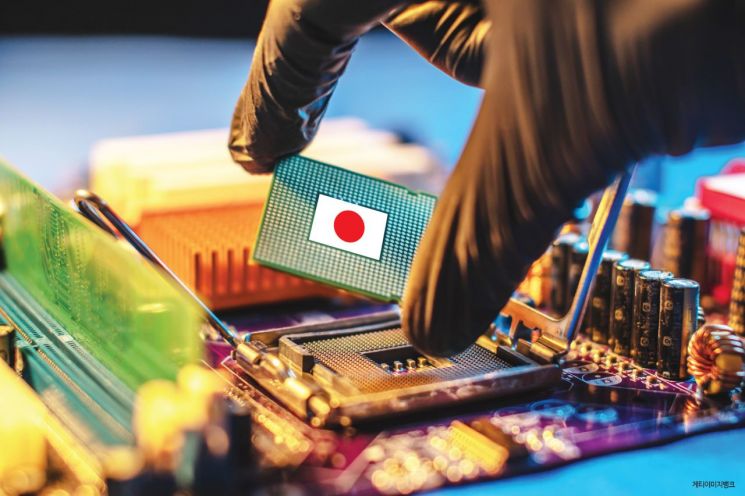
The report goes on to emphasize, through examples of Japan's policy initiatives, that Korea should also recognize the semiconductor industry as a core strategic industry for economic security and as a "survival strategy," highlighting the necessity of policy support and strategic linkage within the corporate and industrial ecosystem.
From a policy perspective, the report suggests that it is necessary to establish an effective mid- to long-term financial support system?including subsidies, loans, and infrastructure?beyond short-term tax benefits. It also adds that even if policies do not deliver the expected results, a "fail-safe" strategy should be implemented in parallel so that the accumulated technology, talent, and intellectual property during the process can be utilized as alternatives in the future.
From a corporate perspective, the report states that it is important to build the capacity to respond swiftly to global supply chain restructuring through joint strategies with the government. In particular, it proposes cooperation methods that can be realized in the short term, such as strategic alliances, mergers and acquisitions (M&A), and the establishment of joint ventures (JV) with Japanese companies.
From the perspective of the industrial ecosystem, the report also mentions that practical, customized support and the construction of a function-centered ecosystem?regardless of nationality or scale?are key. It states that semiconductor clusters should be established at the regional level and that the ecosystem should be balanced according to semiconductor functions, and that the potential for complementary cooperation between Korea and Japan should be fully considered in this process.
Kang Kyungsung, President of KOTRA, said, "The key point in Japan's case is the recognition of the semiconductor industry as a strategic industry directly linked to the nation's fate and the provision of comprehensive support without reservation." He added, "In order to overcome the structural crisis facing Korea's semiconductor industry and secure future competitiveness, strong government support and corporate cooperation are essential."
© The Asia Business Daily(www.asiae.co.kr). All rights reserved.
![Clutching a Stolen Dior Bag, Saying "I Hate Being Poor but Real"... The Grotesque Con of a "Human Knockoff" [Slate]](https://cwcontent.asiae.co.kr/asiaresize/183/2026021902243444107_1771435474.jpg)
















