High Temperatures and Humidity Cause Bentgrass Dieback
31 Golf Courses Nationwide Switch to Korean Turfgrass
Replacement Costs 8 Billion Won, Maintenance Expenses Reduced
Korea Turfgrass Research Institute Establishes Regional Branches for Response
Last week, office worker Mr. A visited B Golf Club in Yongin, Gyeonggi Province for the first time in a while. The green fee alone was 300,000 won. However, the condition of the turf was terrible. Although he went for a round after a month, he came back only feeling frustrated. The turf around the teeing ground and greens was in the worst condition. The grass was scorched, and he had to hit the ball from bare ground. A large number of workers were deployed on the course to repair the turf. It was a hectic day in every way.
Golf courses in Korea are facing a crisis. Due to the abnormal heatwave, course maintenance has become an emergency. Normally, in July, players should be able to take shots from lush green turf, but now they are playing on bare ground with no grass. Not only has the fairway grass melted away, but patches of bare soil have also appeared throughout the courses.
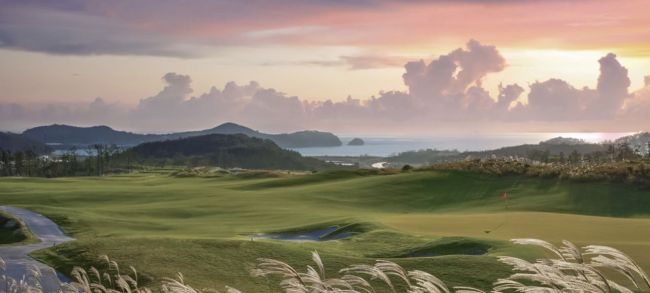 Last month, The Heaven CC, where the KLPGA Tour The Heaven Masters was held, is a representative golf course that replaced the bentgrass with Korean turfgrass. Photo by The Heaven CC
This is due to the abnormal temperature phenomenon, with daily highs exceeding 30 degrees Celsius. It is expected that the number of heatwave days this year will reach an all-time high. The heatwave has caused fatal damage to cool-season turfgrass (bentgrass). The optimal growth temperature for cool-season turfgrass is 15 to 20 degrees Celsius. Growth stops when the temperature exceeds 28 degrees. Even if daytime temperatures are high, turfgrass can recover if the temperature drops at night, but if high temperatures persist at night, bentgrass cannot survive. When high temperatures continue both day and night, the roots of the grass are essentially cooked.
Abnormal weather has led to diseases affecting the roots of turfgrass. In particular, Kentucky bluegrass, which is vulnerable in summer, suffered severe damage. As a result, general maintenance costs for golf courses have increased. More money is required to repair damaged turf, placing a financial burden on the golf courses.
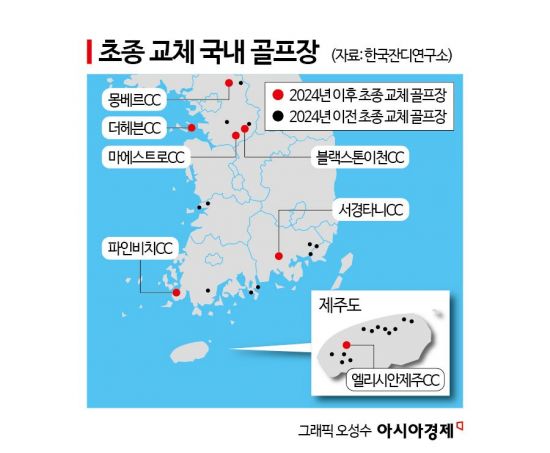
Golf courses in Korea have begun replacing cool-season turfgrass with warm-season turfgrass (Korean turfgrass). According to the Korea Turfgrass Research Institute, as many as 31 golf courses had switched turf species by last year. Golf courses that have replaced cool-season turfgrass with warm-season turfgrass include Montvert CC, The Heaven CC, Maestro CC, Icheon Blackstone CC, Pine Beach CC, Sagewood CC, Ananti Namhae CC, Seogyeong Tani CC, Jeju Elysian CC, and The Classic CC, among others.
It costs 8 billion won to replace the turf on an 18-hole course. Although the initial cost is high, course maintenance and management expenses can be reduced to as little as one-tenth. It is a worthwhile long-term investment. Warm-season turfgrass, which is more resistant to heat, is also advantageous economically. Water costs are much lower. The amount of pesticides and fertilizers required for course maintenance is also less compared to cool-season turfgrass. The aesthetic aspect has improved as well. As summers become longer, the period before discoloration naturally extends. If colorants are applied before discoloration begins, it is not a major issue.
The cause of climate change is the acceleration of global warming due to greenhouse gases emitted by humanity. Looking at the trend of global temperature changes since 1910, the temperature has gradually risen, reaching an increase of 1.2 degrees Celsius by 2010. According to the most recent United Nations Environment Conference assessment, the average temperature increase between 1990 and 2100 is expected to be at least 2 degrees and up to 3.5 degrees Celsius.
The signs of climate change are clear. Temperatures are rising, and rainfall patterns are changing. Last year, the number of heatwave days increased by 5.5 times compared to the average, and the number of tropical nights increased by 2.5 times. Summer temperature increases are fatal for cool-season turfgrass. They promote root-related diseases and physiological disorders in cool-season turfgrass. In the summer of 2024, tropical nights continued until the end of September, further worsening the condition of the turf.
The main factors affecting turfgrass are temperature, rainfall, and sunlight. As the number of heatwave and tropical night days increases, carbohydrate synthesis through photosynthesis stops. Increased respiration at night depletes stored nutrients, weakening the grass. Excess moisture from heavy rain and poor drainage also contribute to poor turf growth. When there are problems with temperature, rainfall, or sunlight, physiological dieback increases.
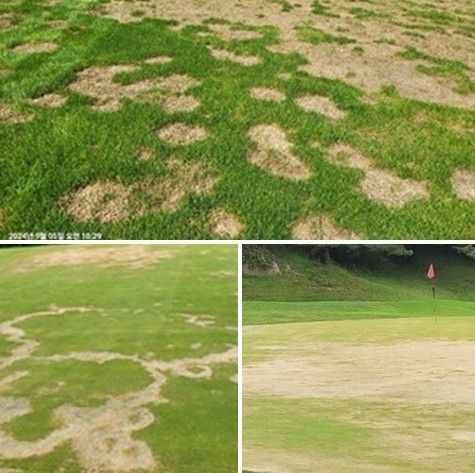 Some golf courses in Korea are struggling to maintain their turf due to the heatwave. Photo by Korea Turfgrass Research Institute
Due to the subtropicalization of Korea, maintaining cool-season turfgrass has become difficult. It is necessary to switch to turf species and varieties that are strong in summer. This means converting cool-season turfgrass to warm-season turfgrass. For example, Kentucky bluegrass can be replaced with Korean turfgrass or Bermuda grass.
To minimize mowing stress, low mowing is avoided, and if heatwaves persist, mowing is done every other day. To improve air circulation around the greens, undergrowth is removed or pruned. Fans are installed on the course to enhance air circulation. Turfgrass tissues are strengthened to better withstand heat stress.
When all greens on a golf course require irrigation, sprinklers are used. For greens where water tends to accumulate, hand spraying is used. Nighttime irrigation causes the turf leaves to remain wet for long periods, increasing disease incidence. In contrast, morning irrigation prevents the leaves from staying wet for extended periods, reducing the risk of disease.
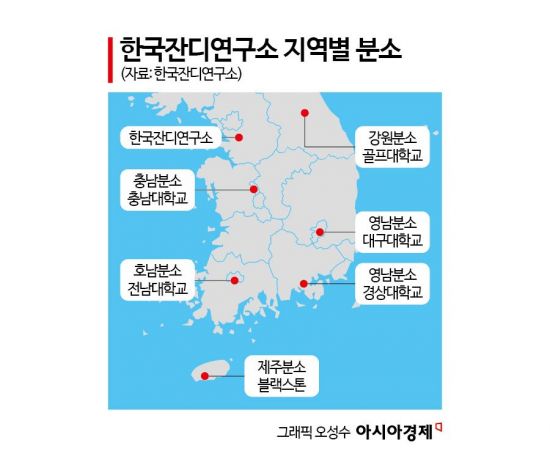
The most urgent situation is in the domestic golf course industry. The Korea Golf Course Management Association is actively operating a regional hub system based on climate zones, centered on the Korea Turfgrass Research Institute, to improve the efficiency of course management at member golf courses. Instead of the previous uniform visit approach, they now designate regional branches and assign responsible researchers and advisors by region. Currently, 210 member golf courses nationwide are divided into eight regions. Each region has eight responsible researchers and seven advisors, providing regular on-site visits and close technical consulting services.
From April to May this year, the Korea Turfgrass Research Institute visited member golf courses a total of 133 times. They provided customized management plans for greens and fairways according to climate zone and turf species, disease prevention, and key landscaping tree management strategies. In particular, after June, they proposed region-specific management plans to prepare for the heat and rainy season.
© The Asia Business Daily(www.asiae.co.kr). All rights reserved.
![Clutching a Stolen Dior Bag, Saying "I Hate Being Poor but Real"... The Grotesque Con of a "Human Knockoff" [Slate]](https://cwcontent.asiae.co.kr/asiaresize/183/2026021902243444107_1771435474.jpg)

















