Statistics Korea Releases "2024 International Migration Statistics"
Number of Foreign Nationals Entering Korea Drops by 29,000 (6.0%)
After the COVID-19 pandemic, the number of Korean nationals returning from overseas surged, resulting in a 26.5% increase in the number of Korean nationals entering the country last year. In contrast, the number of foreign nationals entering Korea, which had been on the rise in recent years, declined last year due to factors such as a decrease in short-term and employment-related entries. However, the number of foreign nationals entering Korea for study or general training purposes surged, reaching 99,000 last year?the highest since statistics began to be recorded.
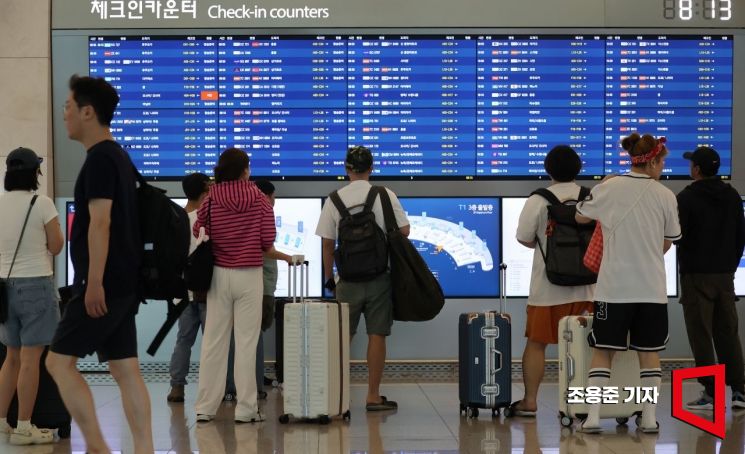
According to the "2024 International Migration Statistics" released by Statistics Korea on July 10, the total number of international movers (arrivals + departures) who stayed for more than 90 days last year was 1,329,000, an increase of 54,000 (4.2%) compared to the previous year. The number of arrivals rose by 29,000 (4.1%) to 727,000, while the number of departures increased by 25,000 (4.3%) to 602,000. Net international migration (arrivals minus departures) recorded a net inflow of 125,000, up by 4,000 from the previous year.
The number of Korean nationals entering the country was 276,000, an increase of 58,000 (26.5%). This marks the fourth consecutive year of growth since 2021 (190,000). The number of Korean nationals departing was 249,000, a decrease of 9,000 (3.5%). Net migration (arrivals minus departures) showed a net inflow of 28,000, marking a reversal to net inflow for the first time since 2020 (when there was a net inflow of 241,000). The net inflow was concentrated in those aged 30 and over, with the largest net inflow observed in the 50s age group (13,000).
Yoo Sudeok, head of the Population Projection Team at Statistics Korea, stated, "The increase in the number of Korean nationals entering the country last year and the resulting shift to net inflow is due to Korean nationals who had gone abroad in 2022 and 2023 returning home." He also explained, "Korean nationals in their 30s and 40s traveled abroad more frequently as COVID-19 restrictions eased, but after staying overseas for a certain period, they returned to Korea, resulting in this trend."
The number of foreign nationals entering Korea was 451,000, a decrease of 29,000 (6.0%). After four consecutive years of increase from 2021 (221,000) to 2023 (480,000), the upward trend reversed last year. The number of foreign nationals departing was 353,000, an increase of 34,000 (10.7%). Net migration (arrivals minus departures) showed a net inflow of 98,000, a decrease of 63,000 from the previous year. Net inflow was concentrated in those under 30, with the largest net inflow observed in the 20s age group (65,000).
Of the foreign nationals entering Korea, 49.6% were from China (112,000), Vietnam (88,000), and the United States (23,000). Among foreign nationals departing, 54.7% were from China (103,000), Vietnam (55,000), and Thailand (35,000). The largest net inflows were from Vietnam (33,000), Myanmar (11,000), and Nepal (11,000). Compared to the previous year, net inflows increased in Laos (2,000), Myanmar (2,000), and Vietnam (2,000).
By visa type, the composition of foreign nationals entering Korea was as follows: employment (36.4%), study/general training (21.9%), short-term (16.1%), and permanent residency/marriage migration, etc. (13.1%). Compared to the previous year, the number of arrivals for study/general training (19.2%) and permanent residency/marriage migration (1.8%) increased, while arrivals for short-term (-27.9%), overseas Koreans (-18.1%), and employment (-5.1%) decreased.
Yoo explained, "Last year, the number of employment-related arrivals decreased for the first time in four years," and added, "This decrease occurred despite the Ministry of Employment and Labor expanding the E-9 quota (Employment Permit System) last year." He interpreted this as, "One of the reasons for the decrease in employment-related arrivals is that actual demand from businesses did not materialize due to domestic economic conditions."
He also pointed out, "The number of arrivals for study/general training reached 99,000 last year, the highest since statistics began in 2000," and explained, "Arrivals for study/general training decreased during the spread of COVID-19, but have since increased." He continued, "Recently, the Ministry of Education and the Ministry of Justice have been implementing policies to attract foreign students, which appears to have contributed to this result."
This statistical report covers international movers, both Korean and foreign nationals, who left their country of residence and stayed abroad for more than 90 days. It also includes foreign nationals who entered Korea on short-term visas (less than 90 days) but overstayed or changed their visa status to remain for more than 90 days.
© The Asia Business Daily(www.asiae.co.kr). All rights reserved.
![Clutching a Stolen Dior Bag, Saying "I Hate Being Poor but Real"... The Grotesque Con of a "Human Knockoff" [Slate]](https://cwcontent.asiae.co.kr/asiaresize/183/2026021902243444107_1771435474.jpg)















