ESS Directly Linked to Energy Security...
Rising Possibility of Excluding China
Higher Profit Margins Than Electric Vehicles...
Profitability on the Rise
On July 3, at the Battery Industry Support Center in the Chungbuk Specialized Complex of the Korea Electronics Technology Institute in Cheongju, Chungbuk, Junho Song, Director of the Battery Industry Support Center, responded this way when asked about the next major battleground for K-batteries. Director Song explained, "ESS is mainly used in conjunction with renewable energy facilities, and renewable energy is connected to national core industries." He added, "In the United States and in allied European countries, the entry conditions are being scrutinized even more strictly than for electric vehicles, and there is a high possibility that certain countries will be excluded." This suggests that checks against China in the related market may intensify.
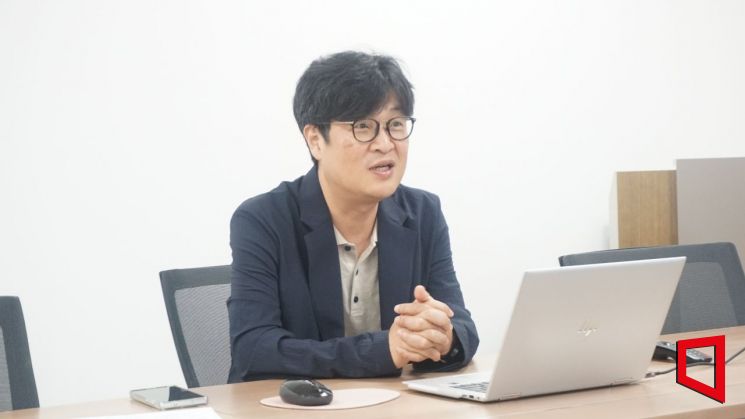 An interview with Junho Song, Director of the Battery Industry Support Center, held on the 3rd at the Battery Industry Support Center in the Chungbuk Specialized Complex of the Korea Electronics Technology Institute in Cheongju, Chungbuk. Korea Electronics Technology Institute
Director Song stated, "Under the Donald Trump administration, even Chinese batteries for electric vehicles are not allowed to enter, and the entry barriers for ESS will be even higher." He further predicted, "Moreover, ESS has a better profit margin than batteries for electric vehicles, making it a very attractive market for K-batteries."
High profitability is also an advantage of ESS. Batteries for electric vehicles typically have a margin of more than 20% above the actual capacity to guarantee performance, but ESS allows for an even greater margin, enabling battery companies to improve profitability. Director Song added, "While it usually takes four to five years from vehicle development to the adoption of batteries for electric vehicles, the timeline for ESS is shorter, so the time gap from contract to product launch can be reduced."
The key to ESS is whether the battery lifespan can be maintained for 20 to 30 years. Director Song explained, "It is a market that requires local production, operation, and long-term service capabilities." ESS requires complex after-sales support, including system-level supply, long lifespan guarantees, real-time monitoring, and long-term local response, which are even more demanding than for electric vehicles.
Director Song also mentioned that as the era of autonomous vehicles becomes full-fledged, demand for ternary batteries?a strength of K-batteries?could rise again. Since autonomous vehicles consume 25% to 30% more energy than regular vehicles, higher-performance batteries will be required. He said, "If a car that used to travel 500 km can only go 350 to 400 km, demand for high-performance batteries will increase even further."
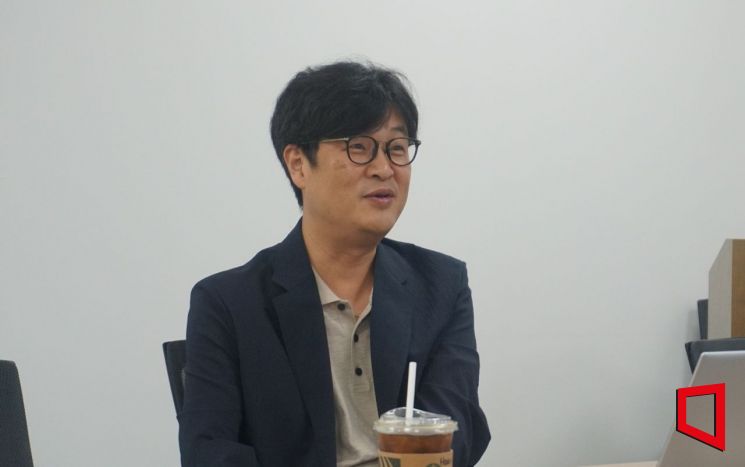 An interview with Junho Song, Director of the Battery Industry Support Center, held on the 3rd at the Battery Industry Support Center in the Chungbuk Specialized Complex of the Korea Electronics Technology Institute in Cheongju, Chungbuk. Korea Electronics Technology Institute
Additionally, Director Song stated, "The battery market is driven by demand," and noted, "With more than 70% of global demand concentrated in China, we must compete with China in the remaining markets." He continued, "It takes a long time and advanced technology to raise the yield from 90% to 95%. Entry by new competitors is not easy, and the technological gap among the three countries?Korea, China, and Japan?which have been researching batteries for more than 30 years, will become even more fiercely contested."
Director Song said, "Currently, batteries for electric vehicles account for the majority, but by 2050, more than 50% will be for mobility, and the rest will be for ESS for renewable energy storage and other power-based applications, opening up a large market." He predicted high growth rates for the air mobility and eco-friendly ship markets. He added, "Since air mobility is much worse for the environment, it will develop based on batteries, and since the International Maritime Organization (IMO) strictly limits carbon emissions, hybrid propulsion ships will become the mainstream." He continued, "Although these markets currently account for only 1% to 10% of the total, they can generate enormous profits, so the three major domestic battery companies are also considering them."
Currently, Chinese companies with abundant capital and resources are leading the global battery market. In response, Director Song repeatedly emphasized the importance of nurturing talent, saying, "The only weapon we have to beat China is high-quality human resources." He continued, "The battery industry is structured in such a way that it is difficult to generate profits in the short term, so we must support long-term technological accumulation by investing a set amount every year." He added, "Even if we have to bear losses, if we secure the technology, the future of the industry is guaranteed." Currently, the center has won a national project to build a platform for virtual research. Director Song predicted, "If AI technology is integrated and we can pre-install and test manufacturing lines in virtual reality to verify problems in advance, we can save both time and money."
© The Asia Business Daily(www.asiae.co.kr). All rights reserved.
![Clutching a Stolen Dior Bag, Saying "I Hate Being Poor but Real"... The Grotesque Con of a "Human Knockoff" [Slate]](https://cwcontent.asiae.co.kr/asiaresize/183/2026021902243444107_1771435474.jpg)
















