Enhancing Reliability of Animal Models and
Establishing Age-Specific Treatment Strategies Expected
A research team led by Professor Suin Jo at the School of Korean Medicine, Pusan National University, in collaboration with Harvard Medical School in the United States, has become the first in the world to prove that the patterns of brain injury in the representative ischemic stroke animal model known as "middle cerebral artery occlusion (MCAO)" experiments differ significantly depending on the age of the mice and the modeling method.
This study is drawing attention for presenting new standards for the application and interpretation of the MCAO model, which is commonly used in the preclinical stage of stroke drug development. The results were published online on June 26 in the internationally renowned journal in the field of cerebral blood flow, the Journal of Cerebral Blood Flow and Metabolism (JCBFM).
MCAO is an animal experimental technique that artificially blocks cerebral blood vessels to simulate stroke. The two main methods are the Koizumi method (KMCAO) and the Zea Longa method (LMCAO). In the former, a filament is inserted through the common carotid artery, while in the latter, it is inserted through the external carotid artery to block blood flow.
The Pusan National University research team applied each model to mice aged 3, 6, 9, and 12 months and compared the patterns of injury. The results showed that young mice (3?6 months) have better vascular recovery, resulting in rapid reperfusion, but this process leads to excessive production of reactive oxygen species, causing mainly "reperfusion injury." In contrast, older mice (9?12 months) had limited reperfusion, resulting in greater injury due to "ischemia itself."
These differences are also closely related to the structural characteristics of KMCAO and LMCAO. In LMCAO, blood flow can be restored relatively naturally after the filament is removed, but in KMCAO, the common carotid artery is permanently ligated, so recovery is limited.
Professor Suin Jo emphasized, "By integrating years of data, we analyzed the pathological differences of the MCAO model along with the variable of age," and added, "We have established a foundation to address the lack of model consistency, which is one of the main reasons for the failure of efficacy evaluation in the preclinical stage."
In fact, although numerous stroke drug candidates have shown efficacy in animal experiments, the lack of standardization in experimental models has played a significant role in their failure in clinical trials.
This study clearly demonstrates the need for precise experimental design that considers various factors such as model method, age group, and reperfusion characteristics in mouse experiments. It is also expected to help improve understanding of side effects that occur after reperfusion therapies, such as thrombolytics.
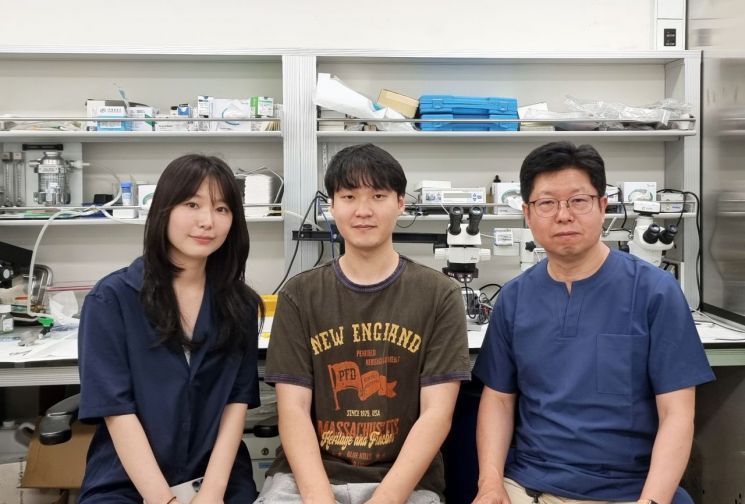
This research was conducted with Professor Suin Jo of Pusan National University as the corresponding author, and master's students Hongrae Kim and Hyoeun Kim as first author and co-author, respectively. Professor Hyunghwan Kim (co-corresponding author) and Dr. Jiyeon Lim (co-first author) of Harvard Medical School in the United States also participated in the study.
The research team stated, "In the next stage, we plan to closely investigate the molecular mechanisms underlying the pathological damage of each model and explore stroke treatment mechanisms using herbal medicine resources based on these findings."
The Koizumi and Zea Longa models were developed in the 1980s for use in rats, but their application has recently expanded as the use of genetically engineered mice has become more common. Nevertheless, studies comparing the two models by age remain extremely rare worldwide.
© The Asia Business Daily(www.asiae.co.kr). All rights reserved.
![Clutching a Stolen Dior Bag, Saying "I Hate Being Poor but Real"... The Grotesque Con of a "Human Knockoff" [Slate]](https://cwcontent.asiae.co.kr/asiaresize/183/2026021902243444107_1771435474.jpg)















