First Meeting of the Insurance Industry Soundness Task Force Held
Basic Capital Regulations Directly Linked to KICS Ratio and
Roadmap for Advancing Actuarial Assumptions to Be Detailed in the Second Half of the Year
The financial authorities will announce new regulations next month aimed at making the discount rate for insurance liabilities more realistic and strengthening asset-liability management (ALM) for insurance companies. Basic capital regulations, which are directly linked to the capital adequacy ratio (K-ICS, also known as KICS)?a key indicator of insurers’ financial soundness?as well as a roadmap for advancing actuarial assumptions, are expected to be detailed in the second half of the year.
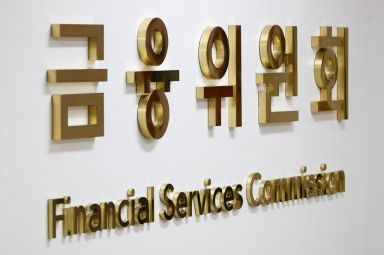
The Financial Services Commission and the Financial Supervisory Service announced on July 2 that they held the first meeting of the "Insurance Industry Soundness Task Force (TF)" at the Seoul Government Complex in Jongno-gu, Seoul, on July 1, where they discussed the implementation of the new international accounting standard (IFRS 17) by insurers and measures to strengthen soundness regulations.
Participants at the meeting diagnosed that the decline in insurers’ KICS ratios was due to the continued fall in market interest rates and the sales practices that focus on long-term protection-type products. The average KICS ratio for life insurers fell by 42.1 percentage points, from 232.8% at the end of 2023 to 190.7% in the first quarter of this year. The average KICS ratio for non-life insurers dropped by 23.8 percentage points, from 231.4% to 207.6% over the same period.
During the meeting, participants discussed making the insurance liability discount rate more realistic and introducing new ALM regulations.
First, three scenarios were considered regarding the maturity date for the Last Observable Term (LoT), which is directly related to the discount rate. The three scenarios are: maintaining the current plan (phased implementation over three years starting this year), determining the period each year through discussions between the Financial Services Commission and the Financial Supervisory Service, and pre-determining the plan to extend the LoT but lengthening the period beyond the current three years.
The authorities had initially planned to extend the LoT from 20 years to 30 years at the beginning of this year, but decided to delay the implementation and instead phase it in over three years starting this year. The LoT refers to the period during which market data, including government bond yields, are used in applying the insurance liability discount rate. The longer the LoT, the lower the discount rate, which increases insurers’ insurance liabilities and the need for capital augmentation. The decision to delay the implementation of the LoT extension policy indicates that the authorities judged the capital augmentation burden on insurers to be significant.
The authorities also decided to newly introduce regulations to strengthen insurers’ ALM. Participants diagnosed that the main reason for the sharp decline in insurers’ soundness indicators during periods of falling interest rates is the vulnerability of insurers’ asset-liability effective maturity (duration) structure. Duration is a sensitivity indicator that shows how much the value of assets or liabilities changes when interest rates move by 100 basis points (1 basis point = 0.01 percentage point).
Participants agreed that, given the ongoing decline in interest rates expected due to factors such as population decline and a slowdown in potential growth rate, it is inevitable to consider introducing regulations to strengthen insurers’ ALM. The meeting discussed measures such as setting the allowable duration gap range for insurers in supervisory regulations and imposing compliance obligations, as well as introducing or strengthening ALM evaluation items in the K-ICS system or management status assessment.
Some participants suggested that, considering companies with large current duration gaps may have difficulty complying with the regulations, it would be necessary to apply the rules first to large insurers with assets above a certain threshold or to provide a sufficient adaptation period.
An official from the Financial Services Commission stated, "If the pace of making the insurance liability discount rate more realistic, including the LoT, is adjusted, we will simultaneously continue to encourage insurers to strengthen their ALM management efforts," adding, "We plan to announce the implementation schedule for the insurance liability discount rate and measures to strengthen ALM next month."
Participants also agreed to continue detailed discussions on insurance soundness policies, such as basic capital regulations that directly affect the KICS ratio and the roadmap for advancing actuarial assumptions. The relevant regulations are expected to be finalized and announced in the second half of the year.
An Chang-guk, Director General of the Financial Industry Bureau at the Financial Services Commission, emphasized, "The main goal of the Soundness TF is to promote the stability and sustainable growth of the insurance industry," adding, "We will strictly strengthen soundness management, but will maintain an appropriate implementation pace so that insurers are not exposed to excessive burdens, and will pursue necessary regulatory reforms in parallel."
© The Asia Business Daily(www.asiae.co.kr). All rights reserved.
![Clutching a Stolen Dior Bag, Saying "I Hate Being Poor but Real"... The Grotesque Con of a "Human Knockoff" [Slate]](https://cwcontent.asiae.co.kr/asiaresize/183/2026021902243444107_1771435474.jpg)















