Criticism Focused on Japan for Two Consecutive Days
Pressure Intensifies Ahead of Reciprocal Tariff Suspension Expiry on July 8
Besant: "Even Good-Faith Negotiators May Face April 2 Tariffs"
Hassett: "Country-Specific Tariff Rates to Be Finalized After Tax Cut Bill Signing"
The Donald Trump administration in the United States has ramped up all-out pressure on major trading partners, including Japan, by raising the possibility of imposing high tariffs ahead of the expiration of the reciprocal tariff suspension deadline on July 8 (local time). This move is interpreted as an attempt to express dissatisfaction with the sluggish progress of trade negotiations with various countries and to push for a swift resolution. The White House announced that as soon as the tax cut bill passes Congress this week, President Trump will finalize the country-specific reciprocal tariff rates together with his trade team.
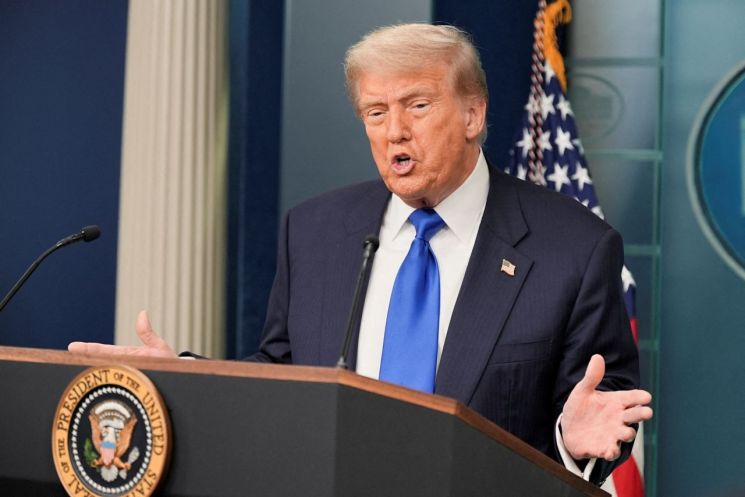
On June 30, President Trump stated on his self-created social media platform, Truth Social, "I want to show how much the United States has spoiled other countries," adding, "I respect Japan, but they are experiencing a major rice shortage and still refuse to import our rice." He went on to say, "In other words, we will send them a letter," and added, "We want to keep them as our trade partner for years to come."
The letter President Trump mentioned is interpreted as a document that will include the reciprocal tariff rates to be applied to Japan. In an interview with Fox News released the previous day, he also addressed the possibility of extending the reciprocal tariff suspension, saying, "I don't think it will be necessary," and added, "What we will do is send a letter to every country before July 9." Regarding the tariff rates, he mentioned that they could be "25%, 35%, 50%, or 10%."
Such remarks by President Trump appear to signal a hardline stance of unilaterally notifying tariff rates due to the lack of significant progress in trade negotiations with Japan. The previous day, he also criticized Japan as "unfair," stating that Japan imports very few American cars while the United States imports millions of Japanese cars. By singling out Japan for two consecutive days, he has escalated the pressure.
Previously, on April 9, President Trump implemented reciprocal tariffs on 57 economic entities (56 countries and the European Union, EU), including South Korea and Japan, and then applied a 90-day suspension. During this suspension period, the United States has continued negotiations with major trading partners with the goal of reaching trade agreements. The suspension is scheduled to end at 12:01 a.m. on July 9.
With President Trump expressing a negative stance on extending the reciprocal tariff suspension, his aides have also issued repeated warnings about the possibility of reimposing high tariffs.
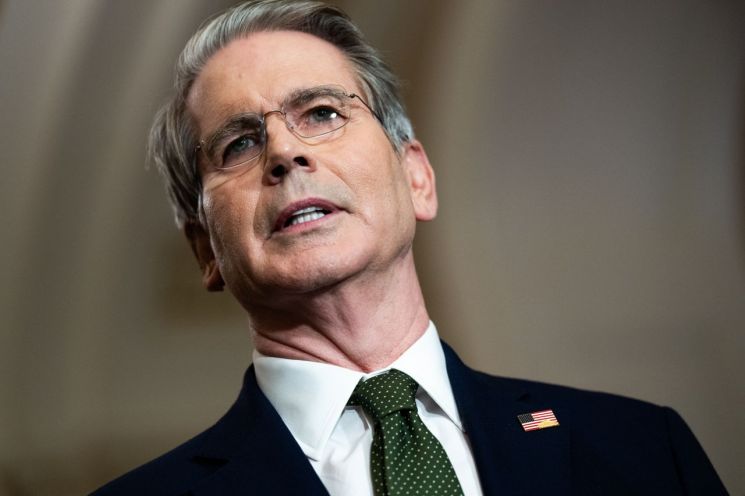
Scott Besant, U.S. Treasury Secretary, warned in a Bloomberg TV interview that "although some countries are negotiating in good faith, if they remain stubborn and fail to reach an agreement, the tariff rates could revert to the levels of April 2." This means that if an agreement is not reached within the suspension period, the previously announced country-specific reciprocal tariffs could be reapplied even to countries that have negotiated in good faith. This is interpreted in the same context as President Trump directly criticizing Japan, a key ally and trading partner, for two consecutive days.
White House spokesperson Caroline Leavitt also stated at a briefing that day, regarding the extension of the reciprocal tariff suspension, "President Trump does not see it as necessary," and added, "He will meet with his trade team this week to determine the tariff rates for many countries that are not negotiating in good faith."
President Trump is reportedly planning to sign the large-scale tax cut bill, which is currently undergoing a vote in the U.S. Senate, on Independence Day (July 4), and immediately finalize the country-specific reciprocal tariff rates.
Kevin Hassett, Chairman of the White House National Economic Council (NEC), said in a CNBC interview that day, when asked about the possibility of tariff increases on July 9, "If the tax bill passes, a marathon meeting will be held in the Oval Office immediately," and added, "We will review each case with the President and set the final tariff rates. The world will see all the work that Howard Lutnick (Secretary of Commerce), Jamison Greer (U.S. Trade Representative), and Scott Besant (Treasury Secretary) have done."
With just over a week left before the expiration of the reciprocal tariff suspension, the hardline messages from President Trump and his aides have prompted major countries to seek response strategies amid heightened tension. Although President Trump mentioned the previous day that the suspension "could be extended," the simultaneous possibility of a last-minute extension and the actual imposition of high tariffs has increased uncertainty surrounding U.S. trade policy even further.
South Korea is also on high alert as it has recently entered into its first high-level tariff negotiations with the United States since the inauguration of the Lee Jaemyung administration. The United States is demanding that South Korea remove various non-tariff barriers, including the importation of U.S. beef over 30 months of age and the export of Google’s detailed maps. In addition, before demanding that Japan open its rice market, President Trump publicly criticized South Korea during the reciprocal tariff announcement in April, stating that South Korea imposes high tariffs of 50% to 513% on imported rice, and openly criticized the low-tariff quota (TRQ) system, under which ultra-high tariffs are applied to quantities exceeding a certain threshold.
© The Asia Business Daily(www.asiae.co.kr). All rights reserved.
![Clutching a Stolen Dior Bag, Saying "I Hate Being Poor but Real"... The Grotesque Con of a "Human Knockoff" [Slate]](https://cwcontent.asiae.co.kr/asiaresize/183/2026021902243444107_1771435474.jpg)
















