Hwaseong Plant Capable of Producing 120,000 Units Annually
Sample Supply Discussions with 16 Overseas Clients
Plans to Begin Construction of New Plant in Vietnam
JNTC, an electronic components manufacturer, has officially entered the semiconductor glass substrate TGV business and announced that it expects to achieve 20 billion KRW in sales within the year. The company stated that it is currently producing samples at its newly established production line in Hwaseong, Gyeonggi-do this month and is in discussions to supply these samples to 16 global clients.
On the 30th, JNTC held a "TGV Glass Substrate New Product Presentation" at the Korea Exchange Conference Hall and unveiled its new semiconductor glass substrate product. CEO Cho Namhyuk stated, "Sufficient sample supply is necessary for product commercialization," and added, "We have established a plant in Hwaseong capable of producing 120,000 units annually, or 10,000 units per month."
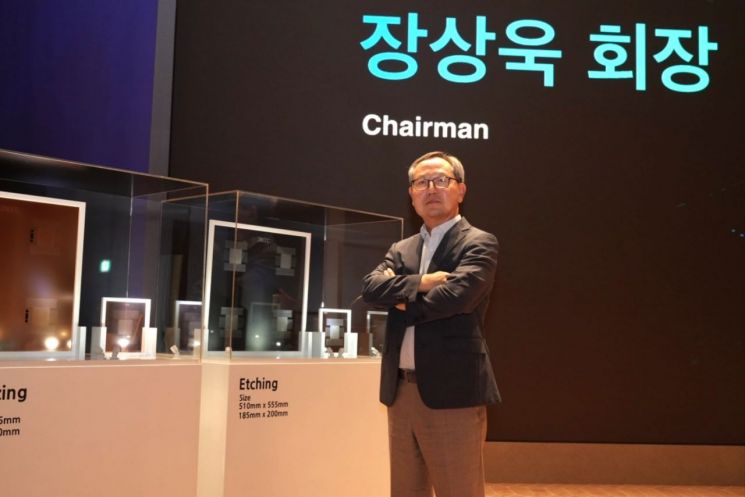 Jang Sangwook, chairman of JNTC, held a "TGV Glass Substrate New Product Presentation" on the 30th at the Korea Exchange Conference Hall and unveiled a new semiconductor glass substrate product. JNTC.
This month, JNTC established a TGV production line in the Mado Industrial Complex in Hwaseong, Gyeonggi-do, with a monthly production capacity of 10,000 units. The TGV process is a core technology in glass substrate manufacturing, involving the drilling of fine holes in glass substrates and electroplating with copper and other materials to create electrical connections. The newly operational plant is the first dedicated semiconductor glass substrate factory in Korea.
JNTC plans to commercialize its products starting in the second half of the year. The company explained that it is currently discussing sample supply with a total of 16 clients, including three global IDMs (integrated device manufacturers), two OSATs (outsourced semiconductor assembly and test companies), eight semiconductor packaging companies, and three materials companies. The main clients are located in Northeast Asia and North America, including the United States, Taiwan, and China.
Additionally, the company announced its ambition to begin construction of a new plant in Vietnam by the end of the year, with a monthly production capacity of 30,000 units, aiming to establish an annual production system of 500,000 units in total.
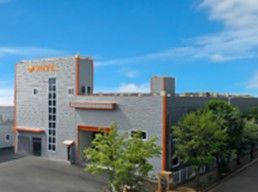 JNTC TGV Semiconductor Glass Substrate Production Plant located in Mado Industrial Complex, Hwaseong, Gyeonggi-do. JNTC.
JNTC explained that it has the advantage of being able to handle all processes for glass substrates?including laser processing, etching, and plating?using its own equipment. By combining the technological capabilities of its affiliates, such as JPC (glass processing) and Comment (plating), the company has established a high-yield production process.
Furthermore, JNTC announced that it has achieved a 0% microcrack occurrence rate, high-density processing of over 1.4 million TGV holes, and a 100% plating fill rate through its independently developed processes. The company explained that this enables it to meet the requirements for precision and stability in high-performance semiconductor substrates, such as those used for AI and HPC applications. Chairman Jang Sangwook emphasized, "We have not only perfected TGV production technology but have also reached a level where our products can be used directly in post-processing."
JNTC stated that it has achieved an in-house yield rate of over 90% by independently developing etching, plating, and processing techniques tailored to the characteristics of glass.
JNTC is targeting overseas markets rather than the domestic market for its TGV substrate business. CEO Cho explained, "We are not tied to domestic companies, nor are we establishing B2B relationships with them," and added, "As far as I know, there is currently no company with a yield rate of over 90% for high-quality products."
JNTC expects TGV sales of 20 billion KRW within the year, and from 2026, it anticipates full-scale market expansion and a turnaround to profitability. In the long term, the company aims to achieve 1 trillion KRW in TGV-related sales by 2028.
For funding, the company is considering various methods, including stock-secured loans, in cooperation with its clients.
© The Asia Business Daily(www.asiae.co.kr). All rights reserved.
![Clutching a Stolen Dior Bag, Saying "I Hate Being Poor but Real"... The Grotesque Con of a "Human Knockoff" [Slate]](https://cwcontent.asiae.co.kr/asiaresize/183/2026021902243444107_1771435474.jpg)















