ICU Reimbursement Rates at 175 Hospitals to Increase by Up to 50% Starting July 1
In order to enable local residents to access necessary medical services without having to visit major tertiary hospitals in the Seoul metropolitan area, the government will invest 700 billion won annually, totaling 2.1 trillion won over three years, in comprehensive secondary general hospitals responsible for essential regional healthcare.
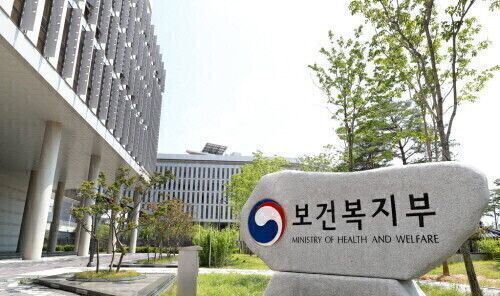
The Ministry of Health and Welfare announced on June 30 that 175 general hospitals have been selected for the "Comprehensive Secondary General Hospital Support Project," which will begin on July 1. The main objective of this project is to strengthen the functions of local general hospitals so that residents can access emergency and other essential medical services in a timely manner.
The ministry formed an advisory panel for the selection and evaluation of the support project, consisting of medical experts, patient groups, and government officials. The panel selected 164 institutions that met all three criteria: acute care hospital accreditation, designation as a regional emergency medical institution or higher, and the ability to perform at least 350 types of surgeries and procedures. In addition, in medical service areas where no general hospital met these criteria, 11 hospitals were given preliminary designation on the condition that they meet the standards within two years.
The government aims to enhance the comprehensive treatment capabilities of these secondary general hospitals so that they can address most medical issues arising in their respective regions. To ensure that local residents can access medical services promptly in emergencies, 24-hour emergency care will be strengthened. In addition, to reinforce cooperation between medical institutions, a compensation system will be established based on the outcomes of collaborative care among tertiary hospitals, comprehensive secondary general hospitals, and local clinics and hospitals.
Through these efforts, the government plans to gradually establish a new medical service delivery and utilization system and build a regionally self-sufficient essential healthcare system. Over the next three years, a total of 2.1 trillion won (700 billion won annually) will be invested in these hospitals to support the strengthening of essential medical functions and to provide performance-based incentives for functional innovation.
Specifically, to secure the capacity to treat moderately severe and certain high-severity cases, the reimbursement rates for intensive care units will be increased. Linked to the results of adequacy evaluations, ICU reimbursement rates will be raised by 50% according to grade: 150,000 won per day for grades 1 and 2, 90,000 won for grade 3, and 30,000 won for grade 4. An annual investment of 170 billion won will be allocated for this purpose.
Additionally, to ensure rapid and effective responses to emergency patients, the additional reimbursement rate for emergency surgeries performed within 24 hours of arrival at the emergency room (for KTAS grades 1 to 3 patients) will be increased: 50% for regional, specialized, and regional trauma centers, and 150% for regional emergency medical centers. A total of 110 billion won per year will be provided. Furthermore, 200 billion won will be allocated annually to cover on-call staffing costs in emergency rooms to maintain 24-hour care for critical and emergency patients.
A compensation system will also be established to reward functional innovation achievements at comprehensive secondary general hospitals. The level of appropriate care concentration, resolution of regional medical issues, and performance in establishing collaborative care systems will be evaluated for each participating institution, and support funds will be distributed differentially based on these results. Specific evaluation indicators will be developed in the second half of this year by collecting input from experts and the medical field.
Jung Kyungsil, Director of the Healthcare Reform Promotion Team at the Ministry of Health and Welfare, stated, "The Comprehensive Secondary General Hospital Support Project is a step towards establishing a desirable regionally self-sufficient essential healthcare delivery system, following the restructuring of tertiary hospitals. We will continue to communicate with the field and listen to concerns to further improve the system."
© The Asia Business Daily(www.asiae.co.kr). All rights reserved.
![Clutching a Stolen Dior Bag, Saying "I Hate Being Poor but Real"... The Grotesque Con of a "Human Knockoff" [Slate]](https://cwcontent.asiae.co.kr/asiaresize/183/2026021902243444107_1771435474.jpg)















