Supply Measures Must Accompany Regulations
Starting from the 28th, the maximum limit for mortgage loans will be reduced to less than 600 million won, and requirements for actual residence will be further tightened. Among genuine homebuyers who had been eyeing high-priced apartments in the three Gangnam districts or Mapo-gu, there is growing frustration that even the last ladder to homeownership has now disappeared.
Regarding the "Emergency Household Debt Management Reinforcement Plan" announced by the government the previous day, real estate experts believe that, as a strong loan regulation targeting overheated areas such as Gangnam, it can be expected to have a short-term stabilizing effect on the market. However, there are also considerable concerns that it will make it more difficult for genuine buyers, especially younger people, to purchase homes and could trigger a balloon effect, shifting demand to outlying areas. Critics point out that a regulatory-only approach without supply measures has clear limitations.
Short-term Market Stabilization Expected
Experts generally assessed that this measure could put the brakes on the high-priced apartment market, which has recently shown signs of overheating, at least in the short term.
Park Won-gap, Chief Real Estate Specialist at KB Kookmin Bank, said, "This is a strong regulation squarely targeting overheated areas such as Gangnam and the Hangang Belt (Mapo, Yongsan, Seongdong, Gwangjin)," adding, "Due to decreased demand, areas densely populated with high-priced apartments will enter a period of adjustment."
He further explained, "It is a misconception that only those with substantial cash can buy apartments in Gangnam. In reality, many buyers rely heavily on loans, so this regulation will have the greatest impact on apartments in Gangnam and along the Han River."
Ham Young-jin, Head of Real Estate Research Lab at Woori Bank, also analyzed, "The restriction on mortgage loan limits and the strengthening of actual residence requirements will, in effect, block gap investments," and predicted, "The overheating in the Hangang Belt will be curbed."
Lee Chang-moo, Professor of Urban Engineering at Hanyang University, also forecast a short-term contraction, saying, "By greatly strengthening the actual residence requirement, the regulation has become as strict as the level of land transaction permit zones."
"Only Ordinary Citizens and Young People Are Left More Helpless"?Burden on Genuine Buyers Increases
 The appearance of a Jeonse loan information promotional poster displayed at a commercial bank in downtown Seoul on the 1st. Photo by Yonhap News
However, there are significant concerns that for genuine buyers, especially those in their 20s and 30s who are highly dependent on loans, this measure will become a barrier to homeownership.
Professor Lee Chang-moo pointed out, "Limiting the loan ceiling to 600 million won could hit genuine buyers with fewer assets," adding, "Owners of high-priced apartments can buy with their own funds, but genuine buyers will see their opportunities shrink."
Ko Jong-wan, Director of the Korea Asset Management Institute, said, "There are no effective measures to expand supply, and now even first-time homebuyer loans are restricted, making it even harder for young people to buy homes."
Ham Young-jin also commented, "The abrupt and unusual manner in which these regulations were announced could draw criticism," and added, "The blanket restriction of policy loans such as Didimdol and Bogeumjari, which are mainly used by ordinary citizens, could be seen as excessive."
There were also concerns about the possibility of a balloon effect, where if demand in popular areas of Seoul is suppressed, it could shift to areas densely populated with mid- to low-priced apartments.
Ham Young-jin noted, "We need to closely monitor the balloon effect in outlying areas such as Nodogang (Nowon, Dobong, Gangbuk) and Geumgwang-gu (Geumcheon, Gwanak, Guro), where listings in the 600-800 million won range are concentrated." Ko Jong-wan also predicted, "There is a possibility that housing prices in outlying areas will become volatile."
However, Park Won-gap assessed, "Although areas densely populated with mid- to low-priced apartments on the outskirts of Seoul or in the metropolitan area will be less affected by the regulations than popular central areas, the requirement to reside for at least six months when taking out a loan limits the extent to which these areas can benefit, so the balloon effect may not be significant."
Signs of Instability in the Jeonse Market
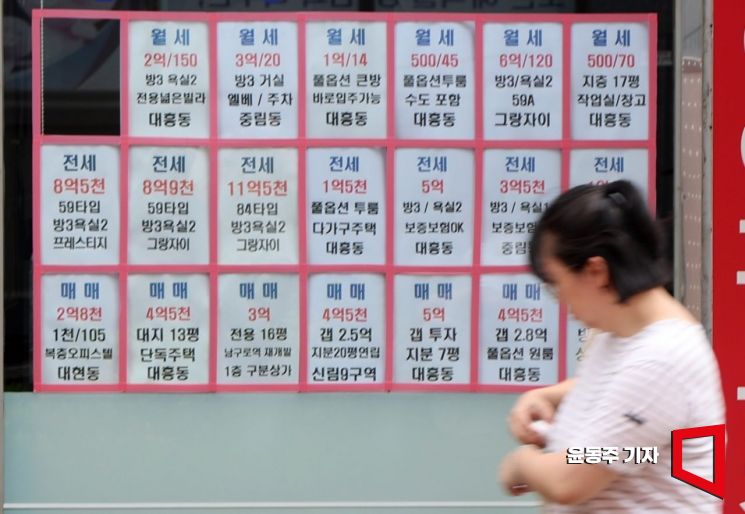
Concerns about the Jeonse market are also growing. Park Won-gap pointed out, "With the new requirement to move in within six months of taking out a loan, buyers must move in immediately after purchasing a home," adding, "This could reduce the number of Jeonse and monthly rental listings on the market." He also said, "With demand for apartment Jeonse rising due to the aftermath of villa Jeonse fraud and the supply of new apartments decreasing, the imbalance between Jeonse supply and demand could worsen," and stressed, "Monitoring needs to be strengthened."
Ham Young-jin also emphasized, "The guarantee ratio for Jeonse loans has been lowered from 90% to 80%, and combined with expectations for a base rate cut, both Jeonse prices and the shift to monthly rentals could occur simultaneously," adding, "Tenants' housing burdens could increase, so monitoring is needed."
In the case of provincial areas, the impact is expected to be relatively small, as they are excluded from the scope of the new measures. Park Won-gap predicted, "Since the provinces are excluded from these regulations, the market could warm up again," and anticipated that, due to factors such as DSR deferment, tax benefits for unsold units after completion, and the relocation of public enterprises, the provincial market could enter a phase of bottoming out.
Ham Young-jin also pointed out, "Since the provinces are not subject to the regulations and the reduction in the Jeonse loan guarantee ratio is centered on the metropolitan area, some warmth may be felt in the provincial housing market," and added, "Additional measures are needed to prevent demand distortion."
Skepticism Over Policy Effectiveness... Need for Supply Measures
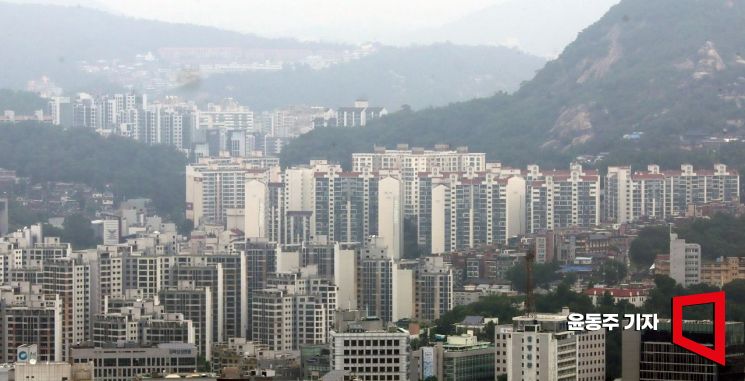 A view of apartment complexes in downtown Seoul as seen from Namsan, Seoul on the 27th. Photo by Dongju Yoon
Some have expressed skepticism that the government's repeated loan regulations are unlikely to be effective.
Son Jae-young, Professor Emeritus at Konkuk University, pointed out, "Even during the previous Moon Jae-in administration, loans for homes exceeding 1.5 billion won were blocked, but prices still rose," adding, "Once again, only those without money will be affected, while those with cash will remain unaffected."
He continued, "We have already seen that even stronger regulations are ineffective. In the end, those with cash are unaffected, and only those without homes are left worse off." He added, "Although the government has mentioned the possibility of expanding regulated areas, it is difficult to change market trends. If policies fail to keep up with reality, only genuine buyers will be isolated."
Lee Eun-hyung, Research Fellow at the Korea Institute of Construction Policy, commented, "This measure is a strong regulation that artificially suppresses the market and induces a short-term contraction in transactions, which is fundamentally different from previous adjustments to the loan-to-value (LTV) ratio," adding, "Setting a uniform loan limit regardless of whether the borrower is a genuine buyer or a multi-homeowner is unprecedented in its severity."
He further noted, "While some immediate effects may be visible, this alone is not sufficient to expect long-term policy effectiveness," adding, "Macroeconomic trends such as price stability must accompany these measures for market stabilization to be achieved."
Preemptive Measure with Rate Cuts in Mind
Some experts view this measure as a "preparatory step before a rate cut." A real estate expert who requested anonymity said, "This measure is focused more on curbing the rapid increase in household debt than on bringing down housing prices." He added, "With consumption stagnating, the government needs a monetary easing card, but since household debt is a burden, it appears they are tightening loans first."
He continued, "Since supply conditions remain unchanged and if interest rates fall, existing buyers will have no urgent reason to sell, so while demand may contract and transactions decrease, it will be difficult for housing prices to fall. Such regulations are unlikely to last long, and to bring about a real change in prices, a much stronger variable such as large-scale supply is needed."
The Bank of Korea is also considering a rate cut but appears to be moderating the pace due to concerns about rising household debt. Yoo Sang-dae, Deputy Governor of the Bank of Korea, said at a press briefing on the 24th, "While monitoring price trends, we are also considering household debt, the foreign exchange market, and financial stability," adding, "I have repeatedly said that we are adjusting the timing and pace of rate cuts due to household debt and the foreign exchange market and financial stability, and I want to emphasize this even more now. There are many factors to consider." The market expects that the Bank of Korea is likely to cut the base rate once in October.
Experts unanimously pointed to the lack of supply measures as the decisive limitation of the new policy.
Ko Jong-wan said, "While speculative demand from gap investors, multi-homeowners, and outsiders may decrease, there are limits to protecting genuine buyers and calming investment sentiment," adding, "This is not a fundamental solution, and additional responses including supply measures are inevitable."
Ham Young-jin also pointed out, "Although the provinces are not subject to the regulations and some warmth is being felt, the imbalance between Jeonse and monthly rental supply and demand could worsen, leading to potential movement of genuine buyers," and added, "To prevent market distortion, regulations and supply measures must go hand in hand."
Strategies for Genuine Buyers
Park Won-gap advised, "Rather than making blind purchases at asking prices, it is necessary to selectively approach urgent listings that come onto the market due to the impact of the regulations."
He also said, "Since the threshold for loans has been raised, you must visit a bank branch before signing a housing contract to confirm the available loan amount," adding, "It is preferable to confirm the loan first and sign the contract afterward."
In particular, regarding home switching for single-homeowners, he emphasized, "You must adhere to the principle of selling first and buying later."
He warned, "If you attempt to switch from an unpopular area to a popular one, or between unpopular areas, the buy-first, sell-later approach is very risky," adding, "If you buy in a hurry and your existing home does not sell, you could face serious difficulties."
© The Asia Business Daily(www.asiae.co.kr). All rights reserved.
![Clutching a Stolen Dior Bag, Saying "I Hate Being Poor but Real"... The Grotesque Con of a "Human Knockoff" [Slate]](https://cwcontent.asiae.co.kr/asiaresize/183/2026021902243444107_1771435474.jpg)

















