Over the past five years, more than 330 people have been arrested on charges of violating the Hong Kong National Security Law, with half of them convicted, the South China Morning Post (SCMP) reported on June 26.
According to the report, since the implementation of the Hong Kong National Security Law on June 30, 2020, a total of 332 people have been arrested in connection with the law. Of these, 57% (189 individuals and 5 companies) were prosecuted, and 165 people were found guilty.
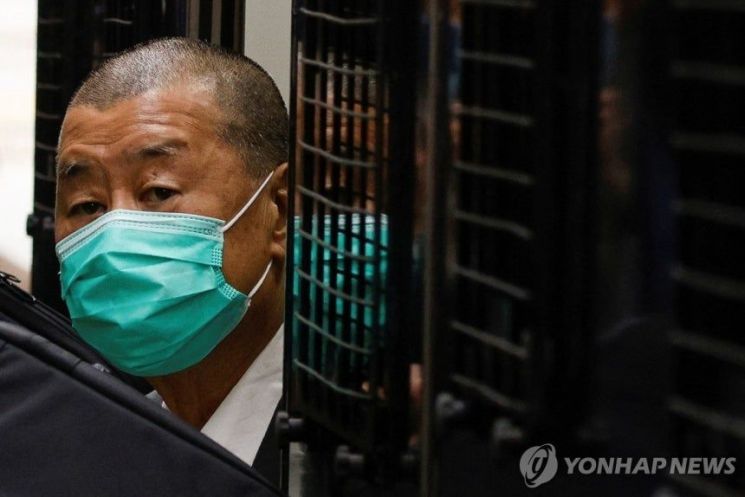
The case that drew the most international attention involved Jimmy Lai, the owner of Apple Daily, a prominent anti-Beijing media outlet in Hong Kong that voluntarily shut down in 2021 under government pressure. He faces two charges of colluding with foreign forces and one charge of publishing seditious materials. He completed his court testimony in March, and the final arguments are scheduled for August.
The largest trial under the Hong Kong National Security Law involved 47 pro-democracy figures. Of these, two were acquitted, while the remaining 45 received sentences ranging from four to ten years. Former University of Hong Kong professor Benny Tai was among those sentenced to ten years. Another challenge faced by the defendants was the lack of legal precedents regarding the security law.
Even experienced local legal experts reportedly admitted that they were not familiar with mainland Chinese law and could not provide clear answers regarding the trials.
Hong Kong civic activists are concerned that the influence of the security law is causing a decline in NGOs and civic groups, and that the media environment in Hong Kong will become increasingly constrained.
Over the past five years, registration for 256 labor unions was canceled, including the dissolution of 112 organizations in 2022 alone. The Hong Kong government has sought to reassure residents by noting that arrests peaked at 134 in the first year of the law's implementation, but dropped to at least 14 last year. The government also emphasizes that, over five years, the average number of arrests under the security law accounts for only 0.2% of annual arrests, arguing that the law targets only a small minority.
However, it is reported that Hong Kong residents do not feel reassured by these statements from the authorities. Lee Waisun, a social worker who was acquitted after being prosecuted under the security law, said, "You can sense that ordinary people are being cautious about what they say," adding, "You have to guess where the red line is, and at the same time, you have to monitor yourself."
The Hong Kong National Security Law was enacted directly by the Chinese government in response to the 2019 anti-government protests in Hong Kong. It allows for life imprisonment as the maximum penalty for four types of crimes: secession, subversion of state power, terrorist activities, and collusion with foreign forces.
© The Asia Business Daily(www.asiae.co.kr). All rights reserved.
![Clutching a Stolen Dior Bag, Saying "I Hate Being Poor but Real"... The Grotesque Con of a "Human Knockoff" [Slate]](https://cwcontent.asiae.co.kr/asiaresize/183/2026021902243444107_1771435474.jpg)















