Eight Years After Permanent Shutdown in 2017
A Milestone for Securing Technology in the 500 Trillion Won Nuclear Decommissioning Market
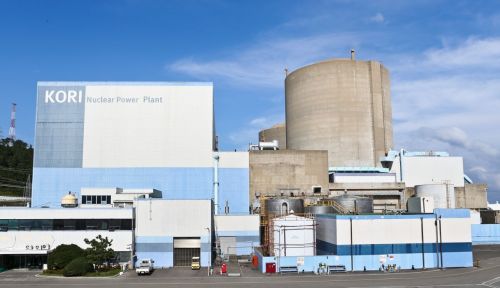
Gori Unit 1, the first nuclear power plant in South Korea to begin commercial operation, is set to officially start its decommissioning process. This marks the first time a commercial nuclear power plant in the country will be dismantled. Industry experts predict that the experience gained from decommissioning Gori Unit 1 could enable South Korea to enter the global nuclear decommissioning market, which is estimated to be worth around 500 trillion won.
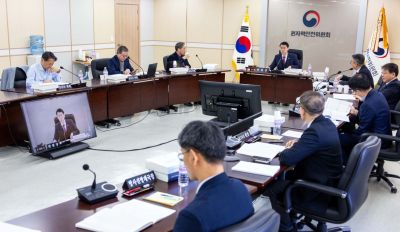
On June 26, the Nuclear Safety and Security Commission announced that it had reviewed and approved the decommissioning plan for Gori Unit 1 during its 216th meeting. The Commission determined that the decommissioning plan for Gori Unit 1 meets the approval criteria set by the Enforcement Decree of the Nuclear Safety Act. It also confirmed that the technical capabilities, decommissioning plan, and expected radiation exposure levels during the process all meet the required standards.
As a result, Gori Unit 1 will begin full-scale decommissioning 53 years after construction approval was granted in 1972 and 8 years after its permanent shutdown was decided in 2017. Gori Unit 1, which began commercial operation on April 29, 1978, is South Korea's first nuclear power plant. It is a pressurized water reactor with an electric output of 587 MWe (megawatts).
The Commission stated that, based on the review by the Korea Institute of Nuclear Safety (KINS), Korea Hydro & Nuclear Power (KHNP) has established the necessary organizational structure, personnel, procedures, decommissioning cost and funding plans, as well as a quality assurance plan for decommissioning, thereby securing the technical capabilities required for the safe decommissioning of Gori Unit 1.
According to the decommissioning plan, KHNP operates three dedicated teams comprising 108 personnel for decommissioning tasks. From 2014 to 2023, KHNP trained 599 professionals and plans to continue expanding its workforce. According to the "Policy Direction for Fostering the Nuclear Decommissioning Industry" announced jointly by relevant ministries in October 2015, of the 96 nuclear decommissioning technologies, KHNP has secured 58 commercialized technologies, while the Korea Atomic Energy Research Institute holds 38 foundational technologies.
KHNP estimates that the total cost of decommissioning Gori Unit 1 will be 1.0713 trillion won. KHNP is accumulating decommissioning funds annually in the form of provisions. As of December 2024, KHNP has accumulated and holds 961.4 billion won in cash for decommissioning, and plans to make additional contributions this year to match the assessed amount. If necessary, the company intends to raise external funds through bond issuance.
KHNP plans to begin decommissioning from areas with lower contamination levels, progressing to areas with higher levels, in consideration of safety. Accordingly, following decommissioning approval, the process will start with the non-radiation zones. After the removal of spent nuclear fuel, the radiation-controlled areas and main equipment will be dismantled. Once decontamination and demolition are complete and the site is restored, the decommissioning work will be finished. KHNP expects the entire decommissioning process to take about 12 years.
According to the Commission, the decommissioning period for light water reactors similar to Gori Unit 1 overseas is generally around 10 years, with costs ranging from 800 billion to 1.1 trillion won.
KHNP has also implemented measures to minimize interference and impact on the adjacent Unit 2 during decommissioning, including the installation of additional pipe isolation valves and the construction of physical protective barriers. The Commission confirmed that the estimated radiation exposure to residents from decommissioning radioactive materials and the operation of multiple units remains within regulatory limits.
KHNP predicts that a total of 171,708 tons of solid radioactive waste will be generated during decommissioning. Of this, intermediate-level waste will account for 65 tons, low-level waste for 8,941 tons, and very low-level waste for 4,315 tons. The largest portion, 158,387 tons, is expected to be disposed of on-site.
Spent nuclear fuel is currently stored in the wet storage facility at Gori Unit 1. Once a dry storage facility is constructed on site, the spent fuel will be removed. In relation to this, KHNP announced plans to apply for an operational change permit in August. After completing the decommissioning of Gori Unit 1, KHNP plans to repurpose the site and remaining buildings for industrial use.
The Nuclear Safety Act requires that a decommissioning application be submitted within five years of permanent shutdown, and the Commission must complete its review within three years of application, excluding the period for KHNP's responses to inquiries.
In May 2021, KHNP submitted the final decommissioning plan and related documents for Gori Unit 1 to the Commission. The Commission began its main review in January 2022. Since May of this year, KHNP has been conducting "decontamination" work to remove radioactive materials as a preliminary step before decommissioning approval. According to the Commission, as of May 2025, a total of 214 nuclear power plants in 22 countries worldwide have been permanently shut down. Of these, decommissioning has been completed for 25 plants. By country, the United States accounts for the largest share, with 20 plants.
By 2050, a total of 588 nuclear power plants are expected to be permanently shut down. Although estimates differ by institution, the nuclear decommissioning market is projected to reach about 500 trillion won by 2050. As of last month, only four countries? the United States, Germany, Japan, and Switzerland? have experience in decommissioning nuclear power plants. However, except for the United States, most of these cases involved research or demonstration reactors, making the United States the only country with experience in decommissioning commercial nuclear power plants.
© The Asia Business Daily(www.asiae.co.kr). All rights reserved.
![Clutching a Stolen Dior Bag, Saying "I Hate Being Poor but Real"... The Grotesque Con of a "Human Knockoff" [Slate]](https://cwcontent.asiae.co.kr/asiaresize/183/2026021902243444107_1771435474.jpg)
















