The Path to a Just Transition
Ⅲ. Offshore Wind Power Revives Fishermen
A City Transformed from the Brink of Extinction
Major Companies Attract Young Talent and Revitalize the City
"15,000 Jobs by 2030"
"We plan to triple the number of renewable energy workers in the Humber region to 15,000 by 2030. Over 90% of new hires will be local residents." (Diana Taylor, CEO of Future Humber, a non-profit organization for regional development)
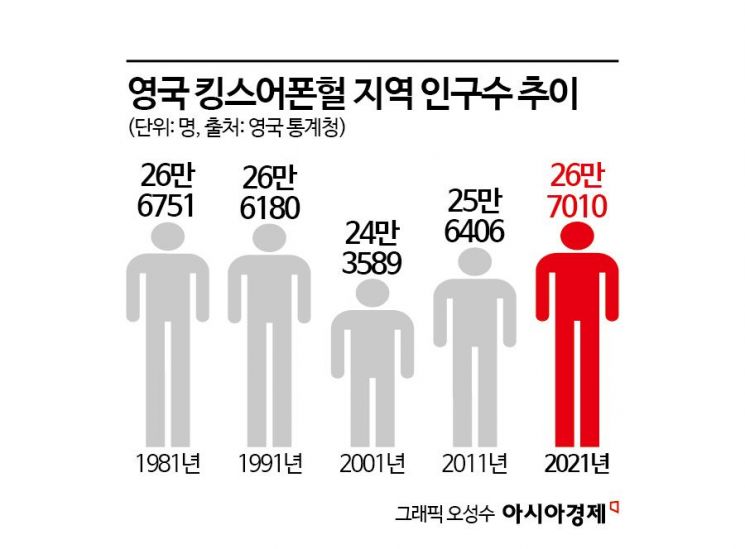
Kingston upon Hull (Hull), the central city of the Humber Estuary in eastern England, faced population decline and the risk of regional extinction as the fishing and steel industries waned. The population, which remained around 260,000 until the early 1990s, dropped by 20,000 (7.5%) to about 240,000 in the early 2000s. The government made urban regeneration a top priority in the early 2000s, and in 2016 succeeded in attracting a Siemens Energy offshore wind turbine blade manufacturing plant, with an investment of 150 million pounds (about 250 billion won). Hull was considered an ideal location for the factory due to its large port, capable of transporting wind turbine blades, and the presence of steel companies. The strategy paid off. According to the Office for National Statistics (ONS), Hull's population was 267,010 in 2021 and continues to grow each year.
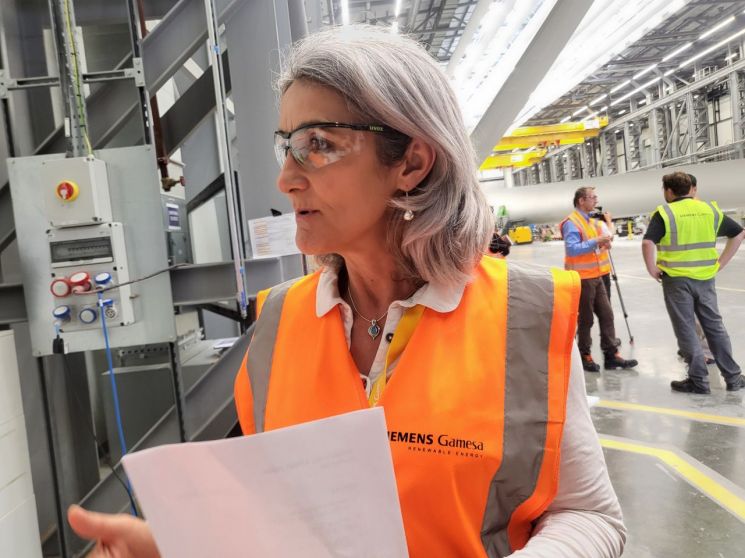 Diana Taylor, CEO of Future Humber, was interviewed last month on the 10th at the Siemens Energy factory, a turbine blade manufacturer located in Hull, Yorkshire, UK. Photo by Hyunju Lee
During an interview at the Siemens Energy factory on the 10th of last month, Diana Taylor, CEO of Future Humber, expressed confidence that the number of offshore wind power workers in the Humber region could increase from the current 4,500 to 15,000 by 2030. She explained that the arrival of leading wind power companies has revitalized a city once on the brink of extinction. Future Humber was established in 1994 to promote the sustainability of the Humber region. It operates in collaboration with local residents, businesses, universities, and institutions.
As a condition for attracting the Siemens Energy factory to the Humber region, "over 90% local resident employment" was required. Solomon Clark, a research assistant at the Hull History Museum, explained, "There has been a lot of investment in wind farm development in Hull recently, and the city has come alive. The Siemens Energy factory, which manufactures wind turbine blades, played a major role." Over the past nine years, the Hull Siemens Energy factory has produced 2,500 turbine blades-enough for 800 offshore wind farms. Most of the blades are used in the UK, but some are exported to Germany, Belgium, Taiwan, and other countries. Andrew Elms, Head of Business Development UK at Siemens Energy, said, "Women now account for about 20% of the workforce, and we hire people for all positions, from engineers to managers."
As local incomes have risen, consumption has increased. Various shopping centers have opened, and living standards have improved. Now, due to relatively affordable housing compared to the residential environment, more people are commuting to London for work. From Hull Central Station to London King's Cross Station, it takes just 2 hours and 30 minutes.
Residents have responded positively to turbine blade manufacturing, as it offers the opportunity to become skilled technicians. Christopher (37), a local resident met in Hull, said, "The turbine blade factory continues to expand and hire more people. It’s not just repetitive work, and with four shifts, workers are very satisfied-a fact known to everyone in the community." Another resident, Barry (30), said, "We take pride in having a company in our neighborhood that people want to work for and that pays well. Here, if you start as an apprentice at 16, you can earn 39,000 pounds (about 72 million won) by age 19, so young people even worry about whether they can manage their money well at such an early age."
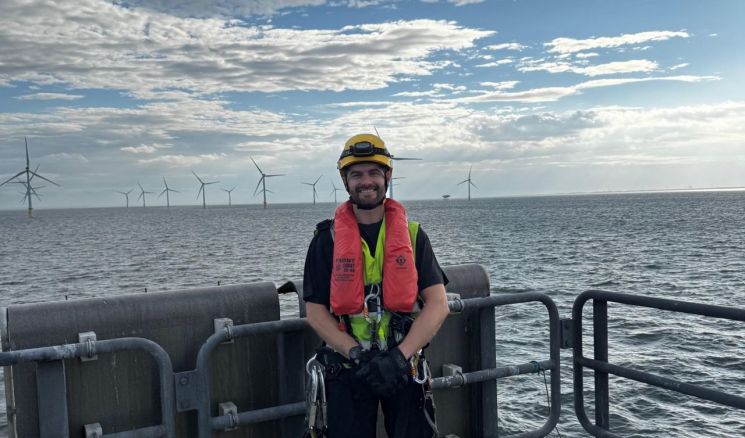 James Jackman (35), a senior engineer at RWE, said, "Young people can establish a foothold in the wind power industry and achieve success."
James Jackman (35), who was born and raised in Hull and now works as a senior engineer at RWE, an offshore wind operator, said, "When I first earned my degree in mechanical engineering, the wind power industry hadn’t developed, so there were no related jobs. Now, I’m happy that I don’t have to leave my hometown to find work."
Among local university students, offshore wind power technician is a popular career. After completing studies related to offshore wind, university graduates can choose between office-based engineering roles and field-based offshore technician roles, depending on their aptitude. Not only university students but also young people who have completed compulsory education (ages 0-16) can join the industry through offshore wind apprenticeship programs. Jackman explained, "Most young people who used to work in the fishing industry are now employed in offshore wind-related sectors," adding, "many former captains and crew members from the fishing industry now work alongside technicians in wind power services."
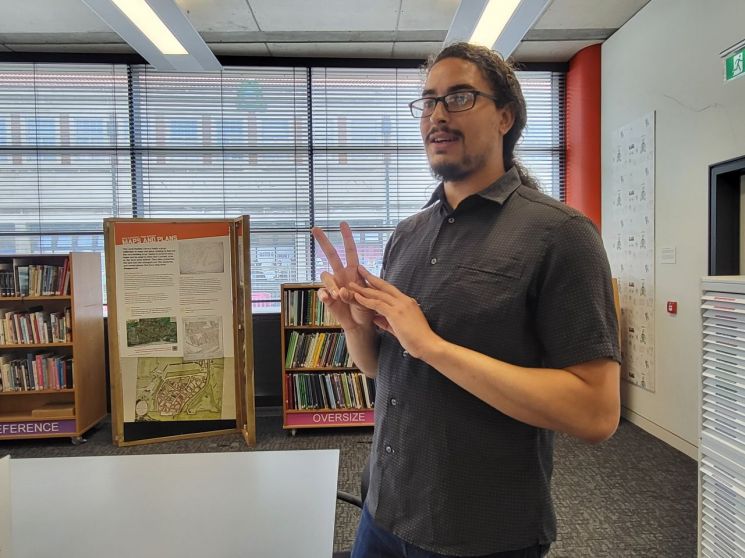 Solomon Clark, a research assistant working at the Hull History Museum, is talking about the history of the Humber area, including Hull. Photo by Lee Hyunju
The Aura Centre for Doctoral Training, which specializes in offshore wind workforce development and has a budget of 6 billion pounds (about 9.8 trillion won), is also located here. The Aura Centre collaborates with universities in eastern England and is researching innovative ways to triple the efficiency of offshore wind facilities.
Ben Colossi, Professor at the University of Hull (Head of the Renewable Energy and Low Carbon Solutions Program), explained, "The Aura Centre is closely linked with the Offshore Wind Industry Growth Plan (2024), which aims to create 10,000 additional jobs and triple wind turbine production capacity. The University of Hull is participating in this project together with three other nearby universities."
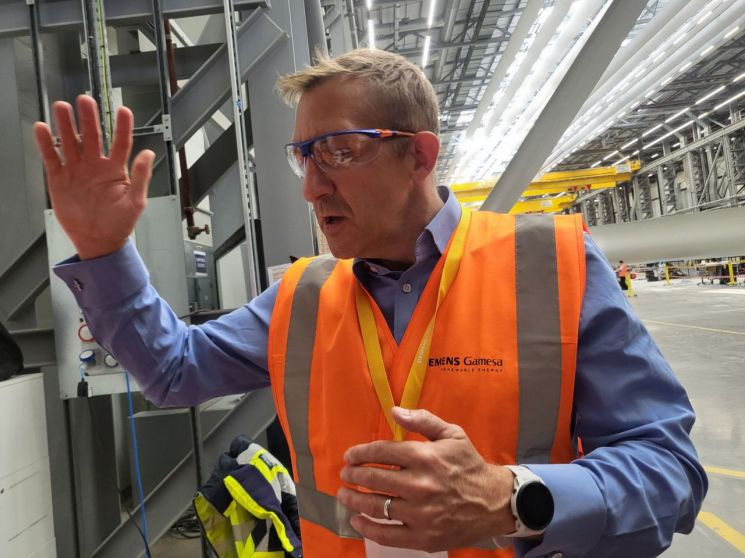 Andrew Elms, Head of Business Development UK at Siemens Energy, is being interviewed at the Siemens Energy plant located in Hull. Elms said, "We also collaborate with universities, but we train many technicians through technical training." Photo by Hyunju Lee
Thanks to skilled factory workers and academic research, turbine blades produced in the Hull area are steadily advancing. The length of blades manufactured at the local Siemens Energy plant has increased from 75 meters in the past to 115 meters today. When the blade length doubles, the amount of wind energy generated increases fourfold.
This feature was supported by the Press Promotion Fund, financed by government advertising fees.

© The Asia Business Daily(www.asiae.co.kr). All rights reserved.
![Clutching a Stolen Dior Bag, Saying "I Hate Being Poor but Real"... The Grotesque Con of a "Human Knockoff" [Slate]](https://cwcontent.asiae.co.kr/asiaresize/183/2026021902243444107_1771435474.jpg)

















