[The Path to a Just Transition]
Ⅲ. Offshore Wind Power Revives Fishermen
Securing Operation and Maintenance Jobs Through Offshore Wind Farms
Turning It Into an Opportunity for New Job Creation
Communication Needed to Protect the Sea and Sustain Livelihoods
"Offshore wind power saved our declining fishing town."
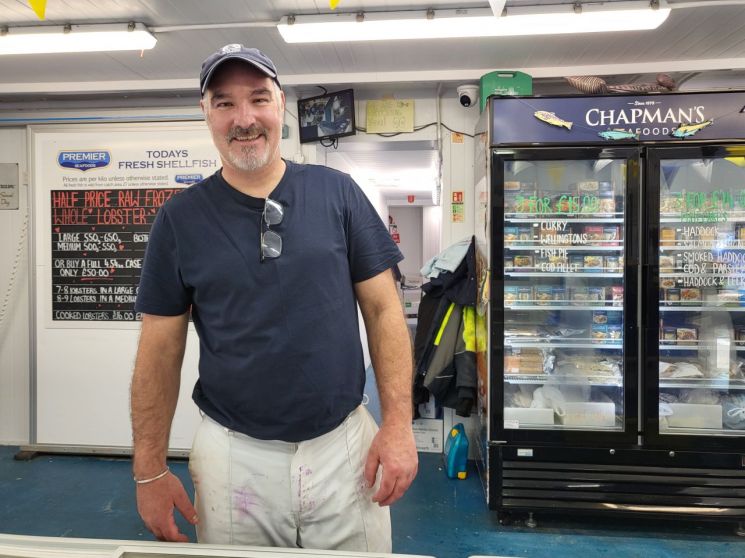 Nathan Godley (52), born in Grimsby, England, who has been engaged in seafood processing for 16 years, is convinced that offshore wind power saved the fishing town on the brink of extinction. Photo by Lee Hyunju
Grimsby, located in the Humber region on the eastern coast of England, is now filled with people whose livelihoods have improved thanks to the development of offshore wind farms. Grimsby, which once relied on fishing as the backbone of its local economy, began to see a sharp decline in the industry starting in the 1970s. However, today, it is rare to find residents concerned about a lack of jobs. Since the construction of offshore wind farms began in 2007, worries about employment have disappeared.
Nathan Godley (52), a Grimsby native who has been working in seafood processing for 16 years, told Asia Economy on June 11, "When the offshore wind farms were built in our declining fishing village, people started moving to Grimsby, and the entire town regained its vitality. I have lived here all my life, and I am a witness to this transformation," he said.
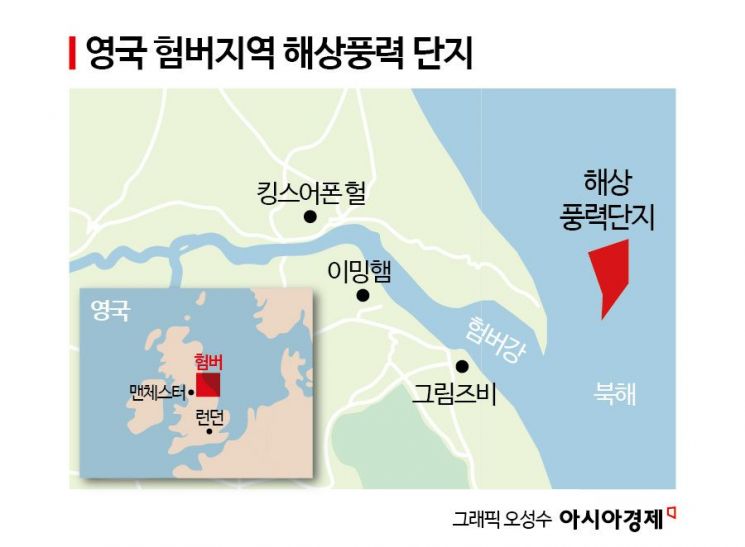
When plans for the offshore wind farm were first announced, there was strong backlash from local fishermen. Although fishing was already in decline, for those who had spent their entire lives working at sea, the news came as a devastating blow. What ultimately eased their concerns was the creation of new jobs.
Andrew Oliver, Chairman of the Grimsby Fish Market Operating Corporation, explained, "When the wind farms were first established, a variety of studies were conducted on the seabed, marine ecosystems, tidal currents, and marine mammals." He continued, "From that point, fishermen with knowledge and skills related to the Grimsby waters began working as crew members on research vessels." Oliver added, "With the arrival of new vessels, there was a need for accommodations, fuel, and food supplies for the crews, and the wind power industry gradually began to replace fishing. As construction progressed, wind power companies began to use our port as a base, and some docks were converted into offices. As the number of workers increased, more services and facilities were needed."
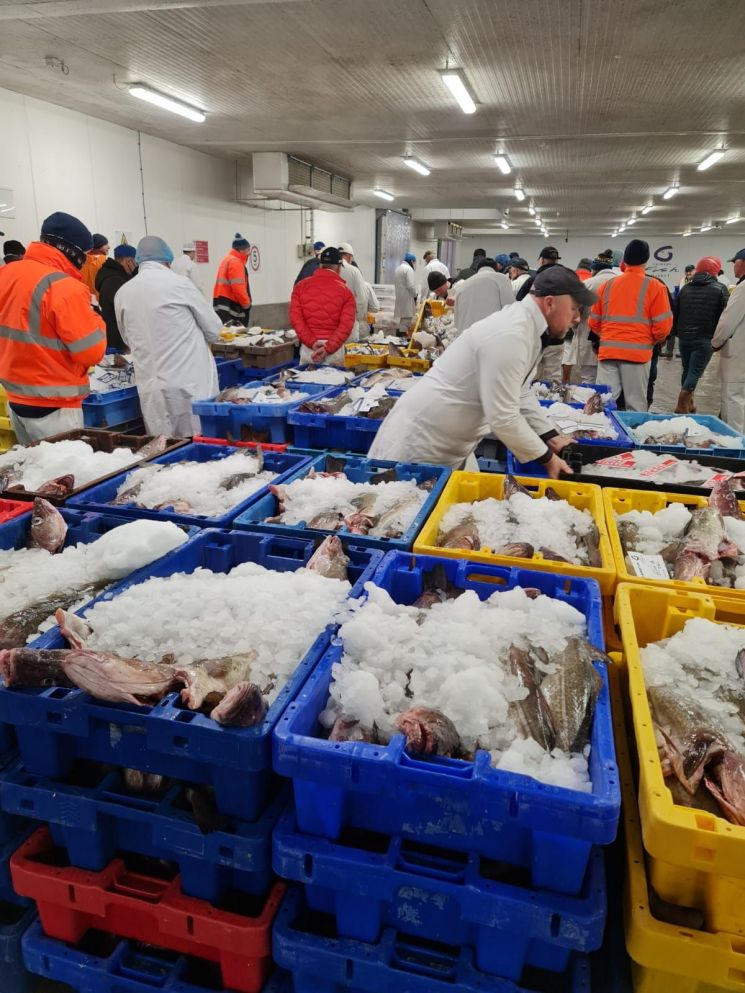 In Grimsby, England, fishing is no longer carried out. Instead, fish imported from places like Iceland are processed and sold. In August 2023, gutted fish imported from Iceland in refrigerated containers were being sold at the Grimsby fish market. Photo by Andrew Oliver, Chairman of Grimsby Fish Market Operating Corporation
Once a simple fishing village, Grimsby has now transformed into the largest offshore wind operation and maintenance hub in the UK. Since 2013, offshore wind operation and maintenance centers have been established in Grimsby, and in 2019, the world's largest offshore wind operation and maintenance center was also built. Eighty percent of the employees live in the Grimsby area. A fund of 2 million pounds (about 3.7 billion won) has also been created to support the local community. While fishing is no longer carried out in Grimsby, seafood imported from countries such as Norway and Ireland is processed and exported worldwide.
Chairman Oliver stated, "Every day, about 30 to 40 vessels leave the port to inspect or maintain wind turbines, with around 12 crew members per vessel. Many of these crew members are former fishermen, and some former fishing boat owners now operate shipping companies."
 Andrew Oliver Grimsby Chairman of the Fishery Market Operating Corporation. Photo provided by the individual
Local residents also view the offshore wind industry positively. Sid Ulsher (59), who lives in Grimsby, said, "Wind power is a very important industry for our region because it creates new jobs. At the same time, it has curbed overfishing, which has actually led to an increase in fish species in nearby waters and the creation of a new marine ecosystem."
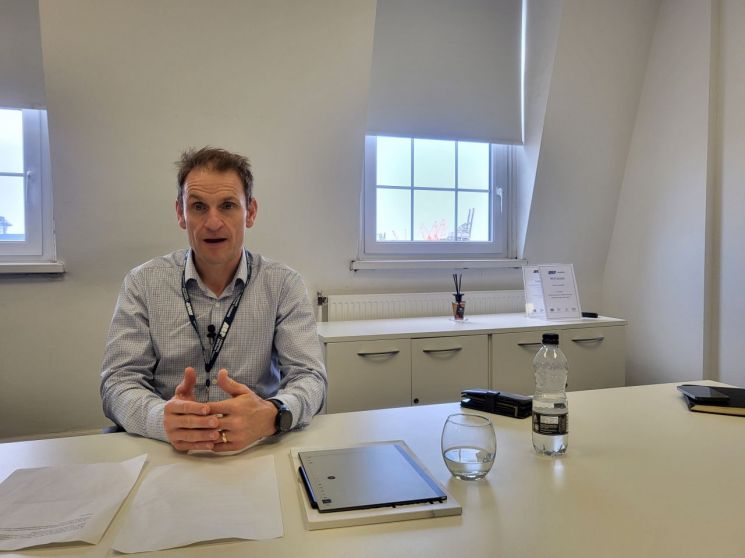 Gareth Russell, Head of Business Development for the Humber region at AB Ports, is being interviewed at the office located in Immingham. Photo by Hyunju Lee
Industry professionals who led the successful transition to renewable energy emphasize that communication is essential to help residents understand new industries. Associated British Ports (AB Ports), which owns ports in the Humber region capable of handling offshore wind turbine transport and installation, parts storage, maintenance, and vessel berthing, identified the most important factor for successful offshore wind farm development as the cooperation of three key stakeholders: businesses, government agencies, and local residents.
Gareth Russell, Head of Business Development at AB Ports, said, "Because this industry is changing so rapidly, companies need to build relationships with local organizations that will be affected by the development of wind farms and transparently explain what projects are being undertaken. It is necessary to communicate what we are working for and how we are contributing to the development of the local community."
This feature was supported by the Press Promotion Fund, which is financed through government advertising fees.

© The Asia Business Daily(www.asiae.co.kr). All rights reserved.
![Clutching a Stolen Dior Bag, Saying "I Hate Being Poor but Real"... The Grotesque Con of a "Human Knockoff" [Slate]](https://cwcontent.asiae.co.kr/asiaresize/183/2026021902243444107_1771435474.jpg)


















