Report Released on "Standards for Recognizing Public Officials' Violations"
"Eight Types of Banquets Public Officials Must Not Attend Specified"
China has established central-level guidelines for the so-called "Chinese version of the Kim Young-ran Act." Some local governments are now moving to excessively restrict public officials' attendance at gatherings based on this law.
According to the Hong Kong Sing Tao Daily on June 23, the Central Commission for Discipline Inspection of the Communist Party of China and the National Supervisory Commission released a report the previous day titled "Central Guidelines on Recognizing Violations of Regulations on Public Officials."
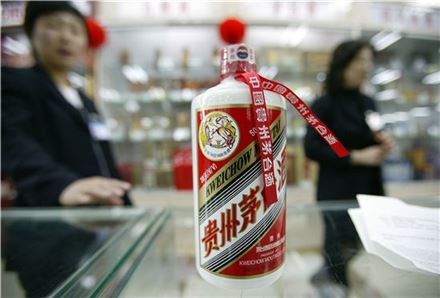 One of the traditional Chinese Baijiu brands, Maotai. This photo is for illustrative purposes and is unrelated to the content. Photo by Bloomberg News
According to the report, a banquet in violation of regulations refers to providing or accepting a banquet that contravenes the rules. This includes providing or accepting banquets that could affect the impartial execution of official duties, accepting banquets paid for with public funds, and organizing or participating in banquets funded by public money in violation of regulations.
The report also clearly outlined eight types of banquets that public officials should not attend, such as banquets funded by public money, meals hosted by companies, meals arranged by stakeholders, and entertainment that could interfere with the execution of official duties.
Regarding the question of "with whom can one dine," the report explained that there is no issue with normal meals with family or friends. However, it drew a clear line that party members and officials must not accept any meal invitations that could affect the fair execution of official duties, regardless of whether public funds are used to pay for the meal.
The report further pointed out that if the invitation comes from subordinates, affiliated organizations, companies, or stakeholders, dining with them constitutes a violation of regulations under any circumstances and regardless of the location.
Additionally, it emphasized that in private clubs, dining with anyone and regardless of who pays is considered a violation, irrespective of whether it affects official duties. The central government established these guidelines because some local governments had sparked controversy by introducing excessive measures, such as banning gatherings of more than three people to prevent factionalism or imposing a 24-hour alcohol ban on public officials.
Previously, on December 4, 2012, the day after Xi Jinping became General Secretary of the Communist Party, the Political Bureau passed the "Eight-point Regulation," known as the Chinese version of the Kim Young-ran Act.
© The Asia Business Daily(www.asiae.co.kr). All rights reserved.
![Clutching a Stolen Dior Bag, Saying "I Hate Being Poor but Real"... The Grotesque Con of a "Human Knockoff" [Slate]](https://cwcontent.asiae.co.kr/asiaresize/183/2026021902243444107_1771435474.jpg)














