Lee Government Holds Emergency Meetings for Two Consecutive Days Amid Middle East Crisis
As the United States strikes Iranian nuclear facilities and the Middle East conflict shows signs of escalating, concerns are mounting once again over rising international oil prices and inflationary pressures. The global economy, which has been anticipating further interest rate cuts, now faces an unpredictable outlook. There is also analysis suggesting that if inflationary pressures in Korea are heightened due to Middle East-driven geopolitical risks, and if such risks hinder economic stimulus measures such as interest rate cuts, it may become difficult for the country to escape the current economic downturn in the second half of the year.
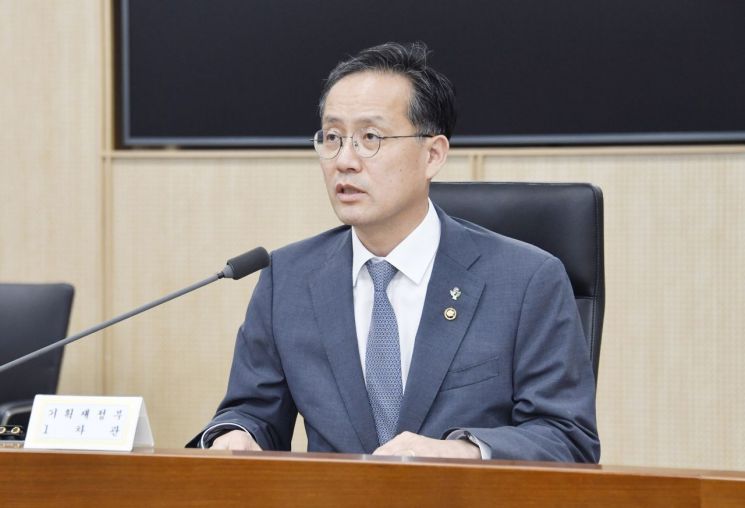
On June 23, the government, led by Lee Hyungil, Acting Minister of Strategy and Finance, convened emergency meetings with relevant agencies for two consecutive days to discuss the impact of the Middle East situation on the Korean economy and corresponding response measures. These meetings were held amid heightened tensions across global financial and foreign exchange markets, as the United States struck three nuclear facilities in Iran, including Fordow, over the weekend, and the risk of direct conflict between Iran and Israel spread further.
Lee emphasized, "After the U.S. airstrikes, the Iranian parliament has decided to blockade the Strait of Hormuz, making the future development of the situation highly uncertain," and added, "Given the potential for increased volatility in international energy prices, relevant agencies will remain highly vigilant and respond closely to developments in international energy prices and supply-demand conditions."
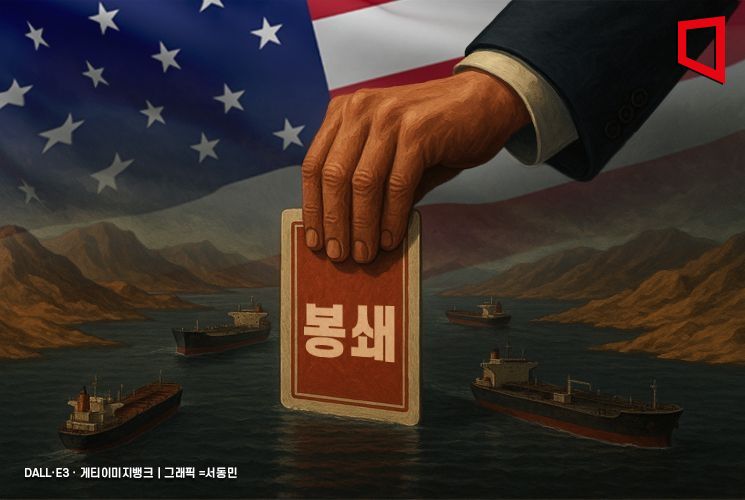
The government is closely monitoring the possible ramifications of future developments and the potential for these to spill over into the real economy. There are concerns that if the situation becomes protracted, rising international commodity prices and worsening supply chain instability could trigger a multi-faceted crisis for the global economy, including stagflation (slowing growth amid rising prices) and trade deficits. Jeong Gyucheol, Director at the Korea Development Institute (KDI), pointed out, "If the situation drags on, it will inevitably lead to worsening corporate performance due to increased costs for domestic companies and a deterioration in the trade balance due to declining exports. Rising import prices, especially for oil products, could once again intensify inflationary pressures."
The government believes that, with the United States now directly striking Iranian territory and intervening in the Israel-Iran conflict, a sharp rise in international oil prices is inevitable, regardless of how the situation unfolds. Since Israel's initial surprise attack on Iran on June 13 (local time), international oil prices have risen by about 10%. Although, so far, there have been no disruptions to oil supply due to the recent trend of increased production, after the U.S. airstrikes on Iran in the early hours of June 22, Brent crude prices have shown significant volatility, surpassing $80 per barrel. Some even predict that, in the worst-case scenario of a full blockade of the Strait of Hormuz, international oil prices could soar to $130-150 per barrel.
The government is watching for the possibility that Iran could fully blockade the Strait of Hormuz by laying naval mines or physically blocking the waterway as a retaliatory measure, or that it could attack ships in the Red Sea through proxy forces such as the Houthi rebels. The Strait of Hormuz is a key route for importing Middle Eastern crude oil to Korea, with about 20% of the world's oil and about 40% of seaborne oil passing through it.
The government assesses that, if the Strait of Hormuz is fully blockaded by Iran, there are few viable alternative routes. A senior official from the Ministry of Trade, Industry and Energy stated, "Some volumes could be rerouted through pipelines on the Red Sea side, but it would not be easy in terms of effective capacity." There are also concerns that, as an alternative to a full closure, Iran could attack oil fields belonging to U.S. allies in the region, such as Saudi Arabia and the United Arab Emirates (UAE), or pipeline facilities that bypass the Strait of Hormuz.
The Iranian parliament has approved the blockade of the Strait of Hormuz, with only the final approval from the Supreme National Security Council (SNSC) remaining for a full blockade. While Iran has repeatedly used the threat of blockading the Strait of Hormuz as leverage during past disputes, it has never actually attempted a full closure. Since most of Iran’s trade, which sustains its economy, is conducted by sea, and with public sentiment already negative due to the recent economic downturn and high unemployment, some analysts believe Iran may refrain from a full blockade out of concern that reduced trade could further weaken the regime’s position. A government official stated, "Whether the strait will be fully blockaded is a matter of political judgment, so it is difficult to predict. We are preparing for all possible scenarios."
Currently, the government and private sector have reserves of crude oil sufficient to last about 200 days and are prepared for emergencies. An official from the Ministry of Strategy and Finance stated, "Since the U.S. airstrikes on Iran, there have been no disruptions in the import of crude oil or liquefied natural gas (LNG) to Korea, and our 31 vessels currently sailing near the Middle East are also operating safely." However, to prepare for the possibility of rapidly escalating developments, the government will monitor trends in the financial, energy, trade, and shipping logistics sectors around the clock and, if any unusual developments occur, will respond swiftly and in close coordination according to contingency plans.
Given that Korea’s financial markets open ahead of those in major countries following the U.S. airstrikes on Iran, the government plans to closely monitor market trends and, if excessive volatility arises, to immediately implement necessary measures in close cooperation with relevant agencies. On this day, the KOSPI index opened at 2,992.20, down 0.98% from the previous session, falling below the 3,000 mark in a single day due to negative factors stemming from the Middle East. As of 9:15 a.m., the KOSDAQ index was also down by more than 1%. In the Seoul foreign exchange market, the won-dollar exchange rate opened at 1,375.0 won, up 9.4 won.
Experts pointed out that, amid growing uncertainty surrounding the economy, the government should focus on minimizing risks. There are also concerns that, as soaring oil prices amplify inflation risks and hinder economic stimulus measures such as interest rate cuts, the effectiveness of the new government’s fiscal expansion policies aimed at economic recovery could be diminished. Jang Min, Research Fellow at the Korea Institute of Finance, stated, "Supply-side disruptions and other upward pressures on prices could slow the pace of inflation easing and even alter the trajectory of base rate cuts. The government should focus on crisis management, including the swift implementation of the already formulated supplementary budget."
© The Asia Business Daily(www.asiae.co.kr). All rights reserved.
![Clutching a Stolen Dior Bag, Saying "I Hate Being Poor but Real"... The Grotesque Con of a "Human Knockoff" [Slate]](https://cwcontent.asiae.co.kr/asiaresize/183/2026021902243444107_1771435474.jpg)

















