Samsung and LG Evacuate All Personnel from Israel... Preparing for Prolonged Conflict
Oil Price Surge and Rising Logistics Costs Become Reality... Industry on High Alert
K-Defense Industry Eyes Expanded Exports to Middle East
"Cheongung and K9 See Growing Demand"
Refining, Steel, and Battery Sectors Worry Over Higher Oil and Shipping Costs
Strait of Hormuz Freight Instability... Shipping Industry Closely Monitoring
Concerns Over Extended Trade Negotiation Deadlines Amid Trump’s Involvement
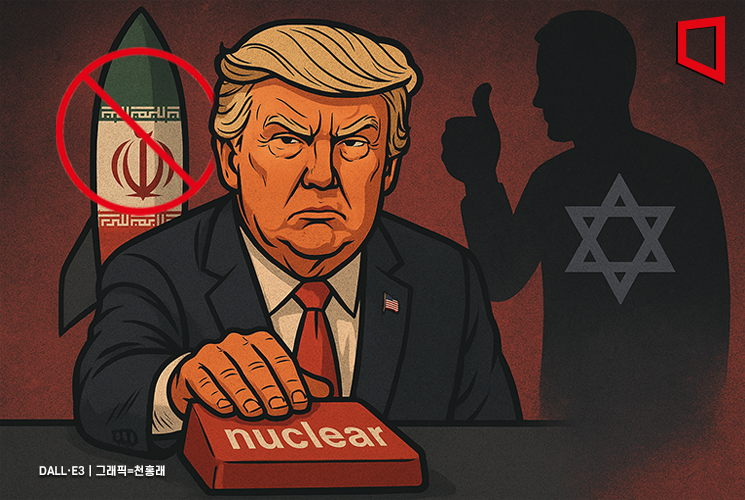
As the military conflict between Israel and Iran intensifies, the domestic industrial sector is on high alert. The refining, petrochemical, steel, and logistics industries are preparing for the possibility of a sharp rise in oil prices and disruptions in maritime transportation. Meanwhile, the electronics sector has begun taking local measures, such as evacuating personnel stationed in Israel to neighboring countries. The defense industry, which counts the Middle East as a major export market, is focusing on the potential for increased exports due to rising demand for missile defense systems.
According to the business community on June 18, concerns are mounting that if rising oil prices and instability in maritime logistics become a reality, cost burdens across industries will increase further. The refining and chemical sectors believe that profitability could deteriorate further as both oil prices and exchange rates fluctuate. The steel industry is not ruling out the possibility that rising maritime transportation costs could burden the entire supply chain. Even if the risk of a blockade in the Strait of Hormuz does not materialize, the existence of such risks is fueling market anxiety and influencing corporate responses.
The steel industry has not yet suffered direct damage but is concerned about indirect effects. A representative from Hyundai Steel stated, "We mainly use iron ore and coking coal from Australia and Brazil, so there are no supply issues," but added, "If the Israel-Iran conflict escalates into a full-scale war and the Strait of Hormuz is blocked, we cannot rule out the possibility of rising maritime transportation costs." Due to the nature of blast furnace-based steelmaking processes, rising oil prices could affect manufacturing costs. However, "since crude oil is not the main energy source, there is currently no direct impact," the representative clarified.
The battery industry maintains that, due to low dependence on Middle Eastern raw materials and the absence of local production or investment, direct impact is limited. An official from a battery company said, "There is almost no direct impact, but if oil prices rise in the long term, demand for electric vehicles may increase, which could in turn drive up demand for batteries."
The refining and petrochemical industries believe that the burden from surging oil prices could intensify. Refiners explain that "rising oil prices do not immediately translate into improved refining margins." The petrochemical sector also points out that rising oil prices inevitably lead to higher cost burdens. A representative from the Korea Chemical Industry Association said, "If oil prices rise amid ongoing global oversupply and weak demand, profitability could worsen further," adding, "Even if export prices rise, soaring raw material costs eat into profits."
The Korea Energy Economics Institute warns that if Iran takes extreme measures such as blocking the Strait of Hormuz, international oil prices could soar even higher. In fact, immediately after the outbreak of the crisis, West Texas Intermediate (WTI) crude oil surpassed $70 per barrel in a single day. An official noted, "Regardless of whether a blockade occurs, the mere discussion of such risks can increase oil price volatility."
The stability of global shipping routes passing through the Middle East has also come under threat. The Strait of Hormuz is a strategic chokepoint with no alternative routes, accounting for 11% of global maritime trade and 34% of seaborne oil exports. When Houthi rebel attacks in Yemen paralyzed the Red Sea shipping lane at the end of 2023, freight rates surged, and there are expectations of a similar rebound this time. HMM recorded sales of 11.7002 trillion won and an operating margin of 30% during that period.
However, some believe that the benefits for HMM may be limited, as it operates only one regular container service to the Middle East. If the situation drags on, rising freight rates could lead to decreased demand, and higher oil prices could increase cost burdens across the shipping industry. An HMM official stated, "There have been no disruptions to operations so far," but added, "If the Strait of Hormuz is blocked, we could consider unloading at alternative nearby ports and transporting goods overland."
The airline industry maintains that there is no direct impact. Korean Air suspended its Tel Aviv route following the Red Sea crisis and is currently operating only the Dubai route. A Korean Air official explained, "No route changes or other measures have been required," adding, "We are monitoring oil price volatility."
Meanwhile, companies with business bases in the Middle East are raising their level of local response in anticipation of escalating hostilities. Over the past weekend, Samsung Electronics and LG Electronics evacuated their employees and families stationed in Israel to neighboring countries such as Jordan for safety. Samsung Electronics operates a sales subsidiary, a semiconductor R&D center, and the multi-camera development company Corephotonics in Israel, while LG Electronics owns the cybersecurity solutions company Cybellum. As of May this year, Samsung Electronics held a 51.2% share of the Israeli smartphone market, ranking first, and LG Electronics is targeting the market with OLED TVs.
Both companies believe that, given concerns about potential disruption to local sales and the relatively small share of global sales, the immediate visible impact is not significant. An industry official said, "It is too early to discuss damage or losses at this point," but added, "We are closely monitoring developments and reviewing necessary measures."
While geopolitical risks are weighing on the entire industrial sector, some industries are seeing new export opportunities.
The Korean defense industry sees increased demand for military spending in the Middle East as an opportunity to expand exports. Starting with the United Arab Emirates (UAE) in 2022, followed by Saudi Arabia in 2023 and Iraq in 2024, Korea's medium-range surface-to-air missile system Cheongung-II (M-SAM2) has been exported in succession, and earlier this year, a helicopter export contract was also signed with Iraq. The total contract value amounts to 6.2 trillion won. At 'IDEX 2025' held in the UAE in February, domestic defense companies conducted aggressive marketing.
Export potential is also increasing in the field of ground weapons. As Saudi Arabia pursues a large-scale modernization project covering its army, navy, and air force, the K9 self-propelled howitzer and K2 tank are being cited as strong export candidates. A defense industry official stated, "There are projections that the export potential for the Saudi market alone could reach 7 trillion won."
The export base is also expanding to naval and aviation power. At the International Maritime Defense Industry Exhibition (MADEX) recently held in Busan, the Saudi Chief of Naval Operations inspected Hanwha Ocean's 3,600-ton submarine and HD Hyundai's 6,500-ton frigate. In April, UAE Air Force officials visited Korea Aerospace Industries (KAI) to tour the KF-21 fighter jet production facilities. However, there are concerns that if hostilities drag on or maritime logistics networks are blocked, the defense industry may also face cost burdens and delivery delays due to surging oil prices and transportation delays.
© The Asia Business Daily(www.asiae.co.kr). All rights reserved.
![Clutching a Stolen Dior Bag, Saying "I Hate Being Poor but Real"... The Grotesque Con of a "Human Knockoff" [Slate]](https://cwcontent.asiae.co.kr/asiaresize/183/2026021902243444107_1771435474.jpg)















