K-Defense Sees Export Boom in the Middle East...
Rising Demand for Missiles and Ground Weapons
Steel Industry: "Not a Direct Hit, but Concerned About Indirect Impact"
Battery Industry: "Minimal Direct Impact...
Positive Outlook for EV Demand"
Refining and Chemical Industries: "Soaring Oil Prices Are a Burden"
The intensifying military conflict between Israel and Iran is also sending shockwaves through the domestic industrial sector. While some industries are seeing mixed fortunes, the Korean defense industry, which counts major Middle Eastern countries as key export markets, is actually benefiting from the situation. In contrast, the refining and petrochemical sectors, which are highly dependent on energy, as well as the steel industry, which is sensitive to logistics networks and raw material costs, are closely monitoring the geopolitical uncertainties.
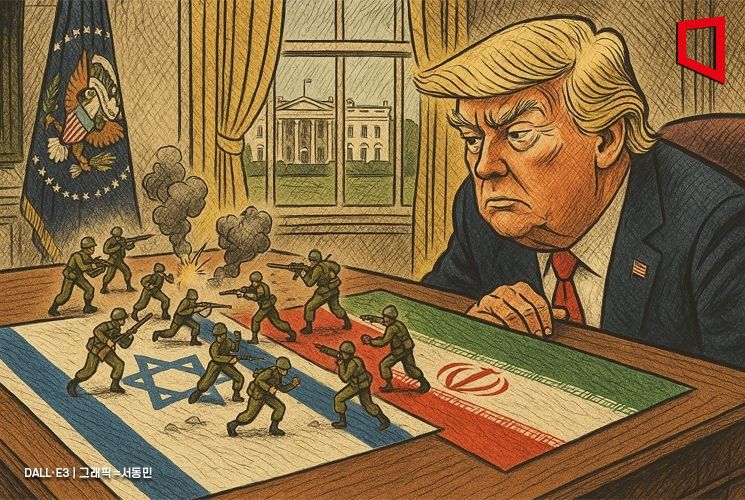
K-Defense Sees Export Boom in the Middle East... Rising Demand for Missiles and Ground Weapons
According to industry sources on the 17th, the Middle East is emerging as a strategic export hub for the Korean defense industry. Starting with the United Arab Emirates (UAE) in 2022, followed by Saudi Arabia in 2023, and Iraq in 2024, the region has successively adopted the Korean-made medium-range surface-to-air missile system, Cheongung-II (M-SAM2). Earlier this year, a helicopter export contract was also signed with Iraq. The total contract value amounts to 6.2 trillion won.
Industry experts note that as the Israel-Iran conflict increases demand for missile defense systems, there is a surge in both stockpiling and new procurement of air defense weapons. In fact, at IDEX 2025, the largest defense exhibition in the Middle East and Africa held in the UAE this February, major Korean defense companies engaged in aggressive marketing efforts.
Expectations are also high in the ground weapons sector. As Saudi Arabia pursues a large-scale modernization project covering its army, navy, and air force, Korea’s mainstay weapon systems such as the K9 self-propelled howitzer and K2 tank are being mentioned as potential export candidates. An industry insider said, "For the Saudi market alone, export potential is estimated to reach up to 7 trillion won."
The export stage is also expanding to the sea and air. At the International Maritime Defense Industry Exhibition (MADEX) held in Busan last month, the Chief of Staff of the Saudi Navy attended and showed interest in Hanwha Ocean’s 3,600-ton submarine and HD Hyundai’s 6,500-ton frigate. In April, officials from the UAE Air Force visited Korea Aerospace Industries (KAI) to inspect the KF-21 fighter jet production facilities.
However, if geopolitical tensions escalate to the extreme, risks remain for the defense industry as well. If rising oil prices and a blockade of the Strait of Hormuz lead to continued disruptions in maritime logistics, operational burdens could increase in terms of costs and delivery schedules.
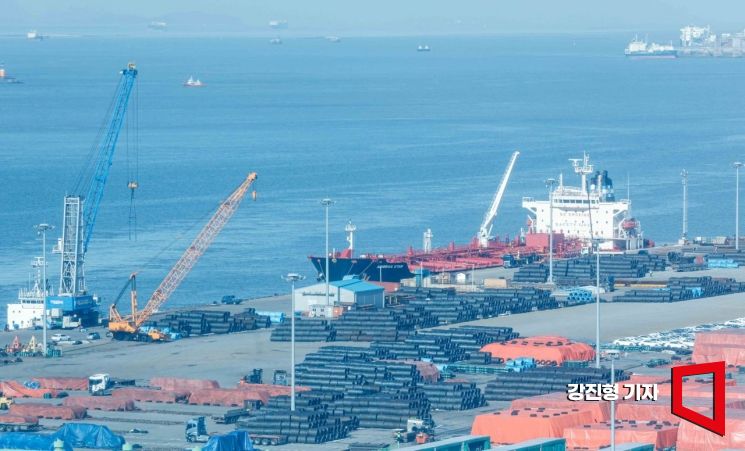 Steel products are piled up at the export yard of Pyeongtaek Port, Gyeonggi. 2025.2.13. Photo by Kang Jinhyung
Steel Industry: "Not a Direct Hit, but Concerned About Indirect Impact"
The steel industry has not yet suffered direct damage but remains wary of potential indirect impacts. A representative from Hyundai Steel explained, "We mainly use iron ore and coking coal from Australia and Brazil, so there are no supply issues." However, they added, "If the Israel-Iran conflict escalates into a full-scale war and the Strait of Hormuz is blockaded, we cannot rule out the possibility of rising maritime shipping costs."
There is some interpretation that, since blast furnace-based steel production is energy-intensive, a sharp rise in oil prices would immediately lead to higher manufacturing costs. However, Hyundai Steel clarified, "Crude oil is not the main energy source for our steel mills, so there is currently no direct impact." They added, "Nevertheless, we are concerned about the indirect effects that rising oil prices could have on the global economy."
Battery Industry: "Minimal Direct Impact... Positive Outlook for EV Demand"
The battery industry believes that the current Middle East crisis will have only a limited impact on their business. Major domestic battery companies do not source raw materials from the Middle East and have no production or investment projects in the region. From a logistics perspective, most battery factories are located near automotive plants in Europe and North America, so they are largely outside the influence of Middle Eastern maritime logistics.
A battery industry official said, "There is almost no direct impact, but if oil prices rise in the long term, demand for electric vehicles could increase, which in turn could boost demand for batteries."
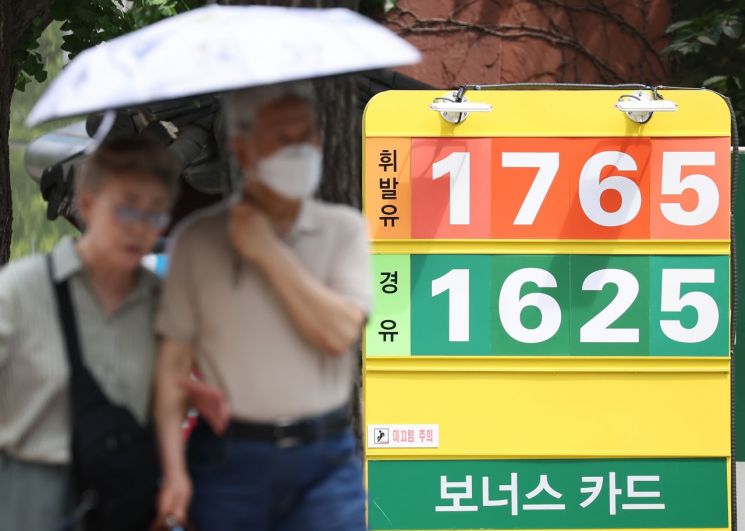 The weekly average prices of gasoline and diesel at gas stations nationwide fell for the fifth consecutive week in the second week of June (8-12). However, with news of Israel's airstrike on Iran, international oil prices surged by 10%, and it is expected that fluctuations in international oil prices will soon be reflected in domestic fuel prices. Photo by Yonhap News on the 15th at a gas station in Seoul.
Refining and Chemical Industries: "Soaring Oil Prices Are a Burden"
The refining and petrochemical industries view the recent surge in oil prices from the Middle East as a "short-term benefit, long-term uncertainty." Refiners say, "Rising oil prices do not immediately translate into improved refining margins." Since product demand moves in line with the economy, greater oil price instability can actually prompt buyers to take a wait-and-see approach, leading to weaker demand.
The petrochemical industry is concerned that higher oil prices will inevitably lead to increased cost burdens. A representative from the Korea Chemical Industry Association pointed out, "With global oversupply and sluggish demand continuing, if oil prices rise as well, profitability could worsen further." They added, "Even if export prices go up, surging raw material costs will eat into profits."
The Korea Energy Economics Institute warns that if Iran plays its "last card" by blockading the Strait of Hormuz, oil prices could soar even higher. Since the crisis began, international oil prices (based on WTI) have already surpassed the $70 mark in just one day. An official said, "Regardless of whether a blockade actually occurs, the mere mention of this risk can increase oil price volatility."
© The Asia Business Daily(www.asiae.co.kr). All rights reserved.
![Clutching a Stolen Dior Bag, Saying "I Hate Being Poor but Real"... The Grotesque Con of a "Human Knockoff" [Slate]](https://cwcontent.asiae.co.kr/asiaresize/183/2026021902243444107_1771435474.jpg)

















