Brazilian Chicken to Be Supplied Domestically from Mid-August
The government will allocate 46 billion won to support discounts on agricultural, livestock, and fisheries products in order to stabilize energy and food prices. It will also extend the temporary fuel tax cut, which was scheduled to expire at the end of this month, for an additional two months. These measures are being implemented because the intensifying military conflict between Israel and Iran has caused international oil prices to surge, creating new inflationary pressures. To boost domestic demand, the government will also extend the reduction of the individual consumption tax on automobiles until the end of this year.
On June 16, the Ministry of Economy and Finance held a meeting of vice ministers responsible for price management to discuss measures to ease the burden of energy costs and stabilize food prices. The meeting was attended by the Ministry of Agriculture, Food and Rural Affairs, the Ministry of Oceans and Fisheries, the Ministry of Land, Infrastructure and Transport, the Ministry of the Interior and Safety, and the Fair Trade Commission, among others.
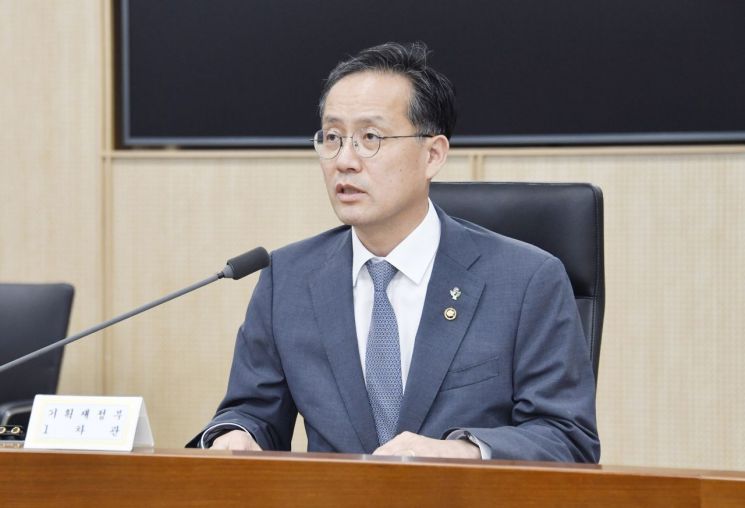
Lee Hyungil, First Vice Minister and Acting Minister of Economy and Finance, stated, "We will mobilize all available means, including discount support, quota tariffs, and supplementary budgets, to stabilize food prices." He added, "To ease the burden of grocery shopping during the summer, we will invest 46 billion won in discount support for agricultural, livestock, and fisheries products during June and July."
Key items such as pork, chicken, and fruit will be discounted by up to 40-50%, and the discount limit will be doubled. A new quota tariff on mackerel will be introduced next month, and the quota tariff volume for processed egg products will be significantly expanded.
Lee explained, "We plan to include support for facility investments related to the expansion of cage area standards for laying hens (14.4 billion won) and support for replacing dried seaweed dryers (6 billion won) in the upcoming supplementary budget as part of price stabilization support projects."
He also noted that Brazilian chicken will be supplied domestically from mid-August, with import procedures resuming immediately after regionalization is completed on June 21. In addition, 4,000 tons of Thai chicken will be imported starting at the end of July.
The temporary fuel tax cut, which was scheduled to end this month, will also be extended until the end of August. This is the 16th extension of the sunset provision since the temporary fuel tax cut was first implemented in November 2021. The government expanded the fuel tax cut for gasoline and diesel to 37% from July 2022 for price stabilization, then gradually reduced the cut from 2023 while extending the expiration date.
As a result, from next month, the fuel tax will remain at 738 won per liter for gasoline and 494 won per liter for diesel, the same as the previous month. Butane will also be taxed at 173 won per liter. This reduction will remain in effect until the end of August.
In addition, the individual consumption tax reduction on power generation fuels such as liquefied natural gas (LNG) and bituminous coal will be extended for another six months until the end of the year. To support the recovery of automobile consumption, the temporary reduction of the individual consumption tax on passenger cars will also be extended for another six months until the end of this year.
Furthermore, to ease the burden of cooking, heating, and transportation costs for ordinary citizens and to support the petrochemical industry, the government will extend the 0% quota tariff on liquefied petroleum gas (LPG) and crude oil for LPG production, which was scheduled to expire at the end of this month, until the end of the year.
The Ministry of Economy and Finance stated, "To stabilize processed food prices, we plan to extend the application of a 15-20% quota tariff on four processed fruit items, including mashed citrus and fruit cocktail, for another six months until the end of the year. In particular, for fruit cocktail, given that most of the previously set quota tariff volume (5,000 tons) has been used up, we plan to increase the quota volume from 5,000 tons to 7,000 tons."
The government also urged the food industry to minimize both the number of items subject to price increases and the rate of price hikes through communication. To ease the management burden on small and medium-sized food companies, 20 billion won in low-interest policy funds to support the purchase of domestic agricultural products will be included in the supplementary budget. To prepare for the possibility of domestic oil prices rising due to instability in the Middle East, an inter-ministerial oil market inspection team will be operated to crack down on illegal activities such as fake oil and collusion.
Lee pointed out, "Recently, the consumer price inflation rate has remained around 2% year-on-year." However, he added, "Due to accumulated inflation, the overall price level remains high, and the rate of increase in food prices is still high, resulting in a continued burden on the cost of living." He continued, "We will swiftly implement the announced measures and continue to identify further tasks for price stabilization going forward."
© The Asia Business Daily(www.asiae.co.kr). All rights reserved.
![Clutching a Stolen Dior Bag, Saying "I Hate Being Poor but Real"... The Grotesque Con of a "Human Knockoff" [Slate]](https://cwcontent.asiae.co.kr/asiaresize/183/2026021902243444107_1771435474.jpg)















