As High-Value Collecting Rises Among People in Their 30s and 40s,
Expensive Items Emerge as Targets for Asset Division
Appraisers Appointed When No Agreement Is Reached
#1. Both husband and wife were wine enthusiasts. Before their marriage, Mr. A and Mrs. B each diligently collected wines. Even after combining their households through marriage, they continued to purchase famous wines from around the world. They dedicated an entire room in their home solely for wine storage.
However, their marriage ended in divorce, and during the divorce proceedings, their extensive wine collection became a key issue in the division of assets. After negotiations, they agreed to appraise the value of all the wines and split them evenly, assigning each a "wine share" worth 20 million won. They distributed the wines according to this value. Additionally, each selected 10 wines they absolutely wanted to keep, ensuring there was no overlap in their choices. When pricing the wines, they used the "average price information" from an international wine search app.
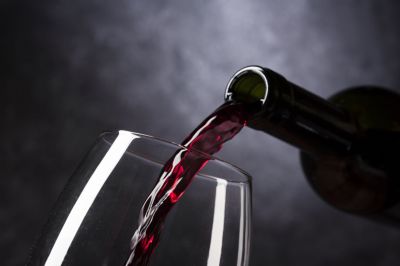
#2. Mr. C, who enjoys collecting wine as a hobby, began secretly removing expensive wines from his home and storing them elsewhere as he prepared for separation and divorce from his spouse, Mrs. D. Concerned that the wines might become subject to asset division in the divorce proceedings, he took preemptive action to keep them out of Mrs. D's sight.
Recently, expensive wines have become a focal point in divorce proceedings as assets to be divided. There are increasing reports of divorcing couples fighting over rare wines worth tens of millions of won, each insisting on keeping them. In some cases, like Mr. C's, one spouse hides the wines, creating further disputes, or the couple cannot agree on the value of the wines, leading to the appointment of an appraiser.
The rise of wine as a target for division in divorce stems from the increasing number of young couples in their 30s and 40s who collect wine. During the COVID-19 pandemic, the "home drinking" trend took hold, significantly expanding the domestic wine market. Wine imports in Korea grew from $260 million in 2019 to $330 million in 2020, surpassed $500 million in 2021, reached a record $581.27 million in 2022, and remained high at $506.01 million in 2023.
Kim Sanghoon (age 51, 33rd Judicial Research and Training Institute class), managing attorney at Trinity Law Firm, stated, "Among older wealthy individuals, it is common to collect expensive artworks, making paintings a frequent subject of inheritance disputes. However, in recent divorce cases among younger people, wine is increasingly becoming an asset to be divided."
Wine, unlike other alcoholic beverages, can carry special significance, such as being associated with family anniversaries, making it more likely to become the subject of property disputes. Attorney Kim further explained, "Recently, there are many cases in Korea where people collect vintage wines produced in the birth year of themselves or their children. Conflicts also arise over who gets to keep these wines with special meaning."
It is not uncommon for one spouse to "misappropriate" wines from the home in anticipation of divorce. Assets subject to division in divorce are those that exist at the "point of marital breakdown," such as when the couple begins living separately or when divorce proceedings are initiated. If one spouse secretly removes wines from the marital home before the breakdown and stores them elsewhere, and this is later discovered during divorce proceedings, it becomes an issue of asset concealment.
There are also cases where, around the time of marital breakdown, one spouse opens and consumes expensive wines or neglects their storage, thereby reducing their value. A lawyer who previously served as a presiding judge commented, "If the value of the wine decreases because it was opened and consumed, the value should be calculated as of the point of marital breakdown, and the amount consumed can be considered as already taken by the person who drank it."
Problems also arise when the couple cannot agree on the value of the wine. If there is a significant discrepancy in their valuations, it becomes difficult to determine a fair price. In such cases, a third-party wine expert is appointed as an appraiser to assess the value. Jeon Anna (age 51, 34th class), managing attorney at Pyeongsan Law Firm and former family court judge, stated, "In cases where expensive artworks or unlisted company shares are subject to asset division, the outcome often depends on the appraiser's findings. The importance of a qualified appraiser who can accurately assess the value of expensive wines becomes even greater when such wines are included in the division of assets."
Hong Yoonji, Legal Times Reporter
※This article is based on content supplied by Law Times.
© The Asia Business Daily(www.asiae.co.kr). All rights reserved.
![Clutching a Stolen Dior Bag, Saying "I Hate Being Poor but Real"... The Grotesque Con of a "Human Knockoff" [Slate]](https://cwcontent.asiae.co.kr/asiaresize/183/2026021902243444107_1771435474.jpg)















