Bank of Korea: "Industry Loans by Depository Institutions for Q1 2025"
Industry Loans Up by 17.3 Trillion Won... "Increased Demand for Corporate Working Capital"
Only Real Estate Loans Decline... Sluggish Regional Commercial Real Estate Takes a Toll
Due to a downturn in the construction market, real estate lending in the first quarter of this year decreased for the first time in 12 years.
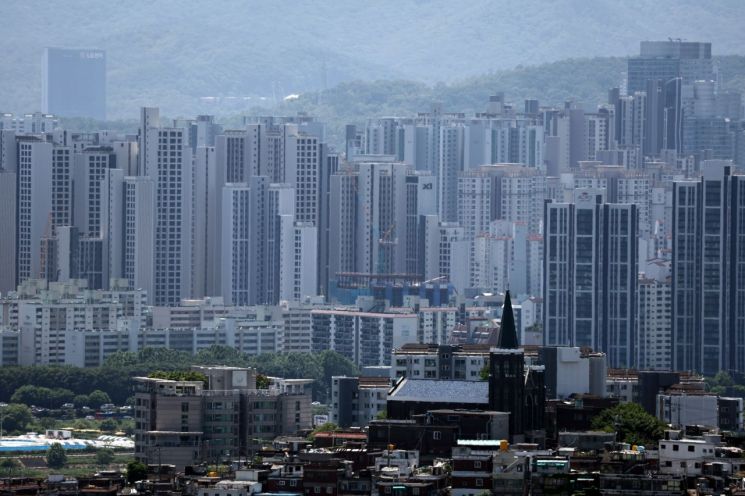
According to the "Loans by Industry at Depository Institutions for Q1 2025" released by the Bank of Korea on June 10, outstanding real estate loans as of the end of March stood at 470.978 trillion won, down by about 2.5 trillion won compared to the end of the previous quarter.
This is the first time since the first quarter of 2013 (down 200 billion won) that real estate loans have declined, and the largest decrease since the second quarter of 2011 (down 3 trillion won).
Kim Minsu, head of the Bank of Korea's Financial Statistics Team, explained, "Commercial real estate, particularly in regional areas, has been sluggish. In addition, the restructuring of real estate project financing (PF) has led to an increase in the write-off and sale of non-performing loans."
Outstanding loans to the construction sector at the end of the first quarter also fell to 104.0289 trillion won, down about 300 billion won from the end of the previous quarter. As construction progress payments continued to decline, this marked the third consecutive quarter of decreases. However, the scale of the decrease narrowed compared to the previous quarter.
Outstanding loans to the manufacturing sector reached 491.4 trillion won in the first quarter, an increase of 8 trillion won. By industry, loans to chemical and medical products (up 1.7 trillion won), other machinery and equipment (up 500 billion won), and electronics, computers, audiovisual, and telecommunications (up 300 billion won) turned to an upward trend.
Outstanding loans to the service sector increased by 7.8 trillion won to 1,261.5 trillion won. Here too, the increase was larger than in the previous quarter.
Total loans to all industries?including manufacturing, construction, and services?stood at 1,979.5 trillion won, up 17.3 trillion won from the end of the previous quarter.
By loan purpose, working capital loans increased by 9.5 trillion won in the first quarter, while facility loans rose by 7.8 trillion won. Working capital loans had declined in the fourth quarter of last year but turned to an increase this quarter, while the increase in facility loans accelerated.
Kim added, "At the end of last year, companies temporarily repaid credit lines to manage their financial ratios, but these loans were extended again at the beginning of this year. In addition, demand for funds around the Lunar New Year holiday increased, which led to a rise in working capital loans in the first quarter. For the service sector, the first quarter is typically a slow season, so companies made up for funding shortages through loans, which is a seasonal factor."
The increases in the first quarter for deposit banks and non-bank depository institutions were tallied at 13.8 trillion won and 3.5 trillion won, respectively.
© The Asia Business Daily(www.asiae.co.kr). All rights reserved.
![Clutching a Stolen Dior Bag, Saying "I Hate Being Poor but Real"... The Grotesque Con of a "Human Knockoff" [Slate]](https://cwcontent.asiae.co.kr/asiaresize/183/2026021902243444107_1771435474.jpg)















