Key Issues in the Duty of Fair Representation under the Trade Union Act
Supreme Court: "POSCO Had Reasonable Cause"
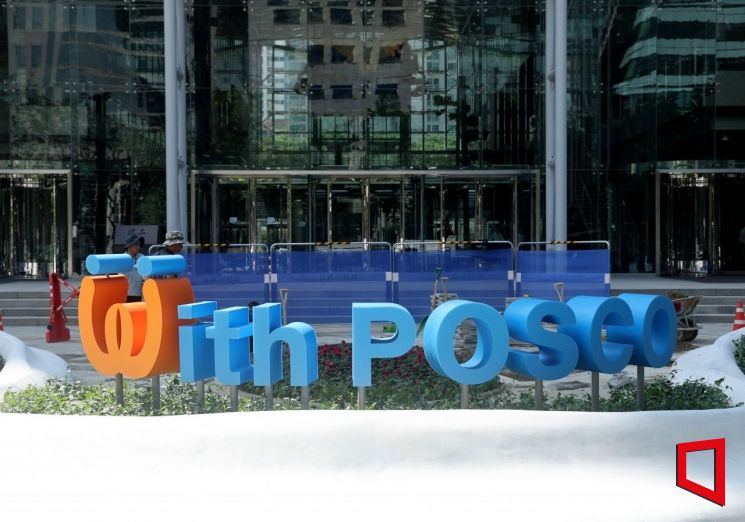
The Supreme Court has ruled that POSCO, which has multiple labor unions, did not violate its duty of fair representation by providing vehicles to each union and allocating the number of vehicles and the duration of use according to the number of union members, as there was a reasonable cause for the differential treatment. The Supreme Court’s Special Division 2 (Presiding Justice Eom Sangpil) overturned the lower court's ruling, which had ruled against POSCO (represented by attorneys Lee Ukrae, Kim Sangmin, Kim Kyunghan, Jung Younghun, and Lee Sungjin of Bae, Kim & Lee LLC) in its lawsuit to cancel the Central Labor Relations Commission’s corrective order for violation of the duty of fair representation (Case No. 2022Du64693), and remanded the case to the Seoul High Court on May 15.
[Facts]
The POSCO branch of the Korean Metal Workers’ Union and the POSCO Labor Union both participated in POSCO’s single bargaining channel procedure, and in December 2018, the POSCO Labor Union was selected as the bargaining representative union. During collective bargaining in 2019, POSCO agreed with the bargaining representative union to provide three rental cars to the unions for 20 months, from November 2019 to June 2021, which was the effective period of the collective agreement. Of these, two vehicles were provided to the POSCO Labor Union, which had about 6,500 members, and the remaining one vehicle was allocated to the POSCO Labor Union for 15 months and to the POSCO branch of the Korean Metal Workers’ Union for 5 months out of the 20 months.
The POSCO branch of the Korean Metal Workers’ Union claimed to have about 3,300 members, but based on the check-off system, the number was about 600. The check-off system is a method in which the employer deducts union dues from employees’ wages before payment and remits them to the union. The POSCO branch argued that the company’s allocation of rental cars constituted a violation of the duty of fair representation and filed a corrective request with the Gyeongbuk Regional Labor Relations Commission. Article 29-4, Paragraph 1 of the Trade Union and Labor Relations Adjustment Act imposes an obligation on employers to prohibit discrimination against unions participating in the single bargaining channel procedure.
The Gyeongbuk Regional Labor Relations Commission ruled that this was a violation of the duty of fair representation. When POSCO’s petition was again dismissed by the Central Labor Relations Commission, the company filed a lawsuit. POSCO argued that the allocation of vehicles was based on an agreement with the bargaining representative union, so the company could not unilaterally change the terms without the consent of the bargaining representative union, and therefore, POSCO could not be the sole subject of a violation of the duty of fair representation without the bargaining representative union. POSCO also argued that, considering the number of members and bargaining demands of each union, there was a necessity to allocate vehicles differently, and thus there was a reasonable cause for the differential treatment.
[Lower Court Rulings]
The court of first instance accepted POSCO’s argument and found that there was no violation of the duty of fair representation. The trial court stated, “POSCO allocated the vehicle usage period in proportion to the number of union members in each union, and since the POSCO branch agreed to use the number of members calculated by the check-off method as the basis for allocating the exemption from working hours with the bargaining representative union, POSCO applied the same standard for vehicle allocation.” The court also noted, “Although the POSCO branch demanded that two of the three vehicles provided by POSCO be allocated to them, this was an unreasonable demand, and they did not propose any alternative.”
The appellate court overturned the first instance and ruled against POSCO. The appellate court found that, in the absence of an agreement on the criteria for vehicle support, allocating vehicles based solely on the number of check-off members at the time of allocation constituted unreasonable discrimination without reasonable cause. The appellate court stated, “The allocation of vehicle support and exemption from working hours are both intended to support union activities and are similar in nature. Considering that Article 1, Paragraph 6 of the labor-management agreement in this case sets the reference date for allocating exemption from working hours as the ‘announcement date of the confirmation of unions requesting bargaining,’ a reasonable criterion for vehicle support should also be the number of union members at the time of participation in the single bargaining channel procedure.” The court added, “POSCO, which bears the duty of fair representation, should have made efforts to determine the number of members in the POSCO branch. Since POSCO’s main workplaces are widely dispersed, vehicle support is necessary for union activities, and allocating vehicles for only a specific period would make it practically impossible for the POSCO branch to use the vehicles.”
[Supreme Court Ruling]
The Supreme Court’s view differed from the appellate court. The Supreme Court stated, “There is considerable room to find that POSCO had a reasonable cause for allocating the vehicle usage period based on the number of union members according to the October 2019 check-off records when providing vehicle support to each union in the form of rental fees,” and remanded the case with a ruling in favor of POSCO. The Supreme Court explained, “Article 29-4, Paragraph 1 of the Trade Union Act designates ‘unions or members participating in the single bargaining channel procedure’ as the counterparties to the duty of fair representation imposed on the employer and bargaining representative union, considering that they are subject to the effect of the collective agreement. It cannot be interpreted as requiring the reference date for allocating exemption from working hours or facilities and equipment to be the time of participation in the single bargaining channel procedure.” The Court further noted, “The standard for allocating exemption from working hours set in this labor-management agreement is, in principle, the date of the agreement itself, i.e., the number of union members at the time when the exemption limit was increased and allocation became possible.”
The Supreme Court also stated, “POSCO repeatedly requested the POSCO branch to submit additional materials if there was any objection to the number of union members, but the POSCO branch did not submit any concrete supporting documents until the time of vehicle support, nor did they propose any reasonable alternative for verifying the actual number of members or request negotiations.” The Court concluded, “Under these circumstances, it cannot be considered unreasonable for POSCO to have allocated vehicle support based on the number of union members according to the check-off records.”
The Supreme Court further explained, “Unlike union offices, which must be provided by the employer, there are no particular restrictions on unions renting and using vehicles on their own, and in this case, vehicle support was actually provided in the form of rental fees. Even considering the characteristics of POSCO’s workplaces, it is difficult to deny the rationality of the vehicle support simply because the POSCO branch could use the vehicles only during a specific period.”
[Attorney’s Opinion]
Kim Sangmin (age 46, Judicial Research and Training Institute Class 37), the attorney from Bae, Kim & Lee LLC who represented POSCO and secured the victory, stated, “This ruling reaffirms that the employer’s duty of fair representation is a passive obligation to maintain a neutral stance.”
Reporter Hong Yoonji, The Law Times
※This article is based on content supplied by Law Times.
© The Asia Business Daily(www.asiae.co.kr). All rights reserved.
![Clutching a Stolen Dior Bag, Saying "I Hate Being Poor but Real"... The Grotesque Con of a "Human Knockoff" [Slate]](https://cwcontent.asiae.co.kr/asiaresize/183/2026021902243444107_1771435474.jpg)















