Nakyeon Lee Assesses First Week of Lee Administration
"Instability in South Korea-U.S. Alliance Stands Out"
"Questions of Legitimacy Raise National Risks"
Four days have passed since President Lee Jae Myung took office, and Nakyeon Lee, Senior Advisor of the New Future Democratic Party, has assessed that "the first week of the new administration has passed uneasily." In a post titled "The Start of the New Government" on his social media account on June 8, Senior Advisor Lee stated, "The most prominent issue is the instability of the South Korea-U.S. alliance." He pointed out, "The customary phone call between the leaders of the two countries took place only after three days. The White House's warning about 'Chinese interference,' the RIP (rest in peace) curse from a close associate of Trump, the 50% tariffs on steel and aluminum, and the redesignation as a currency monitoring country remain as burdens."
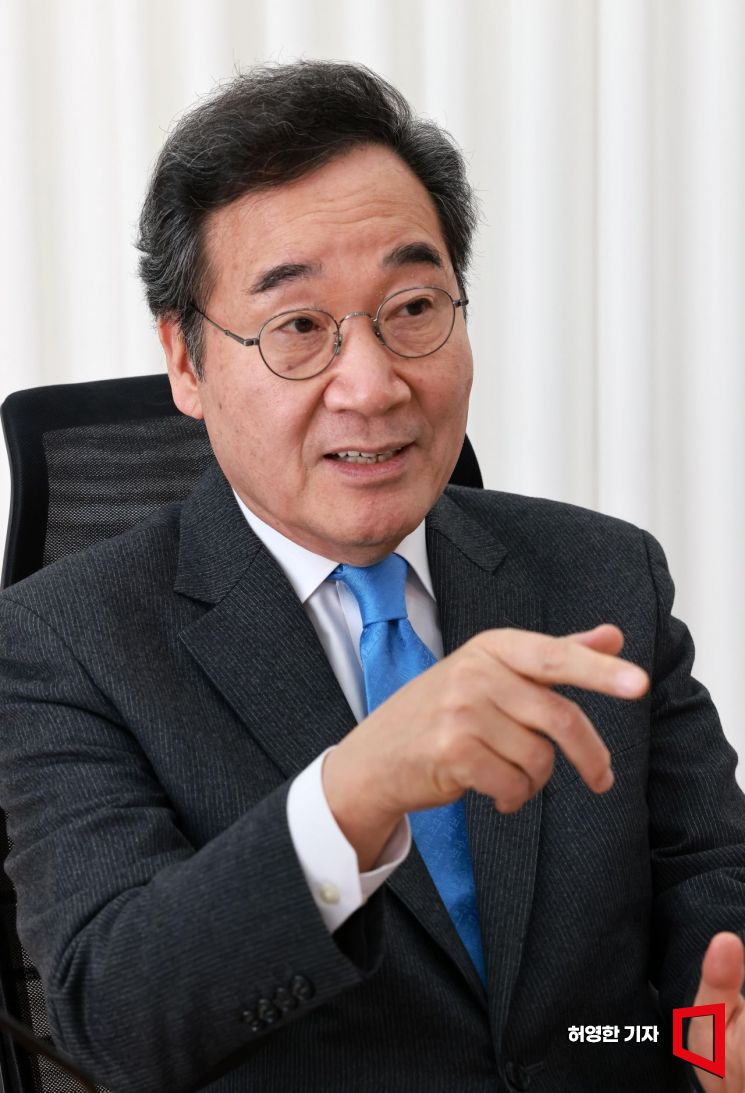
Senior Advisor Lee continued, "This week, the response to the president's judicial risks will begin in earnest," and explained, "This response consists of measures such as the Prosecutor Disciplinary Act, the Judge's Legal Distortion Crime, the expansion of Supreme Court justices, the introduction of a four-tier court system, the establishment of a National Sovereignty Committee above the Constitutional Court, the law to suspend trials for the president, and the deletion of presidential criminal charges. There is even an attempt to appoint the president's defense attorney as a justice of the Constitutional Court. This is a 'complete bulletproof' strategy that binds everything from prosecution indictments to Supreme Court trials and Constitutional Court reviews," he criticized.
He also commented on the Democratic Party's plan to pass an amendment to the Criminal Procedure Act on June 12, which would suspend all ongoing trials against the president, saying, "Trials would be suspended, but acquittals or dismissals would be allowed, while convictions would be prohibited. The reason for attempting to change the Criminal Procedure Act in such a bizarre way is because they lack confidence in their claim that trials against the president are already suspended under the Constitution alone." He added, "Privileges should be interpreted restrictively," and pointed out, "If the Criminal Procedure Act expands the privileges stipulated by the Constitution, it raises concerns of unconstitutionality."
He stated, "The 'immunity from prosecution' for the president under Article 84 of the Constitution does not apply to crimes committed before taking office, and the majority of scholars agree that trials for crimes committed before taking office should continue even after inauguration. 63.9% of the public also shares this view. The Democratic Party also used to hold this position." He continued, "Now, however, the Democratic Party argues that 'prosecution,' from which the president is exempt, also includes trials. But the Constitution distinguishes between 'prosecution,' which is decided by the National Assembly in cases of impeachment (Article 65), and 'adjudication,' which is the responsibility of the Constitutional Court (Article 111)."
He further criticized, "The Democratic Party is trying to overturn the Supreme Court's conviction for disseminating false information and obtain a dismissal verdict. This is a case of 'rule by law for the benefit of a particular person,' which destroys the rule of law." He added, "Both the risk of unconstitutionality and rule by law for the benefit of a particular person call into question the legitimacy of the administration. Questions about legitimacy become national risks both domestically and internationally. The judicial risk of one individual is escalating into a national risk in this emergency situation," he said.
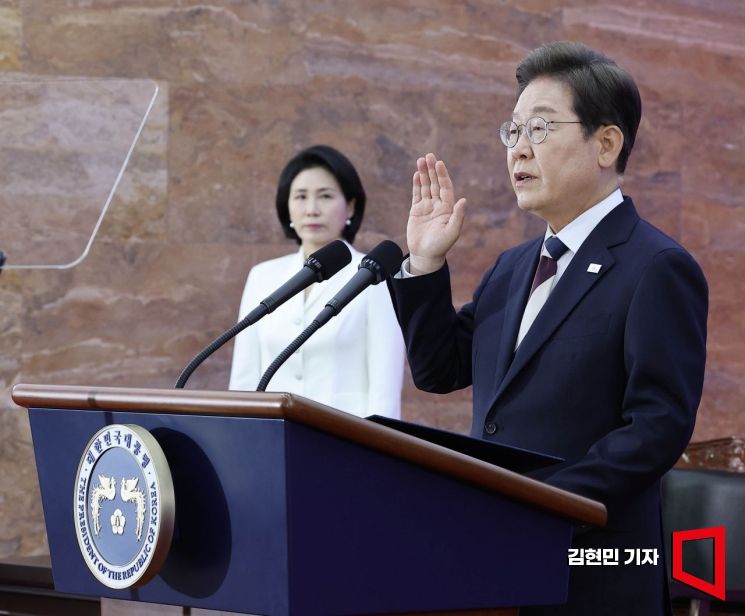 President Lee Jae Myung took the oath of office as the 21st president at the National Assembly in Yeouido, Seoul, on the 4th. Photo by Kim Hyun Min
The Democratic Party plans to process the amendment to the Criminal Procedure Act at the National Assembly plenary session scheduled for June 12. The amendment, led by the Democratic Party, passed the National Assembly Legislation and Judiciary Committee in April and is currently pending before the plenary session. The retrial hearing for President Lee's violation of the Public Official Election Act is reportedly scheduled for June 18.
Previously, Yongtae Kim, Emergency Response Committee Chair of the People Power Party, stated at a press conference on June 8, "The presidency is not a position to escape trials that began before taking office," and publicly questioned, "Is President Lee willing to stand trial for the alleged violation of the Public Official Election Act scheduled for June 18 and for the 'illegal remittance to North Korea' trial scheduled for next month?"
In response, Minsu Han, spokesperson for the Democratic Party, countered, "Are you saying the president should neglect state affairs and only attend trials? Trials must be suspended according to the Constitution." Sunmin Kim, acting leader of the National Innovation Party, also criticized, "The public chose President Lee knowing of the indictment," and added, "Any attempt by a few judges to overturn the people's choice is a judicial coup and an act of rebellion."
© The Asia Business Daily(www.asiae.co.kr). All rights reserved.
![Clutching a Stolen Dior Bag, Saying "I Hate Being Poor but Real"... The Grotesque Con of a "Human Knockoff" [Slate]](https://cwcontent.asiae.co.kr/asiaresize/183/2026021902243444107_1771435474.jpg)
















