Student Disciplined with School Service for "Infringing Teachers' Rights"
Court: "Remark Did Not Cause Sexual Disgust"
The court has ruled that an elementary school student's comment, "Teacher, you are pretty," made on the first day of the semester does not constitute an infringement of teachers' rights.
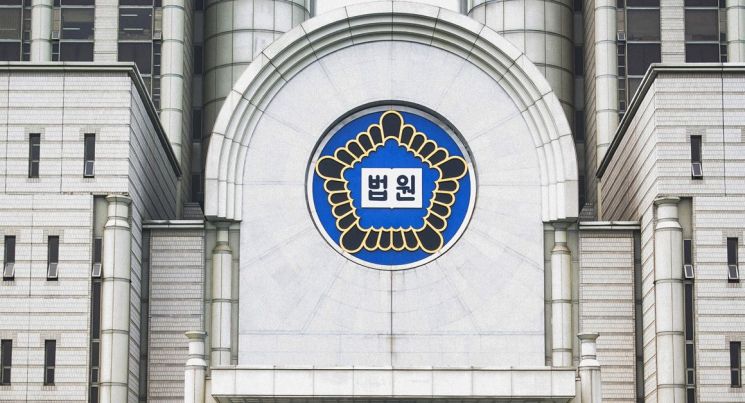
According to Yonhap News on June 8, the Chuncheon District Court Administrative Division 1 (Presiding Judge Kim Byungcheol) ruled in favor of student A in a lawsuit seeking to overturn a disciplinary order for school service, which had been filed against the head of the Wonju Office of Education. In January, A received a disciplinary measure from the Regional Committee for the Protection of Teachers' Rights, requiring two hours of school service.
On March 4 of last year, when A was in the fifth grade, he said to his homeroom teacher, Teacher B, after the opening ceremony, "Teacher, you are pretty. Will you go out with me?" The Regional Committee for the Protection of Teachers' Rights imposed disciplinary action, stating that A's remarks caused sexual discomfort to the teacher. However, A's side argued that he only said, "Teacher, you are pretty," and did not say, "Will you go out with me?" They also claimed that students telling teachers they are "pretty" or "handsome" is a perfectly normal expression of affection. At the time, A was only 11 years old and emphasized that the remark was not made with any sexual intent.
The court acknowledged, based on a handwritten statement from a student witness, that A did in fact say, "Will you go out with me?" However, the court determined that while the remark may have been inappropriate or could have embarrassed the homeroom teacher, it could not be considered a statement presupposing a physical relationship between a man and a woman, nor an act that would cause sexual humiliation or disgust from the perspective of an average, reasonable person.
The court also paid attention to the circumstances under which Teacher B reported A for interfering with educational activities. A had been a victim of school violence from the beginning of the semester, and both A and his parents had sought help from Teacher B. When the situation worsened, they filed a complaint against the perpetrators, and also reported Teacher B for child abuse. Some of the perpetrators were later disciplined for school violence, and some received juvenile protection measures from the court. The court found it questionable that Teacher B reported A as a student infringing on teachers' rights only after these events, raising doubts about the timing and motivation of the report.
The court also ordered the cancellation of the special education order of six hours imposed on A's parents by the Regional Committee for the Protection of Teachers' Rights, which had been issued on the grounds that their request for Teacher B to pay closer attention due to the school violence issue constituted interference with educational activities.
© The Asia Business Daily(www.asiae.co.kr). All rights reserved.
![Clutching a Stolen Dior Bag, Saying "I Hate Being Poor but Real"... The Grotesque Con of a "Human Knockoff" [Slate]](https://cwcontent.asiae.co.kr/asiaresize/183/2026021902243444107_1771435474.jpg)















