"Mobilizing All National, Corporate, and Citizen Resources Is Essential"
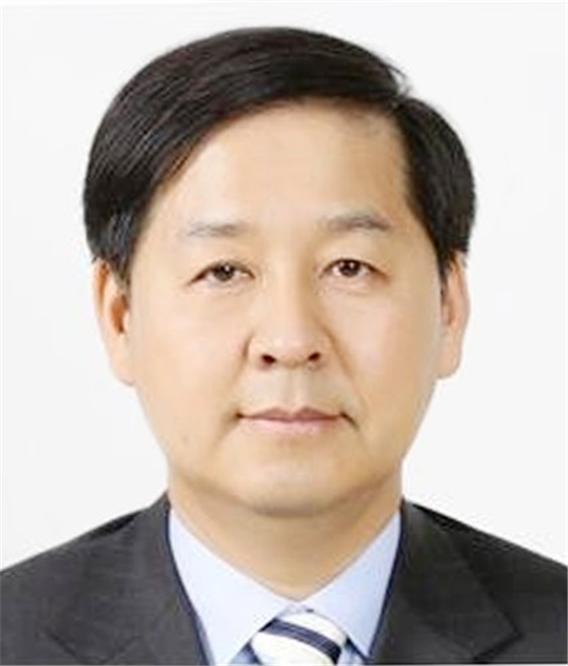
On June 5, Koo Yooncheol, former Chief of the Office for Government Policy Coordination and a leading candidate for the first Deputy Prime Minister and Minister of Economy and Finance under the Lee Jaemyung administration, published a policy proposal advocating for full-scale national investment in AI-related projects.
This book outlines South Korea's response strategy to the rapid advancement of the AI era from the perspective of a policy expert with extensive experience in national policymaking. It incorporates knowledge and insights gained from exchanges with global AI experts, on-the-ground understanding of the AI market, and awareness of global market trends over the past two years, as well as 33 years of experience and expertise acquired while serving as a policy expert in the Korean government.
Koo focused not on AI technology itself, but on the impact of the AI era on human society, the issues of AI regulation and governance needed for human-AI coexistence, and related challenges. The book also includes recommendations on the key elements South Korea must prepare for in the AI era and the directions the country should take in response to these changes.
Chapter 1 examines the relationship between humans and the AI era. Major topics include AI ethics, human employment, human happiness, and basic income. Chapter 2 focuses on governance issues for managing and controlling AI in the AI era. It covers the management of AI from the manufacturing stage, registration and management during AI operation, transfer of AI ownership, recognition of copyrights produced by AI, and issues related to AI-generated income and taxation.
Chapter 3 highlights the core elements considered crucial in the AI era. It explores the significance of large language models (LLMs) developed primarily in the United States, the implications of China's DeepSeek, the importance of physical AI development, robotics, silicon carbide power semiconductors, AI data boxes, and AI rings for South Korea.
The final Chapter 4 discusses and forecasts the direction South Korea should pursue in the AI era. It emphasizes unique strategies for developing AI-related technologies, nurturing AI talent, making South Korea a global leader through AI, and attracting a UN-affiliated AI organization to the country. The book also highlights the need for institutional and policy support, focusing on the innovation of national AI governance structures.
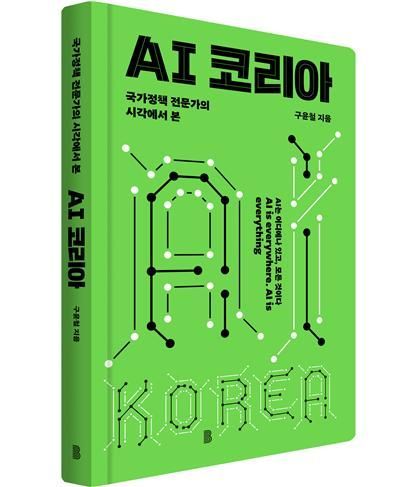
The book categorizes South Korea's response to the AI era into four areas: technology development and human resource training, actual value creation through AI, leading the establishment of global international order, and innovation in the governance of national institutions. In particular, it stresses the importance of attracting international AI organizations to South Korea to lead discussions on establishing various global standards and guidelines.
The author, Koo, passed the civil service exam in 1989 and began his career at the Ministry of Finance, later serving at the Ministry of Economy and Finance, the Planning and Budget Committee, the Ministry of Planning and Budget, the Presidential Office, international organizations, and the Ministry of Economy and Finance, where he handled national policies and budgets. He served as Director General for Budget and the 2nd Vice Minister at the Ministry of Economy and Finance, and concluded his 33-year public service career as Chief of the Office for Government Policy Coordination under the Prime Minister in 2022. His experience as Presidential Secretary for Personnel Affairs (national personnel) and Chief of the Presidential Office for National Affairs (comprehensive national management) has made him a strong candidate for the next Deputy Prime Minister for Economic Affairs.
He graduated from the Department of Economics at Seoul National University and the Department of Law at Korea National Open University, earned a master's degree in public administration from Seoul National University, a master's degree in public policy and administration from the University of Wisconsin?Madison, and a Ph.D. in business administration from the Department of Trade and Logistics at Chung-Ang University.
Currently, he serves as a distinguished professor at the Department of Economics at Seoul National University, a distinguished professor at Korea National Open University, a distinguished professor at Mokpo National Maritime University, chairman of the Win-Win Development Committee at Daejin University, a distinguished research fellow at Jeonbuk National University, and a planning and development committee member at the College of Nursing at Kyungpook National University. In November last year, he published "Revolution Korea," which presents an execution strategy for Korea's grand innovation.
© The Asia Business Daily(www.asiae.co.kr). All rights reserved.
![Clutching a Stolen Dior Bag, Saying "I Hate Being Poor but Real"... The Grotesque Con of a "Human Knockoff" [Slate]](https://cwcontent.asiae.co.kr/asiaresize/183/2026021902243444107_1771435474.jpg)
















