Major International Media Analyze Election Results
Key Issues: Economy, Diplomacy, and Trade
Tariff Negotiations with Trump Also a Challenge
As Lee Jae-myung, the Democratic Party presidential candidate, was elected as the 21st president in the early election triggered by former President Yoon Suk-yeol's martial law crisis, major international media outlets focused their attention, describing him as "an opposition leader returning after turmoil" and "a president who promised the restoration of democracy." With keen interest in whether South Korea, after a prolonged period of political instability, can regain political stability through this election, foreign media identified 'economy, trade, and diplomacy' as the key challenges facing the new administration. In particular, they predicted that tariff negotiations with U.S. President Donald Trump would be an early test for the new government.
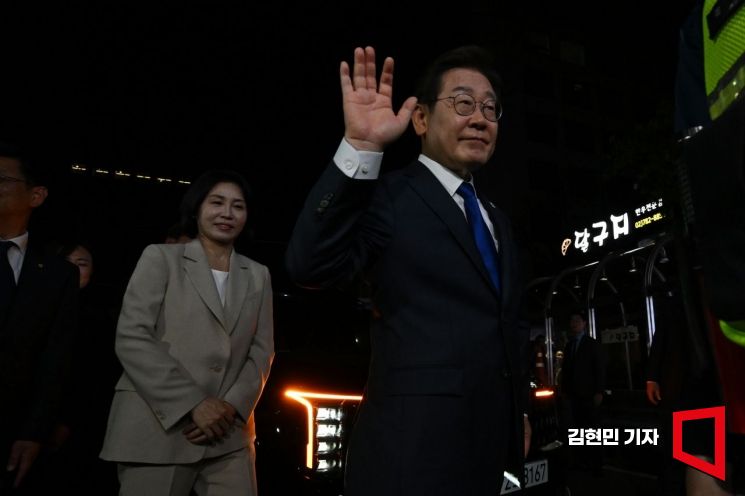 Lee Jae-myung, the Democratic Party presidential candidate who is certain to be elected as the 21st president, is entering the central party office in Yeouido, Seoul, on June 4, 2025, to thank the campaign committee chairpersons. Photo by Kim Hyunmin
After Political Turmoil, Opposition Leader Lee Jae-myung Elected... Judgment on Former President Yoon Decided the Outcome
The Wall Street Journal (WSJ) reported on June 4 that South Korea "welcomed a new president after months of political turmoil" with the election of President Lee. The WSJ highlighted that President Lee has expressed his intention to strengthen the alliance with the United States while also pursuing pragmatic relations with China and Russia, noting the potential for conflict with President Donald Trump's policy of pressuring China.
President Lee has stated that "the South Korea-U.S. alliance is the basic axis of diplomacy," but also emphasized balanced diplomacy by saying, "That does not mean we can rely entirely on the United States."
The WSJ also noted that President Lee returned to politics and won the election even after being attacked with a weapon last year, reporting that "his narrative of considering life itself as a bonus left a strong impression on voters."
The UK’s Financial Times (FT) evaluated that "the election of the progressive President Lee will bring stability to South Korean politics for the first time in a long while." The FT analyzed that "with his party already controlling the National Assembly, President Lee has become the most powerful president in recent decades."
The FT also pointed out that the Trump administration is imposing high tariffs on South Korean steel and automobiles, and reported that President Lee may declare an 'economic wartime system' and embark on trade negotiations with the United States.
The New York Times (NYT) interpreted President Lee's victory as more of a judgment on the Yoon Suk-yeol administration than support for specific policies. The NYT analyzed that "after former President Yoon declared martial law and was impeached, South Korea went through three acting presidents and experienced extreme turmoil," and that "this election was a decisive response to that chaos."
The NYT also noted that President Lee may face criminal trials during his term, adding that "political uncertainty may persist for some time."
The BBC reported that "President Lee has returned to office amid public anger and fatigue," and assessed that "the people chose him in reaction to former President Yoon Suk-yeol's attempt at martial law and the ensuing political chaos."
The BBC quoted Park Sungmin, CEO of Min Consulting, as saying, "Voters valued the defense of democracy more than policies," and reported, "This election was a clear rejection of the ruling party and showed what South Korean democracy prioritizes."
Nihon Keizai Shimbun (Nikkei) reported that "power shifted from conservatives to progressives for the first time in three years," and that "throughout the campaign, President Lee promised to heal the divisions exposed by the martial law crisis and to pursue political reform to ensure that politics never again uses the military."
Nikkei also reported that President Lee emphasized "pragmatic diplomacy prioritizing national interest," mentioning both a conciliatory stance toward China and North Korea, as well as the importance of the South Korea-U.S. alliance and South Korea-Japan relations. Additionally, it pointed out that the failure of the conservative bloc to unite at the end of the campaign further solidified President Lee's landslide victory.
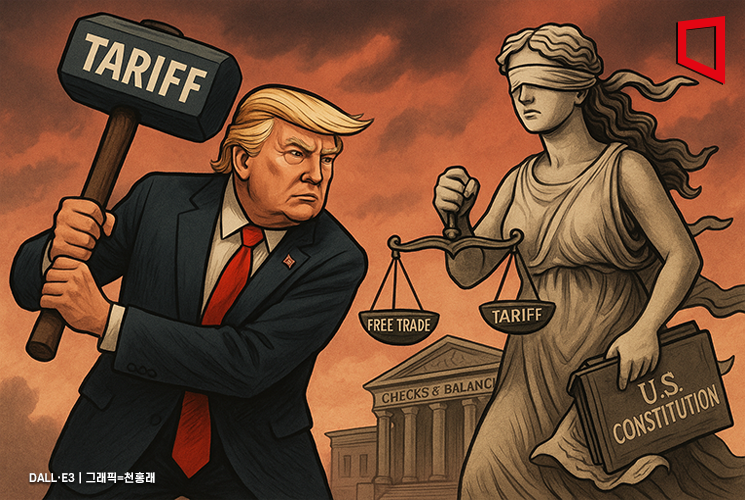
South Korea Holds Early Election After Turmoil... Challenges Facing the Next President
Major international media are focusing on how President Lee will resolve domestic political conflicts and pursue pragmatic diplomacy to safeguard national interests amid U.S.-China tensions and trade pressure.
Currently, about 28,500 U.S. troops are stationed in South Korea, which also hosts the largest overseas U.S. military base. Accordingly, there is analysis that President Trump is likely to demand an increase in South Korea's defense cost sharing, the removal of non-tariff barriers, and restraint from interfering in negotiations with North Korea. Darcy Draut, a researcher at the Carnegie Endowment for International Peace, stated, "President Lee is likely to put the brakes on U.S. demands," and predicted, "Relations between the two countries could deteriorate rapidly."
The BBC emphasized that trade negotiations with the Trump administration, defense cost sharing, and the restoration of North Korea-U.S. diplomacy are urgent challenges facing President Lee, stating, "Restoring domestic unity and diplomatic security are both pressing tasks."
The NYT reported, "President Lee will face difficult challenges from the outset of his term," noting that "he will have to begin tariff negotiations with President Trump of the United States amid a prolonged economic downturn. In particular, the Trump administration is imposing high retaliatory tariffs on South Korean steel and automobiles and is even considering expanding a 25% 'reciprocal tariff.'"
Although the U.S.-China tariff war is currently in a truce, tensions between the two countries continue, drawing attention to President Lee's future diplomatic policy of pursuing balanced diplomacy between the U.S. and China. The WSJ pointed out, "His diplomatic vision of maintaining a close alliance with the United States while pursuing balanced diplomacy with China is expected to have a significant impact not only on the situation on the Korean Peninsula but also on U.S.-China relations."
The WSJ also recalled President Lee's statement last month that "the South Korea-U.S. relationship is the basic axis of diplomacy, but we should not rely entirely on the United States," expressing concern that "this could clash with President Trump's ongoing strategy to contain China."
President Lee is expected to meet President Trump for the first time if he is invited to the Group of Seven (G7) summit in Canada on June 15.
There are also concerns that, because he will take office immediately without a separate transition committee, there will be insufficient time to refine and prepare policies. Unlike the usual practice of a roughly two-month transition period, he must begin governing immediately after the election.
Nikkei reported, "South Korea usually operates a transition committee for two to three months after a presidential election to nominate a prime minister, appoint Blue House staff, and coordinate policies, but this time, the new government will be launched immediately after the election."
France's Le Figaro reported that the next president faces the challenge of responding to the "unpredictable" threat from North Korea, while also balancing between the United States, an ally, and China, a major trading partner, amid their confrontation.
© The Asia Business Daily(www.asiae.co.kr). All rights reserved.
![Clutching a Stolen Dior Bag, Saying "I Hate Being Poor but Real"... The Grotesque Con of a "Human Knockoff" [Slate]](https://cwcontent.asiae.co.kr/asiaresize/183/2026021902243444107_1771435474.jpg)
















