Poet Jungyang, known for works such as "Behind My Old House" and "With My Eyes Closed," passed away on May 31 after a long battle with illness. He was 83 years old.
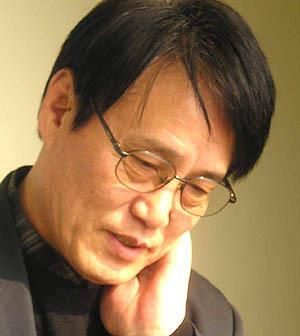
Born in 1942 in Gimje, North Jeolla Province, Jungyang graduated from Dongguk University with a degree in Korean Language and Literature. While working as a teacher, he made his literary debut in 1968 when his poem "Looking at the Ceiling" was selected in the New Year's Literary Contest of the Daehan Daily. In 1977, he also won the Chosun Ilbo's New Year's Literary Contest with his critique "The Myth of Innocence" on the poetry of Yun Dongju.
Jungyang published poetry collections including "A Flock of Crows," "Dream of an Empty House," "The Weight of the Living," "A Village Where Snow Falls," "There Were Many Times I Wanted to Lose My Way," "The Traveler Still," "When I Came of Age," and "Stumbling and Groping." In recognition of his literary achievements, he received numerous awards during his lifetime, such as the Moak Literary Award, Beautiful Writer Award, Baek Seok Literary Award, Koo Sang Literary Award, as well as the Minister of Education Commendation and the Hwangjo Geunjeong Medal.
He wrote poetry that delicately illuminated the pain of the times and the human psyche, having personally endured the turbulence of modern Korean history, including military dictatorship and the 5·18 Gwangju Democratization Movement. Even in harsh realities, his poetry comforted readers with its unwavering affection for humanity, while constantly engaging in self-reflection.
Jungyang emphasized that capturing the essence of life in plain and simple language was the poet's lifelong task. At a publication event during his life, he remarked, "Difficult poems are easy to write, but easy poems are hard to write."
His poem "Behind My Old House" nostalgically recalls the backyard of his childhood home, expressing a deep longing for things lost. "With My Eyes Closed" is a work of self-reflection, questioning whether he had turned away from the complexities and hardships of reality.
Jungyang was mainly active in the North Jeolla region. In 2016, he joined forces with poets such as Ahn Dohyun and Kim Yongtaek, and other writers based in North Jeolla, to establish the local publishing house "Moak," striving to promote literary diversity and the sustainability of publishing.
His family history also served as a motif for fiction. In Yun Heunggil's short story "Monsoon," Jungyang's father is depicted as having been involved in socialist movements, suffering imprisonment due to coal mine and railway strikes, and going missing during the Korean War. Yun Heunggil, a close friend, described Jungyang as "someone who enriches a poor heart, shares inspiration, and teaches how people can understand and love one another."
Jungyang was also an educator. In the 1960s, he taught students as a middle and high school teacher, and from 1980, he served as a professor in the Department of Korean Language and Literature at Woosuk University, nurturing future generations.
He is survived by his wife Lim Jeongsun, son Jung Beom, and daughter Jung Rikyung. The funeral is being held at Yonsei University Yongin Funeral Hall. The burial is scheduled for June 2.
© The Asia Business Daily(www.asiae.co.kr). All rights reserved.
![Clutching a Stolen Dior Bag, Saying "I Hate Being Poor but Real"... The Grotesque Con of a "Human Knockoff" [Slate]](https://cwcontent.asiae.co.kr/asiaresize/183/2026021902243444107_1771435474.jpg)















