Housing Market: Polarization Deepens Amid Deliberate Exclusion
Rental Market Polarization by Capital Strength... Shifting Toward Corporate Funds
The real estate market is rapidly being reorganized around large-scale institutional and corporate investors. Analysts note that as 'big money'?rather than individual investors?leads transactions, market polarization is spreading beyond regional disparities to gaps among market participants themselves.
On June 1, Shin Young Securities released its outlook report for the second half of the year, themed 'Polarization and Populism,' diagnosing that "polarization and populism are being observed everywhere ahead of the 21st presidential election." The report particularly pointed out that the gap in participation, depending on capital strength, is becoming more pronounced in the redevelopment and rental housing sectors.
Housing Market: Polarization Deepens Amid Deliberate Exclusion
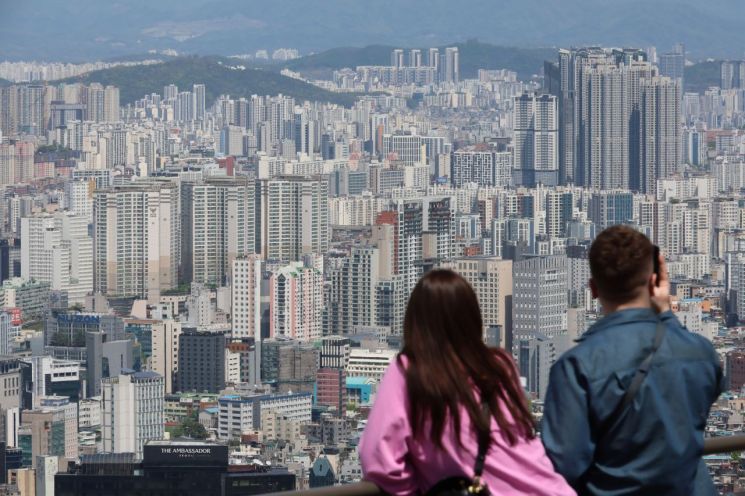
Park Sera, a researcher at Shin Young Securities, presented two main trends for the real estate market in the second half of the year. One is the expansion of public investment for balanced national development. All presidential candidates have pledged to expand metropolitan railway networks and infrastructure investment. They have also announced plans to relocate the National Assembly and the presidential office to Sejong City, and to foster renewable energy development in specialized secondary battery industrial complexes. Park noted, "Infrastructure investments such as the creation of industrial complexes and improvements to transportation networks can stimulate local real estate markets and contribute to a recovery in the construction sector."
The other trend is the contraction of housing welfare. Park stated, "Housing policy is expected to become more passive compared to the past," adding, "While 'housing supply' will likely emerge as the biggest issue in the second half of the year, the prevailing approach will be to rely on the market and the private sector." She further explained, "Polarization will intensify amid deliberate exclusion, and the gap between asset classes is expected to widen further in this process."
Although all major candidates in the 21st presidential election have pledged to 'expand housing supply,' they are being criticized for lacking practical alternatives or implementation plans. Specific plans such as targets or timelines for public housing supply are missing, with most pledges focusing on less burdensome measures such as simplifying redevelopment procedures or increasing floor area ratios. This is interpreted as a result of strategic silence to avoid policies that could provoke voter backlash, given the perception that the Moon Jae-in administration’s real estate policies?intended to stabilize housing for ordinary citizens?ultimately led to rising home prices and contributed to the administration's failure to secure a second term.
Park observed that in the current market, asset holders are preferring vacancies over declining asset values due to falling rents, resulting in reduced consumption and an economy where only assets remain. She said, "Despite a contraction in consumption and a stagnant real economy, asset prices have continued to rise." In this paradoxical situation, where 'expensive properties sell better,' a small number of wealthy individuals are flocking to high-priced real estate, while the main apartment-buying demographic?those in their 30s and 40s?are finding it increasingly difficult to enter the market due to financial barriers. She added, "Following the gap between Seoul and other regions, even within Seoul, differences in returns are widening, further deepening polarization."
The redevelopment market is also transforming into one that only those with sufficient capital can enter. Park noted, "Redevelopment projects are being pursued mainly by complexes that can bear the sharply increased construction costs and financial interest burdens." These complexes are located in prime areas with high existing prices, making the market more receptive to higher pre-sale prices. Park predicted, "Major redevelopment projects in key areas such as Yeouido, Mok-dong, and Apgujeong in Seoul are likely to benefit large construction companies," adding, "With a limited number of participating companies, competition is less intense, allowing for both business expansion and profit generation." As a result, only large companies with sufficient capital, strong brands, and proven track records are able to participate.
Rental Market Polarization by Capital Strength... Shifting Toward Corporate Funds
Amid these trends, Park assessed that the real estate market is "being reorganized around corporate and institutional funds, the ultimate end of polarization." She added, "As rental demand increases, the share of professional rental housing operators that guarantee service quality in prime locations is expected to grow," and noted, "The domestic corporate rental housing market is beginning to blossom."
In fact, global institutions are already investing extensively in the domestic rental housing market. In January of this year, the Canada Pension Plan Investment Board (CPPIB), a major global investor, partnered with domestic rental housing company MGRV to launch a joint venture worth 500 billion won, with CPPIB providing 95% of the investment.
US-based real estate investment firm Hines invested 35 billion won in a 106-unit rental housing project in Sinchon, Seodaemun-gu, Seoul, in December of last year. In February of this year, Morgan Stanley, one of the world's top three investment banks, launched a residential development project worth up to 133 billion won in Geumcheon-gu (195 units) and Seongbuk-gu (60 units), partnering with Korean real estate developer SK D&D. UK-based real estate investment company M&G Real Estate established its Korean office in August of last year and began investing in multiple assets in downtown Seoul in the first half of this year. The amount invested has not been disclosed.
UK asset management firm ICG also established a 300 billion won fund to remodel the Myeongdong Hotel (112 rooms) into co-living or lodging facilities. At the end of last year, global private equity giant Kohlberg Kravis Roberts (KKR) participated in a project to convert The State Seonyu Hotel in Yeongdeungpo, Seoul, into a residential property, and is simultaneously working on converting an officetel in Dongdaemun-gu (98 units).
In addition, large private equity funds such as US-based Warburg Pincus and Invesco Real Estate are expanding into senior housing and active living (independent senior housing) assets in key areas of Seoul. Warburg Pincus participated by jointly investing in three high-end living facilities in Bangbae-dong, Seocho-gu, Seoul. In July of last year, US senior living specialist Thrive also established a joint venture with Korean corporate housing rental management company GH Partners to operate active and independent living communities.
The inflow of institutional funds could lead to the growth of related companies. Park stated, "Institutions require expertise at every stage of development and operation in order to manage long-term funds," adding, "This will create opportunities for capable developers and asset management companies (AMCs)."
© The Asia Business Daily(www.asiae.co.kr). All rights reserved.
![Clutching a Stolen Dior Bag, Saying "I Hate Being Poor but Real"... The Grotesque Con of a "Human Knockoff" [Slate]](https://cwcontent.asiae.co.kr/asiaresize/183/2026021902243444107_1771435474.jpg)















