Analysis of 329 Articles of North Korean Criminal Law
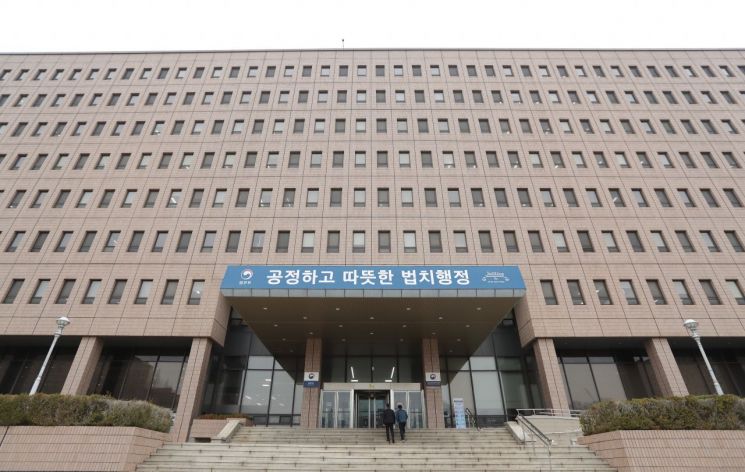
The Ministry of Justice announced on May 30, 2025, that it has published the "Commentary on North Korean Criminal Law," which analyzes 329 articles of North Korea's criminal code.
The commentary on North Korean criminal law was produced with the participation of domestic criminal law scholars and legal professionals. The Ministry of Justice explained that the commentary provides explanations of the elements of each article in North Korea's criminal law and includes comparative legal research with the criminal laws of South Korea, Russia, China, and Vietnam. The publication also contains article-by-article commentaries on the Reactionary Ideology and Culture Rejection Act and the Drug Crime Prevention Act, which, along with North Korean criminal law, illustrate changes in North Korean society.
According to the Ministry of Justice, the amendments to North Korea's criminal law in December 2023 introduced the death penalty into special criminal statutes, such as the Reactionary Ideology and Culture Rejection Act and the Drug Crime Prevention Act. Following a resolution by the Central Committee of the Workers' Party of Korea, which declared inter-Korean relations to be those of "two hostile states, two belligerents at war," related provisions such as the "Crime of Suppressing the Korean National Liberation Movement" were deleted.
In addition, with the enactment of the Reactionary Ideology and Culture Rejection Act in December 2020, North Korea strengthened its control over the influx of external culture, including the so-called Korean Wave (Hallyu). In response to the regime crisis caused by the influx of South Korean culture?such as the use of the term "oppa"?among the so-called "Jangmadang Generation," North Korea intensified punishments, including the imposition of the death penalty. While control and punishment for the influx of external culture were strengthened, previous criminal law provisions related to the import of decadent culture and the "Ryupyo" crime were deleted.
Yu Taeseok, Acting Director-General of the Legal Affairs Bureau, stated, "We hope that the publication of this commentary will lay the foundation for future research to efficiently address the integration of legal systems between South and North Korea. The Ministry of Justice will continue its efforts to prepare for the integration of legal systems and institutions on the Korean Peninsula."
© The Asia Business Daily(www.asiae.co.kr). All rights reserved.
![Clutching a Stolen Dior Bag, Saying "I Hate Being Poor but Real"... The Grotesque Con of a "Human Knockoff" [Slate]](https://cwcontent.asiae.co.kr/asiaresize/183/2026021902243444107_1771435474.jpg)















