Seoul City Refutes Mapo District's "Agreement Invalid" Claim Point by Point
"Ownership Belongs to Seoul, Mapo Has No Operational Authority"
Mapo Calls It "One-Sided Assertion"... Legal Action Likely
The Seoul Metropolitan Government has decided to continue normal operations of the Mapo Resource Recovery Facility (waste incineration plant). There have been ongoing differences between Seoul and Mapo-gu regarding the installation of a new incineration plant and the renewal of the agreement for the existing facility. However, Seoul maintains that there are no legal issues with the operation of the facility.
On the 30th, the Seoul Metropolitan Government responded to Mapo-gu's recent claim that the agreement on the use of the Mapo Resource Recovery Facility is invalid by stating, "The Mapo Resource Recovery Facility is a metropolitan waste treatment facility established by the Seoul Metropolitan Government. Ownership belongs to Seoul, and it is operated through private consignment in accordance with regulations. Mapo-gu is simply the district where the facility is located and does not have ownership or operational authority over the facility."
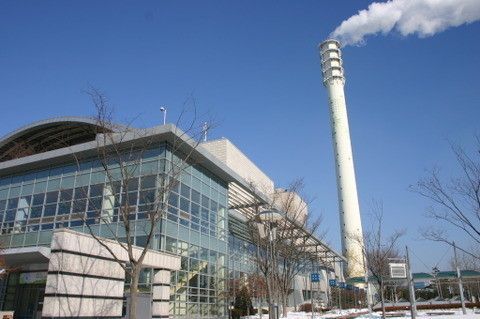
This incineration plant is a facility under the jurisdiction of Seoul, located in Mapo-gu. Since 1997, five districts?including Mapo-gu, Jung-gu, Jongno-gu, Yongsan-gu, and Seodaemun-gu?have jointly used the facility.
The issue arose as the expiration of the existing agreement, which had a 20-year term and was signed in 2005, approached. On May 16, Seoul signed a revised agreement on the joint use of the Mapo Resource Recovery Facility with four districts?Jung-gu, Jongno-gu, Yongsan-gu, and Seodaemun-gu?and agreed to extend the joint use period until the facility is closed.
Mapo-gu immediately objected. The district insists that the agreement is invalid because it was pushed through without Mapo-gu's consent. However, Seoul claims that it faithfully completed the required procedures, stating that it requested consultations with the Mapo-gu Office five times in writing and even visited the office in person during the process.
In particular, Seoul referred to Article 3, Paragraph 4 of the city ordinance revised in 2005, which stipulates that, to improve the operational efficiency of resource recovery facilities, 'consultation' must be held with the head of the district where the facility is located and the Residents' Support Council when bringing in waste from outside the district. Seoul also cited Supreme Court precedent, arguing that 'consultation' between agencies means seeking advice, not necessarily following the other party's opinion in making decisions.
Mapo-gu takes a different view. The district stated that Seoul's visits to the office were merely formal and that no real consultation took place. Mapo-gu also raised issues with the fact that its longstanding demands?such as a one-year term for the agreement and a requirement that more than half of the members of the facility's operations committee be Mapo-gu officials and members of the Mapo Residents' Support Council?were not accepted.
Seoul argues that if the use of the current incineration plant is suspended, the remaining four districts would unfairly bear approximately 18.9 billion won in additional annual economic costs. Currently, public incineration costs around 17.4 billion won per year, while private incineration is known to cost about 36.3 billion won annually. Furthermore, since they began using the Mapo facility, the four districts have paid Mapo-gu a lump sum of 4.2 to 6.7 billion won and annually contributed 20 percent of the facility's waste intake fees to a development fund.
However, Mapo-gu is considering legal action if the revised agreement is not invalidated. Park Kangsu, mayor of Mapo-gu, stated, "There is already a precedent where Seoul lost an administrative lawsuit due to procedural flaws in its unilateral push for a new incineration plant," adding, "We will respond legally to Seoul and stand firmly with local residents."
Seoul and Mapo-gu are also engaged in a legal dispute over plans to build a new incineration plant with a capacity of 1,000 tons in Sangam-dong. A total of 1,850 Mapo-gu residents filed a lawsuit against Seoul, citing procedural flaws, and the Seoul Administrative Court ruled in favor of the residents in the first trial on January 1. Seoul has appealed the decision. A Seoul official stated, "Even if Mapo-gu does not sign the joint use agreement, we do not intend to block Mapo-gu's waste from being brought into the Seoul facility," adding, "We will continue to operate the facility normally and make active efforts to communicate with Mapo-gu."
© The Asia Business Daily(www.asiae.co.kr). All rights reserved.
![Clutching a Stolen Dior Bag, Saying "I Hate Being Poor but Real"... The Grotesque Con of a "Human Knockoff" [Slate]](https://cwcontent.asiae.co.kr/asiaresize/183/2026021902243444107_1771435474.jpg)















