The 'Medical-Nursing-Care Integrated Support' model, which aims to help elderly residents with difficulties in daily life maintain a healthy lifestyle, is gaining attention. Among such initiatives, the pilot project being conducted in Jincheon County, North Chungcheong Province, is being highlighted as an exemplary case of a community-based integrated care model.
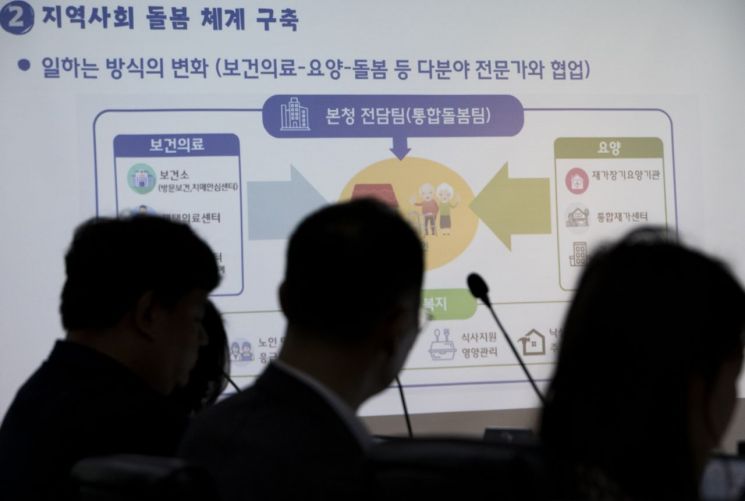 Press tour briefing for the 'Medical-Nursing-Care Integrated Support Pilot Project' held by the Ministry of Health and Welfare and Jincheon County on the 20th / Provided by the Ministry of Health and Welfare
The Ministry of Health and Welfare is preparing for nationwide expansion in anticipation of the 'Integrated Care Support Act' coming into effect on March 27 next year. On the 20th, the Ministry of Health and Welfare and Jincheon County held a press tour briefing for the 'Medical-Nursing-Care Integrated Support Pilot Project' and emphasized, "The core of the integrated model is to proactively manage and reduce the number of people qualifying for long-term care grades."
The key aspect of Jincheon County's integrated care model is its 'home-visit medical service,' in which teams composed of nurses, doctors, and social workers provide tailored care by regularly visiting discharged patients or elderly people with mobility difficulties. The essential feature is that healthcare and welfare professionals work together as a team to deliver all necessary services to recipients in a single visit.
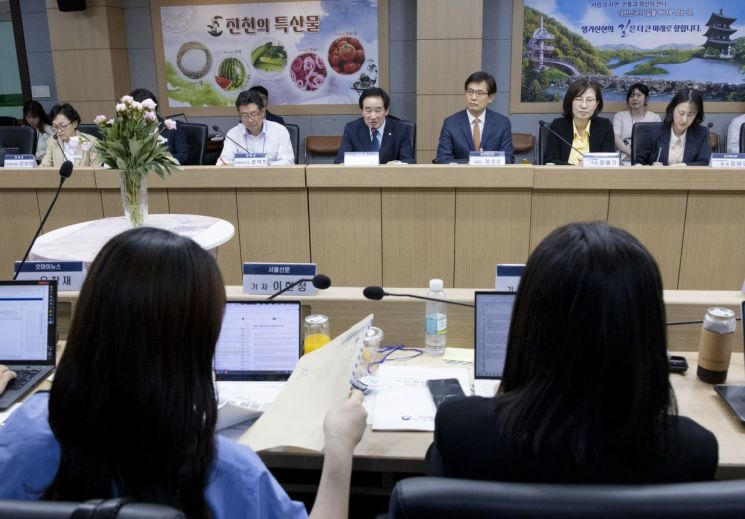 I attended the press tour briefing of the 'Medical-Nursing-Care Integrated Support Pilot Project' held by the Ministry of Health and Welfare and Jincheon County on the 20th / Provided by the Ministry of Health and Welfare
Lee Jaechul, an official from the Jincheon County Resident Welfare Division who presented on the project, explained, "Before the integrated care project was implemented, each welfare system operated independently," and added, "For example, the welfare department provided meal services, and the health department separately operated dementia support centers. The integrated care system, however, allows experts from each field to meet and jointly provide services tailored to the needs of each recipient."
Jincheon County is focusing on proactively identifying individuals in the community who require integrated care services. Lee explained, "Many patients discharged from hospitals in poor health who did not receive adequate care services eventually deteriorated and became eligible for long-term care grades," and added, "We have established a system to quickly identify elderly people being discharged from hospitals and connect them to care services immediately upon their return to the community."
Through the 'Saenggeo Jincheon Home Medical Center,' Jincheon County provides regular home-visit healthcare services for elderly people with mobility difficulties. Teams of nurses, doctors, and social workers visit homes once or twice a month to support health management. In addition, through the integrated nursing center program 'Our Neighborhood Care Station,' the county works with community general hospitals to identify discharged patients returning to Jincheon County and provide them with integrated medical services including home visits, nursing, and nutrition support.
Decrease in Long-Term Care Recipients... Estimated Savings of 1.5 Billion KRW
Jincheon County reports that the proportion of long-term care recipients has decreased since the implementation of the integrated care model. According to Jincheon County, the proportion of long-term care recipients fell by 4.3% between 2022 and 2023, resulting in an estimated savings of over 1.5 billion KRW in care benefits.
This is interpreted as a result of 'community care,' which helps individuals live independently in their communities instead of entering facilities. A Jincheon County official stated, "Increasing the rate of home-based end-of-life care is our goal," and explained, "We are focusing on enabling elderly people to pass away at home rather than in facilities."
The Ministry of Health and Welfare plans to expand the integrated care project to local governments nationwide starting next year. Lim Eulgi, Director of Elderly Policy at the Ministry of Health and Welfare, stated, "Jincheon County has established a model that leverages local characteristics to minimize entry into care facilities through post-discharge care, despite the poor medical infrastructure typical of rural areas," and added, "We will provide both technical and budgetary support with the aim of nationwide expansion by 2026."
© The Asia Business Daily(www.asiae.co.kr). All rights reserved.
![Clutching a Stolen Dior Bag, Saying "I Hate Being Poor but Real"... The Grotesque Con of a "Human Knockoff" [Slate]](https://cwcontent.asiae.co.kr/asiaresize/183/2026021902243444107_1771435474.jpg)
















