Follow Preventive Guidelines When Consuming Seafood and Contacting Seawater
Damyang County in South Jeolla Province urged residents to follow preventive guidelines after the first case of vibriosis was reported this year in South Chungcheong Province on May 10, ahead of the high-risk infection season.
Vibriosis is caused by bacteria that primarily inhabit coastal marine environments, such as seawater, tidal flats, and seafood. The infection occurs most frequently from May to September, when seawater temperatures rise above 18 degrees Celsius.
Infection can occur through the consumption of seafood or contact with seawater. Symptoms begin with acute fever, chills, low blood pressure, abdominal pain, vomiting, and diarrhea. Within 24 hours after infection, severe skin lesions such as rashes, swelling, and hemorrhagic blisters may appear on the legs.
In particular, people with chronic liver disease, those with chronic illnesses such as diabetes, immunocompromised individuals, and organ transplant recipients are considered high-risk groups. For these groups, the fatality rate is high, so extra caution is necessary.
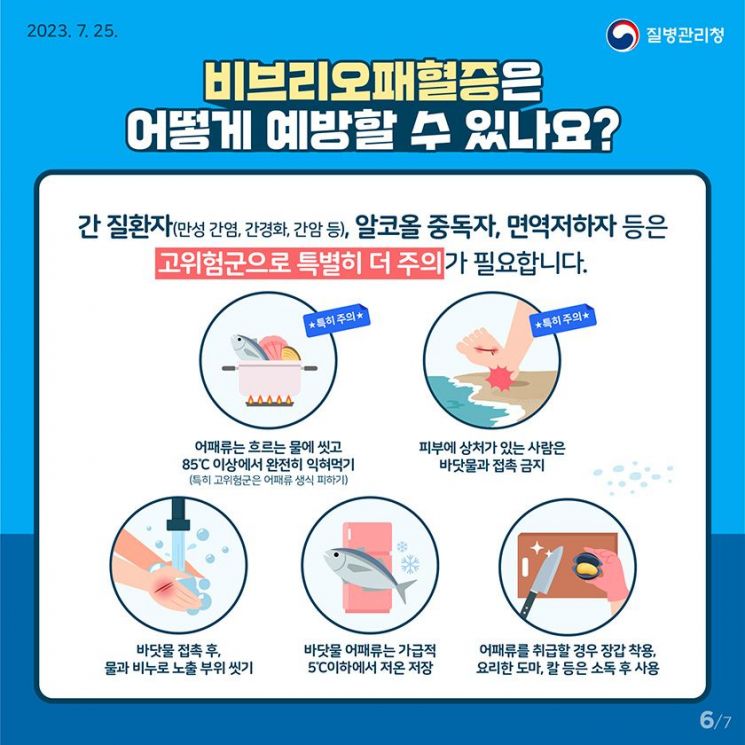
The county provided preventive guidelines that residents can practice in daily life. The most basic method of prevention is to thoroughly wash seafood under running water and cook it thoroughly at temperatures above 85 degrees Celsius. Consuming raw or undercooked seafood increases the risk of infection and should be avoided.
If you have wounds on your skin, it is best to avoid contact with seawater or tidal flats. If marine activities are unavoidable, you should wash exposed areas thoroughly with water and soap to reduce the risk of infection.
On May 23, a county official stated, "For high-risk groups, vibriosis can be life-threatening, so strictly adhering to preventive guidelines is the best defense," and added, "We ask all residents to exercise special caution when consuming seafood and participating in marine activities during the summer."
© The Asia Business Daily(www.asiae.co.kr). All rights reserved.
![Clutching a Stolen Dior Bag, Saying "I Hate Being Poor but Real"... The Grotesque Con of a "Human Knockoff" [Slate]](https://cwcontent.asiae.co.kr/asiaresize/183/2026021902243444107_1771435474.jpg)















