The U.S. economy has achieved a soft landing, but the future remains uncertain
Fiscal deficits, geopolitical issues, and inflationary pressures persist
JPMorgan denies rumors of withdrawing from China
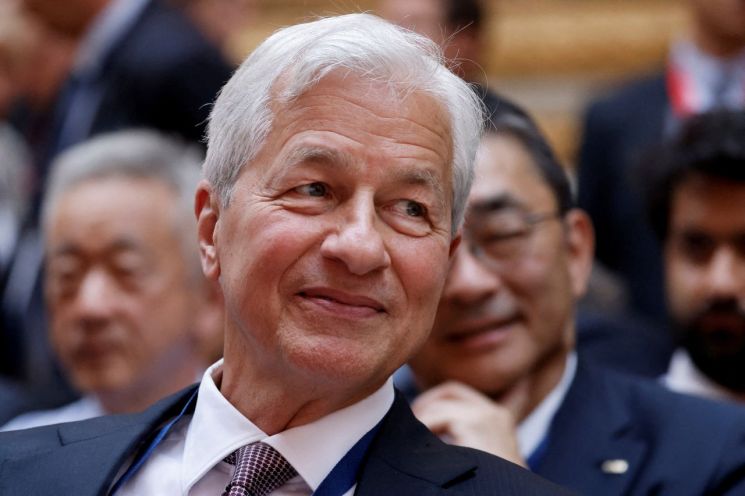
Jamie Dimon, CEO of JPMorgan Chase, stated on May 22 that the possibility of the U.S. economy falling into stagflation?rising prices amid an economic downturn?cannot be ruled out due to factors such as geopolitical risks, fiscal deficits, and inflationary pressures.
During an interview with Bloomberg TV at the "JPMorgan Global China Summit" on the same day, Dimon said, "I do not agree with the statement that we are in a 'sweet spot' right now," expressing his concerns.
He emphasized the need to separate two facts, explaining, "So far, the U.S. economy has performed very well in terms of a soft landing, but that does not necessarily indicate what will happen in the future." He pointed out that significant risks remain, such as the massive U.S. government fiscal deficit, geopolitical issues, and various factors that could trigger inflation.
Dimon has previously stated, "I believe the probability of inflation rising further and stagflation occurring is somewhat higher than what others might think."
Amid these concerns, he evaluated the Federal Reserve's "wait and see" approach?monitoring economic indicators before making monetary policy decisions?as the right approach. The Fed has previously held three Federal Open Market Committee (FOMC) meetings this year, maintaining the policy rate at 4.25?4.50%, citing robust U.S. economic indicators. However, after the May FOMC, the Fed issued a statement raising concerns about stagflation, warning that the risk of facing both high inflation and rising unemployment is increasing.
Dimon said he is not overly concerned about short-term volatility in the dollar, but he understands why some investors are reducing their holdings in dollar assets. On May 21, the ICE Dollar Index, which measures the value of the dollar against six major currencies, fell 0.51% to 99.60. CNBC explained that the decline in the dollar's value was driven by fears that the Trump administration's tax cut legislation could lead to a wider fiscal deficit.
When asked about the short-term outlook for the Chinese market amid ongoing U.S.-China tensions, Dimon responded, "We invest for the long term," adding, "Investors are worried about the current situation, but we believe things will ultimately be resolved."
Previously, the United States and China held high-level trade talks in Geneva, Switzerland, on May 10?11 and agreed to significantly reduce reciprocal tariffs for 90 days. The two sides have also begun working-level negotiations to draft a new trade agreement. However, according to Bloomberg and other sources, analysts predict that the negotiations between the two countries will not be easy.
Dimon countered, "That does not mean we are going to back down," and refuted reports suggesting JPMorgan is withdrawing from China, saying, "That is completely false." However, he acknowledged that political pressure will remain until the current situation is resolved. He added, "I do not believe the U.S. government intends to sever ties with China. I hope there will be second, third, and fourth rounds of negotiations, and that they will lead to positive outcomes."
© The Asia Business Daily(www.asiae.co.kr). All rights reserved.
![Clutching a Stolen Dior Bag, Saying "I Hate Being Poor but Real"... The Grotesque Con of a "Human Knockoff" [Slate]](https://cwcontent.asiae.co.kr/asiaresize/183/2026021902243444107_1771435474.jpg)















