Proportion of Price-Increasing Transactions in Sejong Rises by 7.4 Percentage Points from March
Seoul and Gyeonggi See Decline in Price-Increasing Transactions... Market Remains Cautious
Last month in Sejong, 5 out of every 10 apartment transactions were made at prices higher than previous sales.
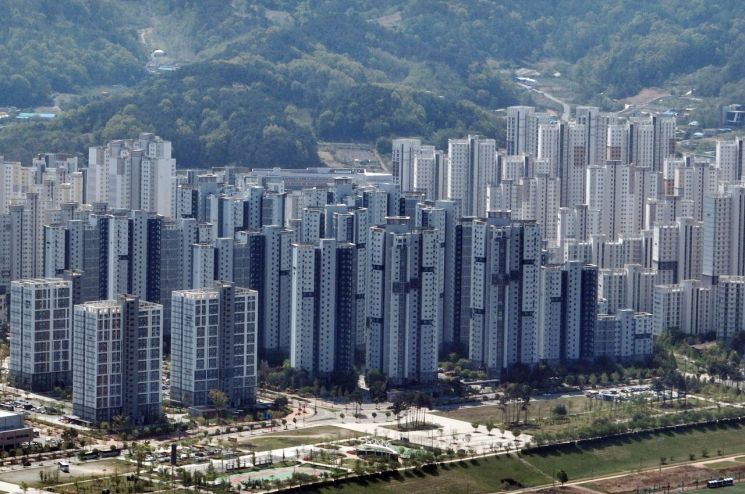
According to an analysis of the Ministry of Land, Infrastructure and Transport's actual transaction data by Zigbang on the 19th, the proportion of price-increasing transactions in Sejong City in April was 52.7%, up 7.4 percentage points from the previous month (45.3%). This is the highest level in the past 22 months (since June 2023, 53.2%).
Sejong Sees Highest Proportion of Price-Increasing Transactions in 22 Months
In April, there were a total of 1,197 apartment sales in Sejong City, of which 631 were made at prices higher than the previous transaction. The proportion of price-increasing transactions in Sejong has been rising for five consecutive months since December last year.
The increase in price-increasing transactions in Sejong reflects expectations for the relocation of public institutions and the administrative capital, as well as infrastructure expansion. Sejong had previously experienced a slowdown in transactions and price adjustments due to concentrated supply. The recent increase in buyers perceiving a market bottom has contributed to the higher proportion of price-increasing transactions.
By area within Sejong, the number of transactions was as follows: Gowun-dong 83, Saerom-dong 66, Dodam-dong 63, Dajeong-dong 63, and Jongchon-dong 60. In Gowun-dong, a 59-square-meter unit in Garak Maeul Complex 6 was sold for 380 million won, about 10% higher than the previous average transaction price of 345 million won. In Saerom-dong, an 84-square-meter unit in Saetteum Maeul Complex 7 changed hands for 570 million won, which is 11% higher than the previous average transaction price of 515 million won.
Proportion of Price-Increasing Apartment Transactions Nationwide at 43.7% in April... Upward Trend Slows
As of April, the proportion of price-increasing transactions among apartment sales nationwide was 43.7%. After increasing for four consecutive months since December last year, the proportion began to decline in April. Ongoing domestic and international uncertainties have led to a wait-and-see attitude in the apartment market, weakening overall buyer sentiment.
By region, the proportion of price-increasing transactions in the Seoul metropolitan area was 43.7%, down 1.7 percentage points from the previous month. In non-metropolitan areas, the figure was 43.6%, similar to the previous month (43.5%). Within the metropolitan area, the proportion decreased in Seoul (46.8%, down 2.9 percentage points) and Gyeonggi Province (42.5%, down 0.7 percentage points), while Incheon saw a slight increase to 43.6% (up 1.0 percentage point).
Except for localized increases centered in Seoul's Gangnam area following the re-designation of the land transaction permit system, the overall market remains cautious. In most regions, except for some high-priced complexes, buyer activity has slowed, resulting in a decrease in the proportion of price-increasing transactions.
Non-Metropolitan Areas Also Show Cautious Sentiment
In non-metropolitan areas, the proportion of price-increasing transactions was 43.6%, similar to the previous month (43.5%). After Sejong, the areas with the largest increases were Gwangju Metropolitan City at 44.8% (up 2.4 percentage points) and Jeonnam at 44.6% (up 2.2 percentage points). With lower price entry barriers compared to the metropolitan area, price-increasing transactions were concentrated in smaller units in Buk-gu, Gwangju, and across Jeonnam.
In April, the nationwide apartment market saw a slowdown in the proportion of price-increasing transactions, with a cautious sentiment spreading. Buyer sentiment weakened and transactions stagnated in most regions, both in the metropolitan area and in the provinces. In particular, in Seoul and the broader metropolitan area, the re-designation of the land transaction permit system led to a contraction in buyer activity in most areas except Gangnam, while Sejong City was the only region to see a significant increase in the proportion of price-increasing transactions.
Kim Minyoung, manager of the Big Data Lab, explained, "In Sejong, expectations for the relocation of public institutions, perception of a market bottom, and the influx of genuine buyers all combined to drive both transactions and prices upward. However, this rebound is a localized phenomenon driven by unique regional factors. Uncertainties regarding policy implementation, structural challenges such as metropolitan transportation networks and self-sufficiency, still pose burdens, and as in the past, short-term optimism could lead to long-term adjustments, which should be taken into account."
© The Asia Business Daily(www.asiae.co.kr). All rights reserved.
![Clutching a Stolen Dior Bag, Saying "I Hate Being Poor but Real"... The Grotesque Con of a "Human Knockoff" [Slate]](https://cwcontent.asiae.co.kr/asiaresize/183/2026021902243444107_1771435474.jpg)















