Sekai Hotel Draws Attention in Japan
A Unique Hotel Blending into Market Alleys
Near Fuse Station on the Eastern Outskirts of Osaka
Old Closed Shops Transformed into Guest Rooms
Guests Receive a "Pass" to Use Local Stores
Solving the Vacant Home Problem and Revitalizing Neighborhood Businesses
"We Aim to Balance Everyday Life and Travelers"
"Ordinary. It's worth experiencing."
The first page of the website for Sekai Hotel, a "village-style hotel" that has been hailed as a comet-like newcomer opening a new horizon in Japan's accommodation industry, welcomes visitors with this phrase. Right next to it, a handwritten-style Japanese message ignites the wanderlust of those planning to travel in Japan: "Let's dive into the everyday life of the travel destination."
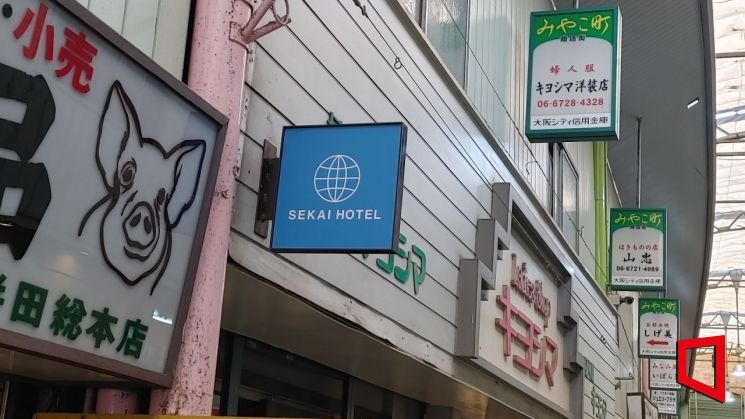 Sekai Hotel built in the eastern outskirts of Fuse area, Osaka, Japan. The photo shows the signboard hanging in front of the Sekai Hotel reception. Photo by Kim Hyungmin
Sekai Hotel is a unique "village-style hotel" that blends into the market streets near Fuse Station on the eastern outskirts of Osaka. Unlike typical hotels housed in a single building, Sekai Hotel renovates various vacant homes and closed shops scattered throughout the neighborhood, especially around the market alleys, and uses them as guest rooms. In terms of length, the area covered by Sekai Hotel stretches for 1.8 kilometers along the alleys.
The website's message, encouraging guests to experience everyday life, encapsulates the hotel's distinctive features and founding philosophy. Mari Kitakawa, manager of Sekai Hotel, explained, "We don't want to turn this place into a tourist attraction. Our goal is to create an atmosphere where guests can feel and enjoy the daily lives of the local people, and to maintain a balance between the lives of residents and travelers."
Tourists visiting Sekai Hotel must first check in at the front office, which still displays the old signboard of a former kimono shop called "Kiyoshima Women's Clothing." Afterwards, they are assigned to rooms that have been converted from shuttered stores, such as a stationery shop, a confectionery store, or a former physical therapy clinic. The interiors of the guest rooms have been completely renovated with sleek, modern designs. However, the exteriors retain the original shop signboards and maintain the appearance of the old stores. Opening the door to one of these former shops leads to the unique experience of entering a "secret room" that is immaculately prepared inside.
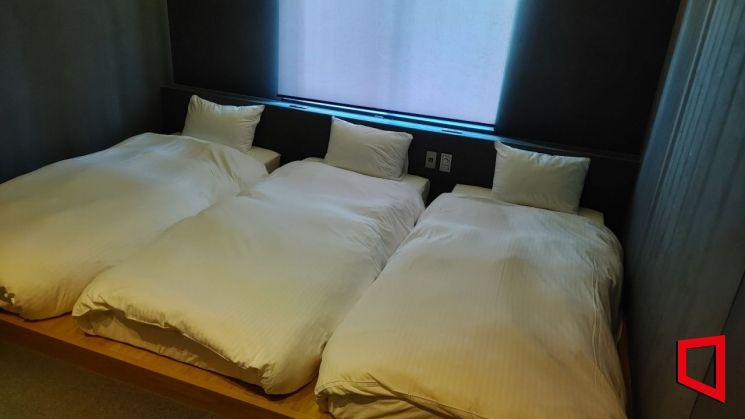 Sekai Hotel built in the Fuse area on the eastern outskirts of Osaka, Japan. The photo shows a bedroom of Sekai Hotel. Photo by Kim Hyungmin
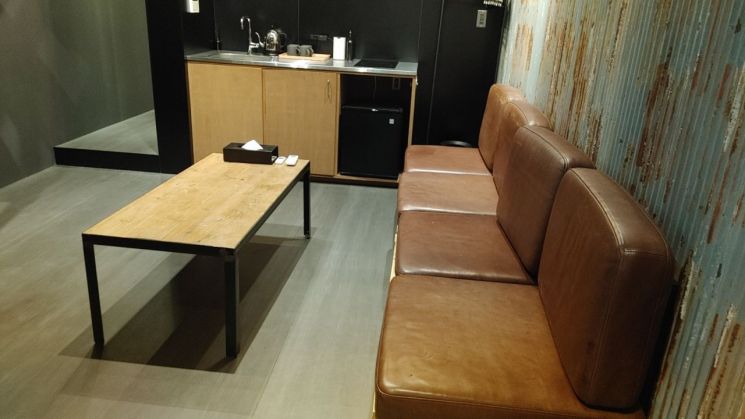 Sekai Hotel, located in the eastern outskirts of Fuse area in Osaka, Japan. The photo shows the living room inside a Sekai Hotel guest room. Photo by Hyungmin Kim
The hotel directly operates only the front desk and the guest rooms scattered throughout the neighborhood. Instead of providing its own facilities such as restaurants or bathhouses, it guides guests to long-established local businesses that have formed partnerships with the hotel. Guests receive a "Sekai Pass," a blue name tag indicating they are staying at the hotel, which allows them to freely use the neighborhood shops.
Sekai Hotel operates 23 guest rooms in 10 buildings around Fuse Station and can accommodate up to 94 guests per day. The rooms range from dormitories with just one bed to standalone houses that can accommodate up to six people at once. The rates are around 100,000 to 200,000 KRW per person. Thanks to word of mouth about the unique experience it offers, the number of guests has increased significantly. In 2018, the year the hotel opened, there were about 300 guests, but last year the number rose to over 4,200.
The hotel does not purchase the buildings it uses as guest rooms, but instead leases them from the owners. In the early days of the business, it was extremely difficult for the hotel to convince property owners to hand over their shops for use as guest rooms. Communicating the hotel's philosophy and purpose and persuading the owners to empathize with the project was a major challenge. However, a much more cooperative atmosphere has now been established.
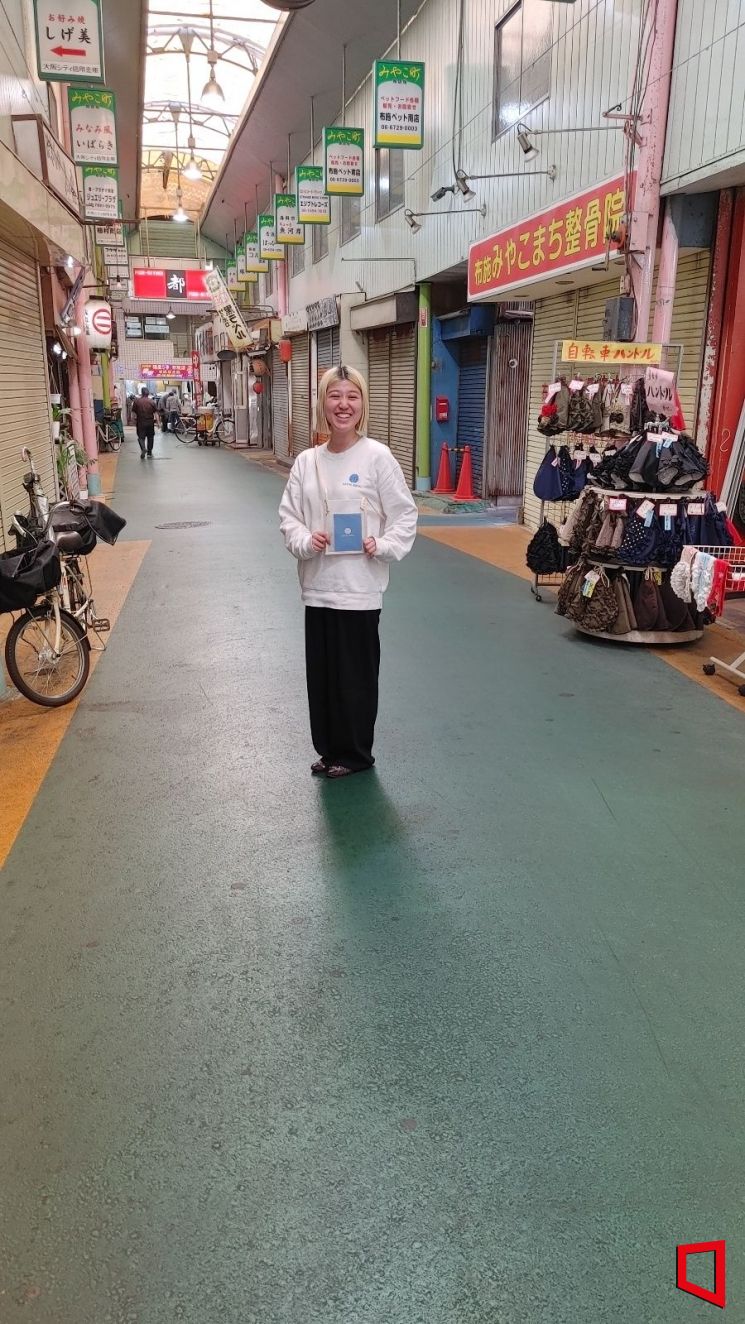 Sekai Hotel, located in the eastern outskirts of Fuse area in Osaka, Japan. The photo shows hotel manager Mari Kitakawa explaining about Sekai Hotel. Photo by Hyungmin Kim
In Japan, the Sekai Hotel model is attracting attention as an innovative solution to the increasingly serious problem of vacant homes. At the same time, it is seen as a way to revitalize declining neighborhood commercial districts. Sekai Hotel first achieved success in the Nishikujo area, adjacent to the famous Osaka theme park Universal Studios Japan, and is now making its second attempt in the Fuse area. After Sekai Hotel established a village hotel in Nishikujo, a boom in accommodation businesses, including Airbnb, followed, and the influx of travelers brought new energy to the local commercial district. The Fuse area is hoping for a similar outcome. Ume Yama, who runs a fried food shop in the Fuse market alley where Sekai Hotel is located, said, "If I compare before and after the hotel opened, there has definitely been an increase in customers. On average, about 5 to 10 guests staying at Sekai Hotel visit my shop every day."
The Fuse area, where Sekai Hotel is located, is administratively part of Higashi-Osaka City, adjacent to Osaka. Since the opening of Fuse Station in 1914, this area thrived as a commercial district for nearly 100 years. As a key transportation hub connecting Osaka and the nearby city of Nara, people traveling between the two cities naturally stopped here to eat, drink, and shop. However, since the 1990s, the expansion of train lines in the area and the formation of large commercial districts centered on Namba and Umeda in downtown Osaka have drawn away the floating population, leading to the rapid decline of the Fuse Station commercial area. The number of shops, which peaked at around 700, has dropped to about 350, turning it into a typical "shutter street." After Fuse, Sekai Hotel plans to continue establishing village-style hotels in other areas facing social challenges. Manager Mari Kitakawa said, "Our ultimate goal is to build enough trust in the Sekai Hotel name that people will visit these neighborhoods because of us, and through that, to help solve social problems together."
© The Asia Business Daily(www.asiae.co.kr). All rights reserved.
![Clutching a Stolen Dior Bag, Saying "I Hate Being Poor but Real"... The Grotesque Con of a "Human Knockoff" [Slate]](https://cwcontent.asiae.co.kr/asiaresize/183/2026021902243444107_1771435474.jpg)

















