In the Age of AI, the Future of Photography Remains 'Human'
Questioning the Essence of Photography: Between Documentation and Creation
[Daesik Kim & Hyeyeon Kim's AHA] ⑮ Photographer Yongho Kim
Questioning the essence of photography, between documentation and creation
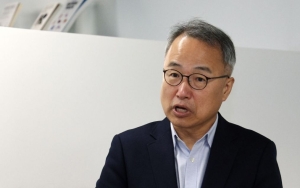
Yongho Kim is a leading Korean photographer who has freely crossed the boundaries between commercial and fine art photography, observing the spirit of the times through his medium. Rare among his peers, he has built an original visual language that encompasses both corporate advertising and art exhibitions. When capturing a subject, he goes beyond mere appearance to convey both emotion and the portrait of an era.
Through collaborations with world-renowned fashion magazines such as VOGUE and BAZAAR, as well as leading Korean companies and global brands including Hyundai Motor, Hyundai Card, KT, LG Electronics, and GUCCI, he has realized brand identity and value through deeply evocative visual imagery.
Defining photography as 'not simply documentation, but a staging of emotion and a reflection on the times,' he has firmly established his presence as an art photographer by consistently organizing exhibitions such as 'Korean Masters of Culture and Art,' which spotlight figures like Nam June Paik and Park Seo-bo.
Recently, through GUCCI's 'Korean Culture Month' photo exhibition <Two Stories>, he drew attention by reinterpreting four masters of Korean culture and the arts?Sooja Kim, Chanwook Park, Eunmi Ahn, and Seongjin Cho?from a new perspective. In 2022, he published his book Photo Language, which contains his photographic philosophy, and in 2023, he made his directorial debut with the film de Vermis Seoulis, further expanding the spectrum of his work.
As AI breaks down the boundaries of imagery today, Yongho Kim continues to ask fundamental questions: "Whose emotion is being captured in this scene?"
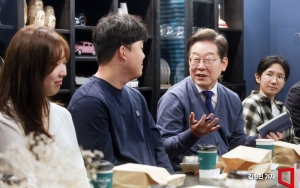
![[Daesik Kim & Hyeyeon Kim's AHA] In the Age of AI, Does Photography Still Capture Emotion?](https://cphoto.asiae.co.kr/listimglink/1/2025042915470540073_1745909225.jpg) Photographer Yongho Kim is having a conversation with Professor Daesik Kim and dancer Hyeyeon Kim at an office in Jamwon-dong, Seocho-gu, Seoul. Photo by Jo Yongjun
Photographer Yongho Kim is having a conversation with Professor Daesik Kim and dancer Hyeyeon Kim at an office in Jamwon-dong, Seocho-gu, Seoul. Photo by Jo Yongjun
-Was there a special reason you chose photography as your medium?
▲To be honest, I never dreamed of becoming a photographer when I was young. There just happened to be a camera at home, and I knew how to use it. Rather than making a clear decision to 'pursue photography,' it was more like instinctively knowing what to do when something needed to be done. That's how I naturally encountered photography.
Looking back, I wasn't particularly studious as a child, but now I realize that I was unconsciously training myself to see the world through a camera from a very early age. There wasn't a dramatic turning point or a specific event; my life simply flowed in a sensory way that led me to photography. I've always tried to fill the sense of lack within me, and I kept pushing forward until I felt fulfilled. That's how I ended up here.
![[Daesik Kim & Hyeyeon Kim's AHA] In the Age of AI, Does Photography Still Capture Emotion?](https://cphoto.asiae.co.kr/listimglink/1/2025042915465940072_1745909218.jpg) Photographer Yongho Kim is having a conversation with Professor Daesik Kim and dancer Hyeyeon Kim at an office in Jamwon-dong, Seocho-gu, Seoul. Photo by Jo Yongjun
Photographer Yongho Kim is having a conversation with Professor Daesik Kim and dancer Hyeyeon Kim at an office in Jamwon-dong, Seocho-gu, Seoul. Photo by Jo Yongjun
-How did you establish your own independent artistic world while working in both commercial and fine art photography?
▲It wasn't the result of a thorough plan, but rather the sum of all the time I spent doing my best in whatever circumstances I was given. Even during periods when I was extremely busy with commercial work, I consistently continued my fine art projects. Activities like solo exhibitions had nothing to do with profit, but I used the income from advertising work to carve out time for my art.
For example, when I worked on projects with Nam June Paik, there was some sponsorship, but my personal expenses far exceeded that. However, the passion, time, and effort I poured into those projects often led to unexpected opportunities or invitations to participate in great exhibitions.
On the other hand, advertising photography is essentially about meeting the client's needs and delivering a clear message. That's a given, but I always tried to go beyond those requirements. I approached each project with the mindset of "I'll show you an image you never even imagined," rather than just fulfilling instructions.
For instance, when working with Hyundai Card, I didn't just create images; I studied the history of currency and delved deeply into the brand's symbols and semiotics. The results were images that, while serving as advertisements, also possessed an independent artistic narrative. Ultimately, the conviction I gained from moving between these two worlds is this: whatever the method, the work must contain sincerity. Advertising that looks like art, art that functions like advertising?finding balance at that boundary has been the key to creating my own artistic world.
![[Daesik Kim & Hyeyeon Kim's AHA] In the Age of AI, Does Photography Still Capture Emotion?](https://cphoto.asiae.co.kr/listimglink/1/2025042915482640089_1745909306.jpg) Photographer Yongho Kim is having a conversation with Professor Daesik Kim and dancer Hyeyeon Kim at an office in Jamwon-dong, Seocho-gu, Seoul. Photo by Jo Yongjun
Photographer Yongho Kim is having a conversation with Professor Daesik Kim and dancer Hyeyeon Kim at an office in Jamwon-dong, Seocho-gu, Seoul. Photo by Jo Yongjun
-To you, is photography documentation or creation?
▲People often say that photography is the art of capturing a moment. But even that moment is often the result of long preparation and contemplation. Sometimes, even that brief instant is meticulously calculated. Especially with portrait photography, it's never a genre that can be done impulsively.
For example, when I went to New York to photograph Nam June Paik, I read all the related biographies and materials before I left. The same goes for photographing a corporate chairman. I study their background, family relationships, and corporate philosophy in advance, striving to develop a deep understanding of the subject. Based on this understanding, I try to create an environment where the subject can naturally express their emotions. I believe that is both the direction and consideration of a photographer.
Of course, photography is also an art of the moment. The ability to capture the 'here and now' of a living subject is important. But for that moment to shine, countless hours of research, patience, and preparation are required. The aesthetics of the moment are revealed through that effort. In the end, photography is not simply the act of pressing the shutter, but an art that condenses years of accumulated time and sensitivity into a single moment.
-How have changes in the environment surrounding photography, from film to digital and now generative AI, affected your work?
▲I've never really felt resistance to technological change. When the transition from film to digital happened, it felt like switching from a slow train to an express one. The speed increased, and the efficiency of my work improved dramatically. The same goes for today's AI technology. I see change not as something to fear, but as a new tool offered by the times.
However, while traveling in Kyoto recently, I had a moment that made me reflect on a sense that goes beyond technology. In Japan, each railway company has a different train interior design. One train had velvet seats and a classic interior in deep green and purple tones, using high-quality materials rarely seen in public transport. It was truly impressive and left a lasting impression.
In that scene, it suddenly struck me: perhaps this is the attitude of an era where emotion and reason coexist. Technology will continue to evolve endlessly, but what matters more is whether it contains human emotion, attitude, and the spirit of the times.
No matter how fast and convenient a high-speed train is, some people still seek out the slower, rattling trains. That's because there's a sense, a romance, memories, and emotions beyond speed. I believe photography is the same. No matter how sophisticated the technology becomes, what ultimately matters is the essential human sense of what and how we feel and capture.
![[Daesik Kim & Hyeyeon Kim's AHA] In the Age of AI, Does Photography Still Capture Emotion?](https://cphoto.asiae.co.kr/listimglink/1/2025042915471240075_1745909232.jpg) Photographer Yongho Kim is having a conversation with Professor Daesik Kim and dancer Hyeyeon Kim at an office in Jamwon-dong, Seocho-gu, Seoul. Photo by Jo Yongjun
Photographer Yongho Kim is having a conversation with Professor Daesik Kim and dancer Hyeyeon Kim at an office in Jamwon-dong, Seocho-gu, Seoul. Photo by Jo Yongjun
-In an era where anyone can take photos with a smartphone, why do you still insist on a single, carefully chosen shot?
▲These days, anyone can take dozens or hundreds of photos a day. That's why people often say, "The scarcity of photography has disappeared." It means the technology has become widespread. But just because technology is accessible to everyone doesn't mean all photos are the same. Let me give you an example. Anyone can cook, but we still dine out. That's because we want a different taste and level of completion than what we can make at home.
Of course, price and convenience are factors, but ultimately, it's because we want to experience the unique sensibility that comes from someone else's hands. Photography is the same. You might think, "It doesn't matter who takes the picture, it'll be similar," but in reality, it's completely different. Photography isn't just about technique; it's about sense and art. That's why I still believe in the power of a single shot.
Even when photographing the same person, depending on who takes the photo, with what perspective and intention, a completely different world unfolds. For example, if I were to photograph choreographer Hyeyeon Kim, I wouldn't just capture the body in motion; I would try to capture the moment she transforms into a character on stage, the texture of her emotions. It's not just movement?she exists as an emotional subject with a living narrative. That is where photography becomes the art of emotion, beyond mere documentation.
People often see the camera as a tool to capture what they want. But sometimes, in front of an entirely unexpected scene, there is a moment when the camera and I become completely one. It's as if emotions I wasn't even aware of are revealed through the shutter. That's when a true work is born. That can't be created by technique alone. My emotions, thoughts, the weather, my physical condition on that day... everything combines to create a scene that only 'that day's me' can capture. Because of that possibility, I still stake my heart on a single shot.
-How do you view the relationship between AI and art?
▲When Marcel Duchamp placed a urinal in a museum, it became art. But if someone else repeats the same act, it's just 'imitation' or 'reproduction.' In the end, what's important is "who did it, when, and why for the first time," and the context and intention behind it.
AI-generated works can certainly achieve a high level of quality. They are technically sophisticated and produced quickly. But I feel that images lacking emotion and context rarely move the heart. No matter how smooth and refined they look, if there's no narrative explaining why and how the image came to exist, it's hard to be moved.
AI is overwhelming in terms of speed. Since it requires almost no physical time, there will inevitably be confusion regarding price and value. Analog work is different. It can take months, sometimes years, to create a single piece. The time and care invested contain a resonance that goes beyond the 'result.' It's like a layer of truth built up over time and existence. This is also why I work with film cameras.
I believe art is not just about the result, but also about how it is experienced. Think of a dance performance or a classical music concert. We don't just see sound and movement. The people we are with, how we dress, the moment we flip through the program in our seats, and the applause for the performers?all of these are part of the art. It's formality, emotion, respect, and courtesy for those who created the performance.
I believe that attitude is the essence of art that AI cannot replace. Ultimately, art is not about the result, but about the sense of relationship?where time, people, and emotion meet and give life to the work.
Compared to other art forms, photography has a relatively low entry barrier. Unlike sculpture, music, or painting, which require years of training, anyone with a camera can take pictures and even hold an exhibition. In that sense, I think AI shares similar characteristics with photography. We live in an era where anyone can easily access and quickly produce results. However, easy access does not mean that all results are equal. Even within that, there are creators with overwhelming sense and vision. Ultimately, what matters is not the tool, but the attitude and depth of the person using it.
I too use AI at times. In the past, I always had to go on location, scout, and wait for the right light and timing. But now, in the early planning stages, I sometimes use AI to simulate scenes. Being able to structure ideas without the constraints of time and space is certainly a big advantage.
That said, I don't think digital will replace analog. Rather, I believe that as the two worlds collide and overlap, a new way of creating will emerge somewhere in between. A completely new artistic language, organically blending the sensibility of analog and the technology of AI. I think this is an exciting time to experiment with that possibility.
![[Daesik Kim & Hyeyeon Kim's AHA] In the Age of AI, Does Photography Still Capture Emotion?](https://cphoto.asiae.co.kr/listimglink/1/2025042915490240094_1745909342.jpg) Photographer Yongho Kim is having a conversation with Professor Daesik Kim and dancer Hyeyeon Kim at an office in Jamwon-dong, Seocho-gu, Seoul. Photo by Jo Yongjun
Photographer Yongho Kim is having a conversation with Professor Daesik Kim and dancer Hyeyeon Kim at an office in Jamwon-dong, Seocho-gu, Seoul. Photo by Jo Yongjun
-If you could create a single work without any economic or time constraints, what would it be?
▲If there were no economic or time constraints at all... Well, ultimately, wouldn't it be 'immortality'? Every time I hear the story of Emperor Qin Shi Huang sending his envoys to Haegeumgang in search of the elixir of life, I can somewhat understand his obsession. After all, the resource humans desire most is 'time.'
I sometimes find myself wishing for a time machine. But someone once said, "If there really were a time machine, wouldn't people from the future already be wandering around here?" After hearing that, I nodded in agreement, realizing, "Ah, so it's not possible."
So perhaps the most realistic imagination is cryonics? Maybe if technology advances, we could be revived in the future. I think this desire to see the future is fundamentally similar to the instinct of art. Taking photographs, making films, leaving records?all are expressions of the desire to hold onto the present moment.
So I believe I am already creating 'that one ultimate work.' The photos I take now, the projects I do now, the stories I tell now?all remain in the cracks of time, eventually becoming future scenes to be discovered by someone. That is the purpose and direction of my work.
Even when photographing a company's CEO, I always say, "Think about your future." Many people feel uncomfortable or awkward in front of the camera, but when I say this, their expression changes. In that moment, as they reflect on the time they've walked and the future ahead, their eyes change. That's when I'm sure: "Ah, right now, I'm photographing this person's 'future.'" It's not just a single photograph, but a time-machine-like moment that records emotion across time.
![[Daesik Kim & Hyeyeon Kim's AHA] In the Age of AI, Does Photography Still Capture Emotion?](https://cphoto.asiae.co.kr/listimglink/1/2025042915475140084_1745909271.jpg) Photographer Yongho Kim is having a conversation with Professor Daesik Kim and dancer Hyeyeon Kim at an office in Jamwon-dong, Seocho-gu, Seoul. Photo by Jo Yongjun
Photographer Yongho Kim is having a conversation with Professor Daesik Kim and dancer Hyeyeon Kim at an office in Jamwon-dong, Seocho-gu, Seoul. Photo by Jo Yongjun
-What advice would you give to the younger generation starting out in photography?
▲Honestly, it's hard for me to give clear advice like "Don't ever do this," because I've made the same mistakes many times myself. Sometimes I even wondered, "Is this just my fate?" But one thing is clear: in the end, you just have to work hard at whatever you do.
There's a saying I like: "Youth passes quickly, learning is difficult to achieve, and not a single moment of time should be taken lightly." When you're young, these words may not resonate, but as time goes by, you come to understand their meaning deeply. If you keep studying what you love, you'll eventually find your own answers.
And one more thing?playing well is really important. Don't just let time pass by; enjoy it with focus, meaning, and efficiency. The experiences and senses you gain in that process will become the foundation for building your own creative world.
Lastly, I want to emphasize the importance of the 'classics.' Places that once seemed like mere tourist spots now come to me as sites filled with the history and culture of humanity. When I go to New York, I visit MoMA, but I end up spending more time at the Metropolitan Museum. In Paris, I linger longer at the Louvre than at the Pompidou Center. Modern art museums are great, but experiencing the roots of Korean art at the National Museum of Korea is something else entirely.
Ultimately, the answer to true creativity lies in the classics. The power to understand the essence that doesn't change, even in a rapidly changing era, can be drawn from study, experience, and the classics. I hope you build that strength and create your own path.
Daesik Kim, Professor of Electrical and Electronic Engineering at KAIST · Hyeyeon Kim, Choreographer (CEO of Yeonist)
© The Asia Business Daily(www.asiae.co.kr). All rights reserved.