194,000 More Employed Last Month
Manufacturing and Construction Continue to See Job Losses
Agriculture, Forestry, and Fisheries Down by 134,000
Youth Employment Rate Drops 0.9 Percentage Points to 45.3%
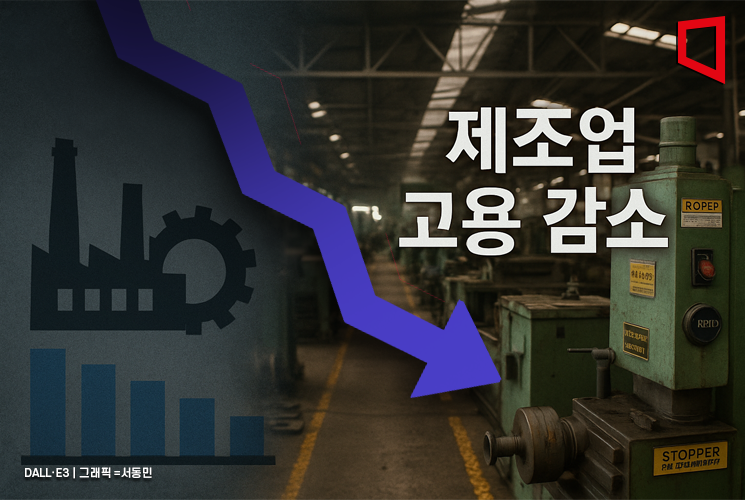
Last month, the number of employed people in the manufacturing sector decreased by 124,000, marking the largest decline in six years and two months. Amid sluggish domestic demand and growing external uncertainties, the manufacturing sector?considered a provider of quality jobs?has seen employment decline for ten consecutive months. For young people, both the employment rate and unemployment rate indicators worsened, and the number of those not seeking work remained in the 400,000 range, clearly reflecting the challenging job market.
According to the "April 2025 Employment Trends" released by Statistics Korea on May 14, the number of employed people aged 15 and older last month was 28,887,000, an increase of 194,000 (0.7%) compared to the same month last year. The number of employed has shown an increase in the 100,000 range for four consecutive months since January (135,000). The increase remained in the 130,000 range through February (136,000), but expanded to the 190,000 range from March (193,000).
By industry, the increase was driven by more jobs in ▲health and social welfare services (218,000), ▲professional, scientific and technical services (113,000), and ▲information and communications (72,000). The health and social welfare services sector posted its largest increase since January 2023 (220,000), and professional, scientific and technical services recorded the largest increase since January 2022 (115,000).
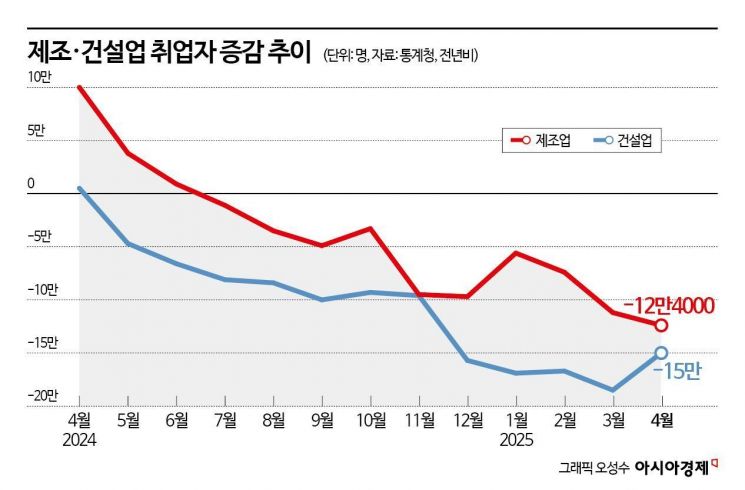
In contrast, the number of employed in manufacturing?a key export-oriented sector and a source of quality jobs?decreased by 124,000, the largest drop since February 2019 (-151,000), a span of six years and two months. This marks the second consecutive month of declines in the 100,000 range, following the previous month’s decrease of 112,000, and the negative trend has continued for ten months. Amid poor economic conditions, the decline was particularly large in electronic components (excluding semiconductors), computers, and fabricated metal products.
Gong Misuk, Director of the Social Statistics Bureau at Statistics Korea, stated, "The recent situation in manufacturing is not good, except for semiconductors." She also explained, "Although semiconductors are leading exports and pulling the manufacturing sector, their employment inducement coefficient is low, so the impact on jobs has not been significant." Regarding the impact of U.S. tariffs, she said, "Employment is a lagging indicator," and added, "It is difficult to analyze the impact of April tariffs immediately, and we need to look at industrial activity trends together."
Jang Juseong, Director of Workforce Policy at the Ministry of Economy and Finance, commented, "Manufacturing employment is not recovering due to sluggish domestic demand and increased external uncertainty." He also emphasized, "If changes in U.S. (tariff) policy affect export-oriented industries with a time lag, there is concern that the impact could spread to related supplier industries, domestic manufacturing, and service industries, so we will closely monitor changes in employment trends."
The construction industry, which is highly sensitive to economic conditions, is also facing difficulties. Last month, the number of employed in construction fell by 150,000, marking a decline for 12 consecutive months. Since December last year (-157,000), construction employment has maintained a negative trend in the 100,000 range, although the decline narrowed compared to the previous month (-185,000). Due to cold weather and other factors, the decrease in employment in agriculture, forestry, and fisheries was also pronounced, with a drop of 134,000 last month.
By age group, due to the aging population and demographic changes, employment increased among those aged 60 and over (340,000) and those in their 30s (93,000), but decreased among those in their 20s (-179,000), 40s (-51,000), and 50s (-14,000).
While overall employment indicators remain favorable, difficulties for young people persist. The employment rate for those aged 15 to 64, based on the OECD comparison standard, rose by 0.3 percentage points to 69.9%, but for young people (aged 15 to 29), it fell by 0.9 percentage points to 45.3%. The youth employment rate was the lowest for any April since 2021 (43.5%). The unemployment rate for those aged 15 and over fell by 0.1 percentage points to 2.9%, but for young people it rose by 0.5 percentage points to 7.3%.
The number of young people not engaged in any job search increased by 15,000 to 415,000, continuing a 12-month upward trend. The number of people in their 20s (aged 20 to 29) not seeking work also rose for 12 consecutive months, increasing by 35,000 to 392,000. As more young people are unable to find desired jobs, Gong explained that "the decrease in child-rearing and housework among those in their 20s has also contributed to the increase in the number of young people not seeking work."
The government plans to continue managing domestic and external risks, creating jobs in the private sector, and making efforts to stabilize employment for vulnerable groups. Director Jang stated, "To minimize the impact of external uncertainties on domestic demand, we plan to quickly execute supplementary budgets to support export companies affected by tariffs and to respond preemptively to employment shocks." He added, "We will sequentially prepare measures to strengthen the competitiveness of key industries and support job creation through fundamental revitalization of the construction sector."
© The Asia Business Daily(www.asiae.co.kr). All rights reserved.
![Clutching a Stolen Dior Bag, Saying "I Hate Being Poor but Real"... The Grotesque Con of a "Human Knockoff" [Slate]](https://cwcontent.asiae.co.kr/asiaresize/183/2026021902243444107_1771435474.jpg)
















