Research on "Pre-Feasibility Study Reform Measures"
"Lower Economic Feasibility Standards for the Seoul Metropolitan Area"
"Reverse Discrimination Against Underdeveloped Areas Within Seoul"
Need to Lower Economic Feasibility Standards and Restructure Evaluation Criteria
The Seoul Metropolitan Government has begun internal discussions to improve the preliminary feasibility study (pre-feasibility study or "Yeta") process. The city believes that the excessive emphasis on "economic feasibility" in Yeta evaluations for the Seoul metropolitan area has actually worsened regional imbalances and reverse discrimination. Following its request to the central government to lower the weight of economic feasibility assessments, the city now plans to conduct its own investigation to identify problems in the current evaluation method and propose detailed reform measures.
According to the urban renewal industry on May 14, the Seoul Metropolitan Government has recently started discussions on a plan to improve the pre-feasibility study system for "balanced development in the Seoul metropolitan area."
The pre-feasibility study is a system overseen by the Ministry of Economy and Finance to verify the feasibility of fiscal projects such as roads and railways in advance. Introduced in 1999 to improve the efficiency of fiscal investment projects, it has been credited with contributing to the soundness of national finances. The evaluation consists of three criteria: economic feasibility, policy relevance, and balanced regional development. Since the 2019 reform, a dual-track approach has been adopted, differentiating the evaluation criteria and weights for projects in the Seoul metropolitan area and those outside it.
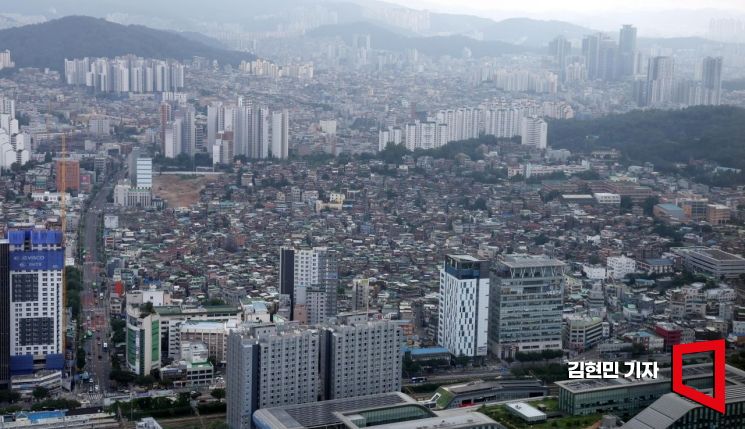
The problem lies in the fact that, for projects in the Seoul metropolitan area, the balanced regional development criterion is not considered, and the weight of the economic feasibility evaluation has been raised to as much as 70%. As a result, factors such as the balanced regional development effect in underdeveloped areas within Seoul are not reflected, making it difficult for projects to pass the pre-feasibility study unless they demonstrate strong economic feasibility.
Representative examples include the "Shinbundang Line Northwest Extension," which passes through Seoul, and the "Gangbuk Transversal Line," which was planned for areas with poor rail accessibility?both failed to pass the pre-feasibility study last year. The Seoul Metropolitan Government's analysis is that it is even more difficult for underdeveloped areas with low demand in the metropolitan area to pass the pre-feasibility study, which has become a factor deepening regional disparities within Seoul.
This has further accelerated economic imbalances such as the gap in gross regional domestic product and business distribution between Gangnam and Gangbuk. The concentration of commercial areas in the city center and the southeastern area is part of the same trend. The Seoul Metropolitan Government notes that, in terms of urban rail, the concentration of railway facilities in Gangnam has intensified transportation disparities between regions, and there are significant differences in commuting times by area.
In response, the city plans to identify cases where the 2019 reformed pre-feasibility study system has exacerbated imbalances within the metropolitan area. The scope includes the current state of imbalanced development and the status and issues of fiscal investment projects in Seoul, Gyeonggi, Incheon, and adjacent metropolitan areas. The city will also review cases where fiscal investment projects in the metropolitan area either passed or failed the pre-feasibility study. In particular, the city plans to focus on cases where projects that could have played a significant role in balanced development failed to pass the pre-feasibility study, making this the core of its reform proposals.
The reform proposal is likely to include lowering the economic feasibility evaluation standard and restructuring the evaluation criteria. The plan is to reduce the weight of "economic feasibility" in the metropolitan area from the current 60-70% to 50-60%, while increasing the weight of "policy relevance" from 30-40% to 40-50%. Given the nature of metropolitan projects, which tend to score lower in economic feasibility, increasing the weight of policy relevance is expected to raise the overall evaluation score and improve the chances of passing the pre-feasibility study.
The proposal is also expected to include the revision of evaluation criteria that the Seoul Metropolitan Government suggested to the central government last year. At that time, the city requested that "congestion mitigation" be newly added to the benefits considered in the economic feasibility evaluation, and that the existing benefit of "travel time reduction" be re-evaluated. A Seoul Metropolitan Government official said, "The current (pre-feasibility study) system has revealed its limitations in achieving balanced development between the metropolitan and non-metropolitan areas," adding, "Since these imbalances are bound to worsen, we will take this opportunity to identify the problems and conduct a comprehensive analysis."
© The Asia Business Daily(www.asiae.co.kr). All rights reserved.
![Clutching a Stolen Dior Bag, Saying "I Hate Being Poor but Real"... The Grotesque Con of a "Human Knockoff" [Slate]](https://cwcontent.asiae.co.kr/asiaresize/183/2026021902243444107_1771435474.jpg)















