Seen as an Extension of Emergency Management Policy
"Effectively Banned," Employees Voice Dissatisfaction
Amid a temporary demand stagnation?known as the "chasm"?in the electric vehicle market, LG Energy Solution is tightening its belt by overhauling its overtime, remote work, and flexible work policies. Through new internal guidelines, the company is now strictly limiting work arrangements that were previously managed with relative autonomy, further reinforcing a cost-cutting stance across the organization. This move is seen as a full-fledged attempt to precisely control labor and operating expenses under its emergency management system.
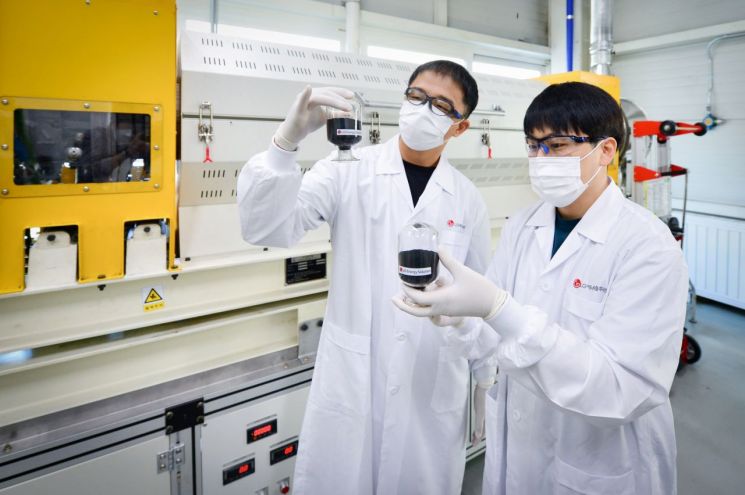 A researcher from LG Energy Solution is showcasing cathode active material manufactured through a direct recycling process of waste electrodes. The photo is unrelated to the article content. Provided by LG Energy Solution.
According to industry sources on May 8, LG Energy Solution announced changes to its overtime, remote work, and flexible work guidelines through an internal notice on April 30. Whereas work arrangements had previously been managed with relative freedom, they will now be restricted at the discretion of team leaders or the next-highest ranking team members. Overtime hours are now capped at 20 hours per month.
This measure is viewed as an extension of the emergency management stance that has been in place since the end of last year. In December 2024, as the growth of the electric vehicle market slowed and the battery industry as a whole faced a chasm, LG Energy Solution declared emergency management and began a comprehensive review of its investment and cost structures. As part of this, the company has been working to boost sales through additional orders in each business division, such as electric vehicles and energy storage systems (ESS), and is pursuing the sale of global production plants. The latest controls on work arrangements are also interpreted as steps to improve organizational efficiency.
Although LG Energy Solution returned to profitability in the first quarter of this year, it posted an operating loss of 8.3 billion KRW when excluding the Advanced Manufacturing Production Credit (AMPC) under the U.S. Inflation Reduction Act (IRA).
Some within the company have expressed dissatisfaction, interpreting the new measures as a de facto ban on overtime and remote work. While employees generally agree on the company's sense of crisis and the need to cut costs, there is resistance to a one-size-fits-all approach that does not take into account the unique characteristics and circumstances of each department. One employee pointed out, "In the current challenging business environment, this rigid atmosphere undermines the flexibility of employees who work day and night." Another employee commented, "The policy should be applied flexibly, reflecting the opinions of each department and the specific nature of their work."
© The Asia Business Daily(www.asiae.co.kr). All rights reserved.
![Clutching a Stolen Dior Bag, Saying "I Hate Being Poor but Real"... The Grotesque Con of a "Human Knockoff" [Slate]](https://cwcontent.asiae.co.kr/asiaresize/183/2026021902243444107_1771435474.jpg)















