Achievement Rate of 98.9%, Four Policies Recognized as Outstanding
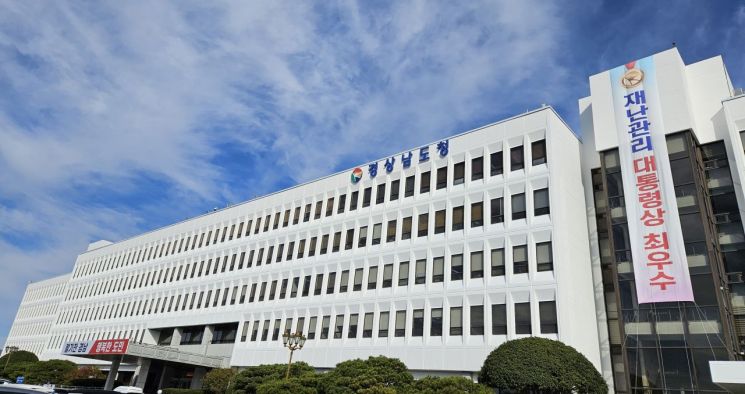
Gyeongsangnam-do ranked second among all local governments nationwide in the quantitative category of the 2025 Joint Evaluation of Local Governments, which is overseen by the Ministry of the Interior and Safety.
According to the announcement by the Ministry of the Interior and Safety on May 7, Gyeongsangnam-do achieved targets for 97 out of 98 indicators in the quantitative evaluation category, recording a target achievement rate of 98.9%, the highest ever for the province.
This figure is 2.3 percentage points higher than last year’s 96.6%, and 3.2 percentage points higher than the national average of 95.7%.
In the qualitative evaluation category, outstanding cases included ▲family services at family centers, ▲university and local government cooperation, and ▲citizen participation in memorial culture events and experiential programs.
In the public evaluation category, ▲activities to improve the local emergency patient transport and admission system were selected as an exemplary case.
For the exemplary case in family center family services, the province was recognized for establishing the nation’s first ‘metropolitan family center’, providing efficient and comprehensive family services.
With the integration of family centers, case management performance improved by 43.8% compared to last year, resource linkage performance increased by 73.6%, self-efficacy among vulnerable and at-risk families rose by 34.1%, and the family function index improved by 28.5%?all of which were acknowledged as notable achievements.
For university and local government cooperation, Gyeongsangnam-do was selected as an exemplary case for the fourth time, having been chosen for three consecutive years from 2020 to 2022 and again this year.
Notably, the province achieved designation as a leading area for the Gyeongnam Future Strategic Industry Education Special Zone, established a region-led university innovation master plan, saw five local universities selected as glocal universities, and was involved in the selection of 30 leading glocal universities for regional innovation through a national-provincial university integration model.
Gyeongsangnam-do was also recognized for providing spaces and programs where citizens can experience the lives of national independence and democracy heroes in diverse ways as part of daily life.
Through public talent donations, the province differentiated its memorial culture from other local governments by holding the ▲‘Stories from Across the Nation’ exhibition featuring portraits of lesser-known independence activists from the region, ▲promoting 190 great independence activists, and ▲issuing local currency vouchers featuring Changwon independence activists.
Additionally, the role of the ‘Emergency Medical Situation Room’?a core initiative of the 8th civil administration?stood out in this evaluation as a control tower for emergency medical care.
The province was recognized for strengthening the emergency medical system by having the emergency medical support team and fire services collaborate to quickly select hospitals and coordinate patient transfers when emergencies occur.
Gyeongsangnam-do explained that it has increased awareness and understanding of the evaluation by aiming for ‘zero unmet indicators’, managing monthly performance, holding regular progress and countermeasure meetings, providing capacity-building training, conducting internal and expert consulting, and organizing department-level discussion sessions.
The province added that it also promoted active communication and cooperation between the province and cities/counties through on-site consulting, working together to improve performance.
Kim Kiyeong, Director of Planning and Coordination, stated, “This is the result of systematic responses and the dedicated efforts of city and county officials responsible for the indicators, which enabled us to implement diverse policies for residents. We will continue to do our best to achieve tangible results that residents can truly feel.”
The ‘Joint Evaluation of Local Governments’ is the only comprehensive government-level evaluation of local governments. Under the Government Joint Evaluation Basic Act, the Minister of the Interior and Safety, together with the heads of central administrative agencies, comprehensively evaluates the performance of 17 metropolitan and provincial governments in carrying out delegated national tasks, state-subsidized projects, and major national policies.
This year, the evaluation covered the past year’s performance on 115 indicators (98 quantitative, 17 qualitative) across six major national policy goals, with mutual verification among provincial governments and performance verification by central ministries and the joint evaluation team, leading to the assessment of target achievement and selection of exemplary cases.
Gyeongsangnam-do also conducts annual evaluations of cities and counties in connection with the government’s joint evaluation to ensure that major national and provincial policies are effectively delivered and implemented at the grassroots level.
© The Asia Business Daily(www.asiae.co.kr). All rights reserved.
![Clutching a Stolen Dior Bag, Saying "I Hate Being Poor but Real"... The Grotesque Con of a "Human Knockoff" [Slate]](https://cwcontent.asiae.co.kr/asiaresize/183/2026021902243444107_1771435474.jpg)















