Carol Miller, Republican Member of the U.S. House of Representatives
Bill Introduced as Announced at USTR Congressional Hearing
U.S. IT Industry Welcomes the Legislation
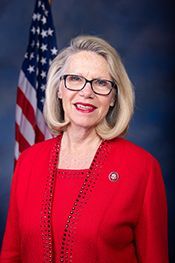 Republican Representative Carol Miller of West Virginia. Congressional Research Service
As the South Korean and U.S. governments are engaged in tariff negotiations, a bill has been introduced in the U.S. Congress that would allow the U.S. government to intervene if South Korea unfairly regulates American platform companies. This move appears to target South Korea’s platform law, which the Trump administration previously identified as a “non-tariff barrier.”
According to the U.S. Congress Legislative Information System on May 6 (local time), Republican Representative Carol Miller of West Virginia introduced the bill the previous day. After being submitted to the House of Representatives, the bill was referred to the Ways and Means Committee, which has jurisdiction over the matter. The full text of the bill has not yet been disclosed, but it has been described as “granting appropriate administrative authority to impose specific restrictions on South Korea.”
Representative Miller previously announced her plan to reintroduce the bill during a committee hearing on the Trump administration’s trade policy agenda on April 9. Referring to South Korea’s platform law, she stated, “American companies are suffering from one of our closest allies, while Chinese companies face no restrictions. I plan to reintroduce this legislation to address this situation.”
She further emphasized, “We cannot allow China to take market share in this critical area of digital trade,” and added, “Several countries are moving forward with legislation modeled after the European Union’s Digital Markets Act (DMA), which in effect creates a ‘Digital Winter’ for American tech companies.”
At the same hearing, Jamison Greer, a representative of the Office of the United States Trade Representative (USTR), stated, “What I can say clearly is that we will not delegate regulatory authority externally.” He added, “For American companies to remain competitive in the face of competition with China, we must lead in this sector,” and stressed, “In this context, digital trade issues may also be included in the ongoing negotiations.” In fact, during the “2+2” finance and trade ministerial talks launched with the South Korean government on April 24, the U.S. government raised South Korea’s digital regulations as a non-tariff barrier and brought the issue to the negotiating table.
Representative Miller has a precedent of introducing similar legislation last year. The “U.S.-Korea Digital Trade Enforcement Act,” which she introduced in September of last year, required the USTR to report to Congress within 30 days on the impact and potential trade agreement violations if South Korea imposed discriminatory regulations on U.S. online and digital platform companies. The bill also required the Secretary of Commerce to take measures to protect U.S. trade based on the report, including filing a World Trade Organization (WTO) dispute, initiating a Section 301 investigation, or pursuing dispute resolution under the Korea-U.S. Free Trade Agreement (FTA). This bill, which was pending in committee, was automatically discarded with the end of the 118th Congress.
U.S. platform companies have long argued that the so-called platform law pursued by the South Korean government and legislature discriminates against American companies, and the U.S. government has also identified the platform law as a trade barrier ahead of trade talks with South Korea. The Computer & Communications Industry Association (CCIA) issued a statement the previous day on the reintroduction of the bill, saying, “Ensuring fair access for U.S. digital services in the Korean market is the foundation for a strong and lasting bilateral economic and security partnership that benefits both countries.”
© The Asia Business Daily(www.asiae.co.kr). All rights reserved.
![Clutching a Stolen Dior Bag, Saying "I Hate Being Poor but Real"... The Grotesque Con of a "Human Knockoff" [Slate]](https://cwcontent.asiae.co.kr/asiaresize/183/2026021902243444107_1771435474.jpg)














