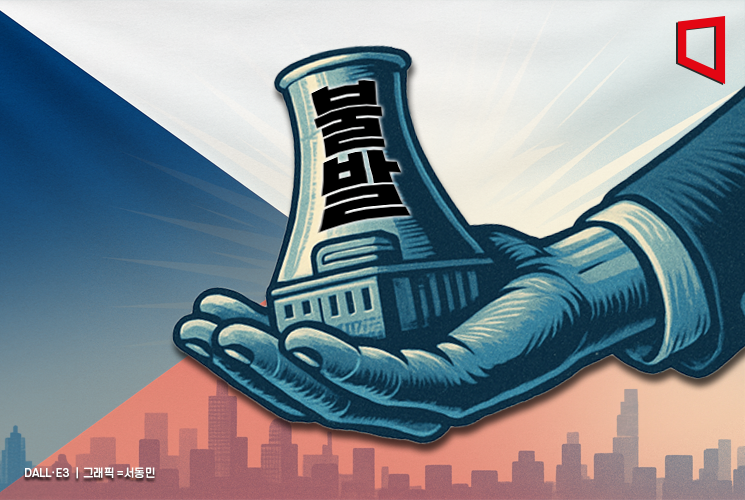
Korea Hydro & Nuclear Power (KHNP) was on the verge of achieving the largest export performance in the history of Korean nuclear power exports after winning the Dukovany nuclear power plant project in the Czech Republic. However, the process was halted at the final stage. A Czech court accepted an objection from Electricite de France (EDF), resulting in the temporary suspension of the contract signing. While the official reason cited was procedural issues, the underlying cause is the sensitive issue of "foreign subsidies."
According to industry sources on May 7, the controversy began with the "price" proposed by KHNP. The new Dukovany nuclear power plant project involves building two 1GW-class reactors, with a total project cost estimated at approximately 18 to 26 trillion won.
When KHNP was selected as the preferred bidder for this project last year, the Korean government highlighted the competitiveness of its construction technology, noting that the construction cost per kilowatt was $3,571, which was more competitive than those of other countries. Many media outlets subsequently estimated that a similar price level was likely proposed to the Czech side. This is less than half of the estimated bids from EDF ($7,931) and Westinghouse of the United States ($7,800). However, EDF argued that the price gap was excessively large and claimed that KHNP's bid amounted to "dumping" supported by subsidies from the Korean government.
The legal basis for this claim is the Foreign Subsidies Regulation (FSR) implemented by the European Union (EU) in July 2023. This regulation requires companies that have received foreign government subsidies to notify or undergo review by the European Commission when acquiring EU-based companies or participating in public tenders above certain thresholds (subsidies of more than 4 million euros or tenders exceeding 250 million euros). If the review determines that there is a market-distorting effect, the contract can be invalidated or fines can be imposed.
EDF's objection regarding foreign subsidies, submitted to the Czech antitrust office (UOHS), was dismissed on the grounds that it was outside UOHS's jurisdiction. This dismissal was one of the reasons why the Czech court accepted EDF's request for an injunction.
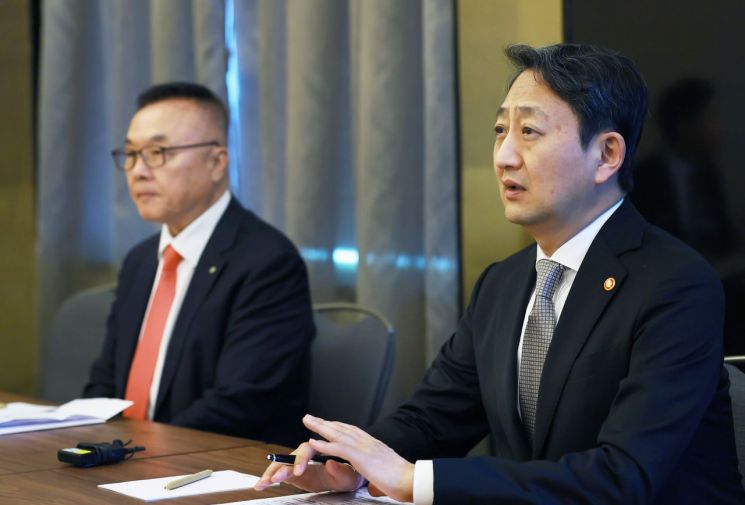 Minister Andeok Geun of the Ministry of Trade, Industry and Energy (right) and Hwang Juho, President of Korea Hydro & Nuclear Power, are explaining the status of the nuclear power plant contract to the press on the 6th (local time) at the Hilton Old Town Hotel in Prague, Czech Republic.
EDF claims that, since KHNP is a state-owned enterprise receiving government support, it could be subject to the EU's foreign subsidies regulation. KHNP is a wholly owned subsidiary of Korea Electric Power Corporation (KEPCO), and KEPCO is a state-owned enterprise under the Ministry of Trade, Industry and Energy. For this reason, EDF has raised suspicions that the Korean government effectively contributed to lowering KHNP's bid price.
However, the Korean government counters that the Czech nuclear power project is not subject to the foreign subsidies regulation and that no form of subsidy has been provided to KHNP. In fact, KHNP's position is that "the bid began in March 2022, before the regulation took effect, so it is not subject to the rules." The company also explained that the contract itself has not been canceled but is only experiencing a temporary procedural delay.
Some observers analyze this situation as EDF resorting to all available legal means to delay the contract after losing out in price competitiveness. Despite the ongoing nuclear cooperation between Korea and the Czech Republic, there is criticism that France is openly obstructing Korea's nuclear exports by invoking EU regulations.
The political background also cannot be ignored. France has long dominated Europe's nuclear technology and market influence, and winning the new Czech nuclear power plant project is strategically significant in securing energy leadership in Europe. From France's perspective, a successful Korean bid could pose a major threat to its domestic industry. Industry experts note that "France is using the regulatory framework to keep Korea's nuclear industry in check."
Experts believe that the current controversy is unlikely to become a decisive variable. Jung Dongwook, a professor in the Department of Energy Systems Engineering at Chung-Ang University, said, "This is closer to a temporary incident than a contract cancellation," and added, "The overall timeline will depend on how quickly the Czech court makes its decision." He further commented, "France has spoiled the party, but the Czech government is likely to respond strongly to this as well."
© The Asia Business Daily(www.asiae.co.kr). All rights reserved.
![Clutching a Stolen Dior Bag, Saying "I Hate Being Poor but Real"... The Grotesque Con of a "Human Knockoff" [Slate]](https://cwcontent.asiae.co.kr/asiaresize/183/2026021902243444107_1771435474.jpg)

















