MGRV Accelerates Trillion-Won Developments Through Foreign Pension Fund Partnership
SK D&D Achieves 'Economies of Scale' With Local Stitch Acquisition
KT Estate Targets Renovation With Strengths in Technology and Operations
Plenty of Growth Potential as Single-Person Households Rise... High Rents and Operating Costs Remain Challenges
The co-living industry is shifting from a period of intense competition to a structure dominated by three major players. Co-living refers to a residential model where individuals have private spaces (such as bedrooms and bathrooms) while sharing common areas with other residents. The domestic co-living market, which had previously seen fierce competition among various startups and small-to-medium developers, is now being reorganized around MGRV, SK D&D, and KT Estate. Each company is accelerating its business in prime locations in Seoul by leveraging capital strength, scalability, and operational platform capabilities.
MGRV Achieves Rapid Growth Through Partnership With Foreign Capital
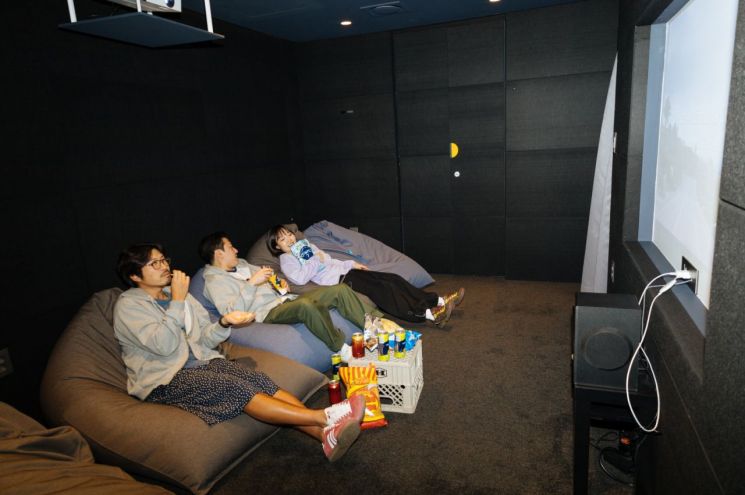
MGRV, a latecomer that entered the co-living market in 2020, has recently emerged as the most prominent player. The company has partnered with the Canada Pension Plan Investment Board (CPPI) to confirm a total of four new development projects. These are located in the Dongdaemun, Seongdong, Jung-gu, and Yeongdeungpo districts of Seoul and will be developed as residential products for one- to two-person households, such as university students and office workers. Among these, the Yeongdeungpo location will be MGRV’s first rental-type dormitory, with a total floor area of 15,000 square meters and 400 units.
Including this latest project, MGRV will be pursuing up to 1 trillion won in new developments by the end of the year. In addition to its six existing locations, the company is building a lineup capable of accommodating about 5,500 people through projects such as Eunpyeong Senior Housing, HUG Station Area Youth Housing, and various workation sites across Seoul. Once this lineup is completed, MGRV will closely trail SK D&D, which is currently the industry leader with approximately 6,200 units in terms of supply scale. MGRV is recognized for purchasing land with 100% equity, making swift decisions, and establishing a stable financial structure that has enabled it to quickly establish joint venture frameworks with foreign capital.
SK D&D Secures 'Economies of Scale' With Local Stitch Acquisition
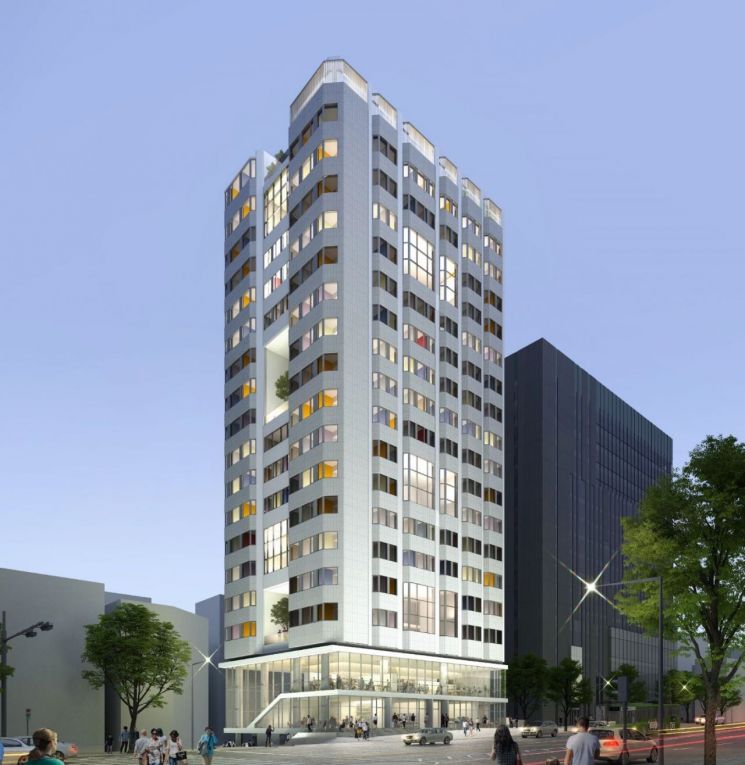 'Episode Sinchon Campus' scheduled to open in July. Most units are offered as shared types where multiple people use one space together. Provided by SK D&D.
SK D&D, currently regarded as the top operator in the industry, is solidifying its position through bold strategic mergers and acquisitions. In March, the company acquired Local Stitch, Korea’s first co-living and co-working brand, through its subsidiary DDPS (D&D Property Solution). Over the past 10 years, Local Stitch has operated 22 locations mainly in central Seoul, gaining attention for its stylish design and flexible contract policies. By combining its existing residential brand ‘Episode’ with the newly acquired Local Stitch, DDPS now boasts a dominant supply scale of 6,200 units.
Based on this, SK D&D aims to secure 50,000 rental units and 300,000 membership customers by 2029. The company’s strategy is to evolve beyond providing offline spaces and become an online-centric living platform that can address risks such as rental fraud, ultimately growing into an ‘infrastructure company’ that integrates and operates the domestic rental housing market. Internally, SK D&D is also building a foundation for long-term competitiveness by linking data with SK Ecoplant and collaborating with SK’s ICT affiliates to expand into proptech models.
KT Estate Leads Urban Renovation Through Remarkville
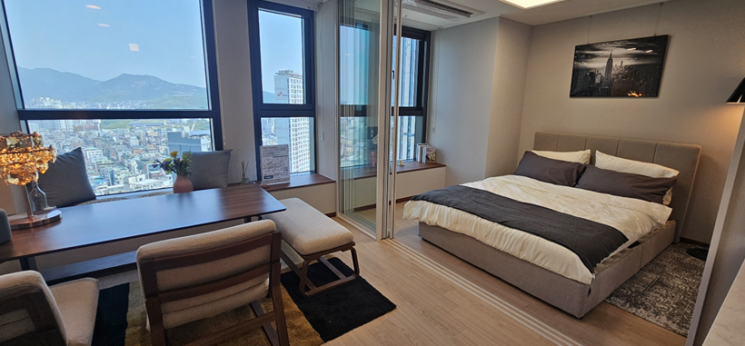 Interior of the corporate rental housing 'Remarkville Eastpole' in Jayang-dong, Gwangjin-gu, Seoul. Photo by Lee Ji-eun.
KT Estate, a leading pioneer in the shared housing market since 2016, has established a business model that converts outdated officetels and inefficient commercial real estate into co-living residential products under the ‘Remarkville’ brand. To date, Remarkville has supplied 3,284 units at seven locations, including Dongdaemun, Yeongdeungpo, Gwanak, Gunja, and Gwangjin in Seoul, as well as Busan Station and Daeyeon-dong in Busan.
KT Estate differentiates itself from competitors by utilizing telecommunications networks, AI control, and smart home systems to provide a higher level of technological integration than traditional co-living operators. The company also leverages the real estate management infrastructure of the KT Group to package not only new supply but also operational and management capabilities, suggesting the potential for future B2B (business-to-business) expansion.
"Increase in Single-Person Households and Rising Housing Barriers"... Shared Housing Will Continue to Grow
The co-living market is expected to grow even further. As the price-to-income ratio (PIR) for housing has risen, making home ownership increasingly difficult, co-living?with its urban accessibility and community infrastructure?has emerged as a viable housing alternative for younger generations. According to the ‘2025 Seoul Co-living Market Report’ by commercial real estate data firm R Square, the number of co-living units in Seoul grew 4.7 times over nine years, reaching a total of 7,371 units as of February 2025. The proportion of single-person households in Seoul increased from 29.5% in 2015 to 39.3% in 2023.
However, there are still significant challenges to address. The rent per exclusive area is higher than that of officetels, and inconveniences related to the use of shared spaces, as well as the burden of marketing and operational costs, are cited as obstacles to securing steady profits. In fact, Common, the largest co-living company in the United States, went bankrupt in 2024, and The Collective in the United Kingdom also entered court receivership. Nevertheless, the diversification of occupations and lifestyles among single-person households in their 20s and 30s is giving rise to specialized shared housing products such as ‘community-centered living,’ ‘pet-friendly co-living,’ and ‘layered homes,’ which are further expanding the co-living market.
© The Asia Business Daily(www.asiae.co.kr). All rights reserved.
![Clutching a Stolen Dior Bag, Saying "I Hate Being Poor but Real"... The Grotesque Con of a "Human Knockoff" [Slate]](https://cwcontent.asiae.co.kr/asiaresize/183/2026021902243444107_1771435474.jpg)

















