The Only Humanities City Policy Division in the Nation Established in 2018
Donggu Humanities School Welcomes Over 37,000 Visitors
"Humanities Walking Path" Offers City Branding and Historical Experiences
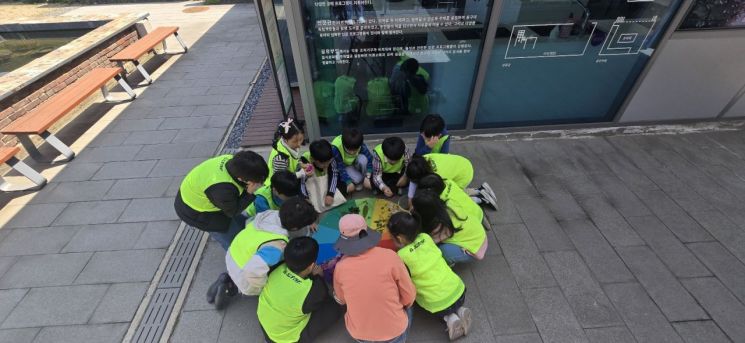
Gwangju Donggu is drawing attention for its proactive efforts to establish its identity as a "city of humanities." In 2018, Donggu became the only district in the country to establish the "Humanities City Policy Division." Last July, Donggu further solidified its status by launching the brand "Humanities City Gwangju Donggu."
According to Donggu on May 1, the district purchased the site for the Donggu Humanities School in 2020, initially intending to use it for a public parking lot. However, in response to earnest petitions from residents who were concerned and saddened by the demolition of modern houses in the area, the site was transformed into the "Donggu Humanities School" in January 2022.
This space consists of the main building, a shared kitchen, a humanities hall, a tearoom, and a garden. It is loved for its regular and special humanities programs, which are held throughout the year. Notably, it received the Presidential Award at the 2023 Korea Spatial Culture Awards and the Beautiful Cultural City Space Award in 2024. It was also selected as a "Unique Venue" by Gwangju Tourism Organization from 2022 to 2024 and will be registered as an Excellent Architectural Asset by Gwangju City in 2025, further recognizing its uniqueness.
Now in its fourth year since opening, the Donggu Humanities School has welcomed approximately 37,000 visitors. On weekends, visitors from outside the region?including Seoul, Jeonju, and the Philippines?frequently visit, establishing it as a representative hub of the humanities city, Donggu.
One of the reasons why both residents and visitors from outside the area are drawn to this place is the unique harmony between the traditional hanok and the Western-style house, as well as the distinctive charm created by the red brick chimney.
The variety of humanities programs also attracts tourists, including special exhibitions featuring thousands of literary works (poetry, novels, comics, etc.) available year-round; "Movie Humanities Theater," where visitors watch films based on novels; "Attic Music Journey," which evokes nostalgic memories; and the "Shared Kitchen," where climate-friendly meals are prepared to match the seasons.
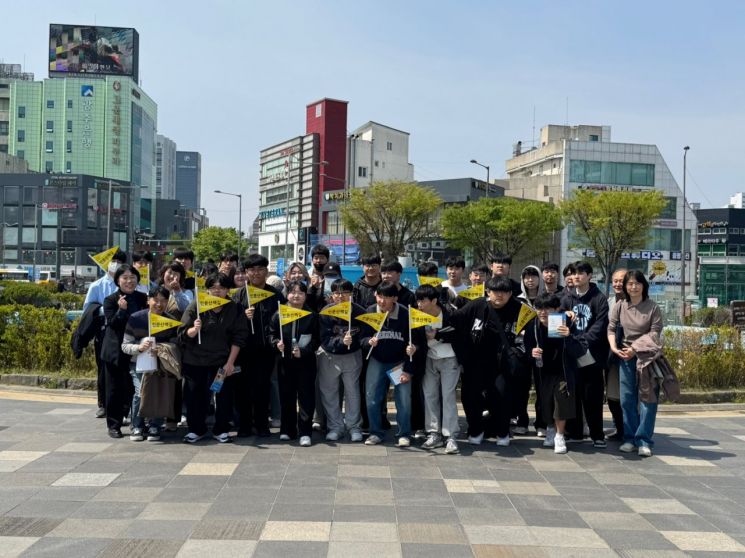 Invitation to Donggu, Gwangju, the City of Humanities: Experience Photos of the 'Humanities Walking Path'.
The "Humanities Walking Path," which weaves together meaningful people, places, and stories of Donggu into a walking tour, was created in 2020 through storytelling. After training guides and installing information boards, more than 100 tours have been held so far, with the number of participants steadily increasing each year.
The walking path consists of four courses: ▲The Road to Mudeung (Hakdong and Hakundong area, from Gwangju Baekbeom Memorial Hall to Jeungsimsa Temple), ▲Gwangju Spirit Original Trail (Chungjang-dong and Seonam-dong area, from Seoseok Elementary School to the site of the main temple), ▲Ddeutseum Path (Jisan-dong area, from Jisan-dong Five-story Stone Pagoda to Jisan Amusement Park), and ▲Bright Hope Path (Dongmyeong-dong area, from the former Jeonnam Public Normal School site to the Dongmun Bridge site). Each course takes about 40 to 70 minutes to walk.
While the majority of participants are typically middle-aged and older adults, the program has become even more widely known recently as first-year students from the Department of History and Culture at Chosun University participated as part of their coursework. These students are learning about the history of Gwangju and Donggu through on-site tours. There has also been an enthusiastic response from local elementary, middle, and high schools, such as Chosun University Girls’ Middle School, with many inquiries about participation.
The most significant achievement since Donggu’s transformation into a city of humanities is the increasing participation of young people. By allowing them to experience humanities programs and take part in various humanities activities, the district aims to encourage deep reflection on life and strengthen their humanities capabilities. Of particular note is the "Me, You, Us: Thought Collection Group" program, which revitalizes humanities activities for children and youth using the Humanities School space.
This program is an extension of humanities classes conducted at local elementary and middle schools, operating three times per school. Community education instructors participate to provide artistic experiences on a variety of topics, including literature, reading, climate crisis, and student rights, with the goal of helping students grow into adults with a strong foundation in the humanities.
Additionally, as part of the "Donggu Humanities Resources Documentation Project," the "Meeting Donggu’s Figures Next to School" program is actively underway for the second year. This year, 223 students from five elementary schools are participating. The program introduces local figures such as Choi Heungjong to elementary school students through both theoretical learning and field trips, fostering pride in the region among the next generation.
Another humanities hub, the "House of Poet Moon Byunglan," is a space remodeled from the actual home of poet Moon Byunglan, who lived in Jisan-dong, to honor his works and life. Poet Park Nosik serves as curator, and every summer and winter vacation, a "Children’s Poet School" is held. Elementary students gather to write poetry, which is then published in collections, giving them the joy of owning their first poetry book.
The creative poetry club "Maelgeopsi Watdangke," mainly comprised of Jisan-dong residents, also continues its activities by compiling and publishing collections of poems created by its members each year.
District Mayor Lim Taek said, "I hope that in humanities hub spaces like the Humanities School, which represent Humanities City Gwangju Donggu, many residents and activists will engage in diverse humanities activities and, through 365 days of warm humanities time, create a community where neighbors comfort and support one another."
© The Asia Business Daily(www.asiae.co.kr). All rights reserved.
![Clutching a Stolen Dior Bag, Saying "I Hate Being Poor but Real"... The Grotesque Con of a "Human Knockoff" [Slate]](https://cwcontent.asiae.co.kr/asiaresize/183/2026021902243444107_1771435474.jpg)
















