Sharp Drop in Scheduled China-to-US Arrivals After 145% Tariff Imposed
An analysis has found that shipments from China to the United States have sharply declined due to the US-China trade war. There are concerns that the tariff dispute between the two countries could affect the broader US economy.
According to the Financial Times (FT) on the 27th (local time), logistics companies reported that container bookings bound for the United States have plummeted since the Donald Trump administration imposed a 145% tariff on Chinese imports.
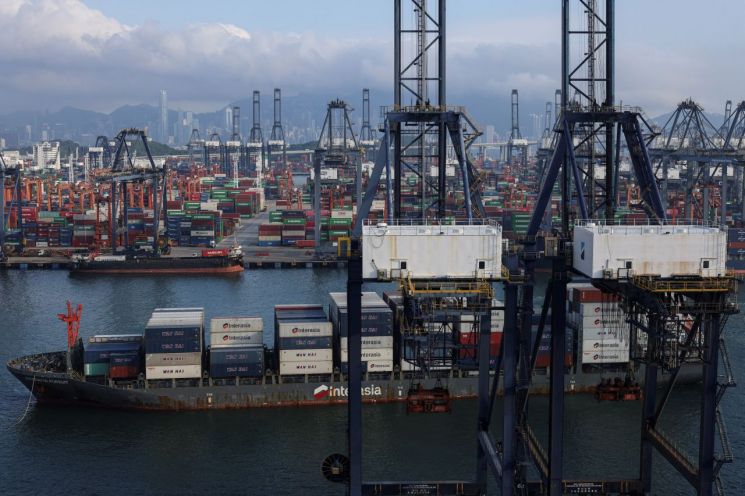
Goods imported from China to the United States typically pass through the Port of Los Angeles. The volume scheduled to arrive during the week starting May 4 is expected to be only one-third of the amount during the same period last year. Air cargo bookings are also on the decline.
According to container tracking service Vision, as of mid-April, bookings for standard 20-foot containers from China to the United States dropped by 45% compared to last year.
John Denton, Secretary General of the International Chamber of Commerce, explained that companies are postponing decisions as they watch to see how quickly the US and China will reach a tariff agreement. Denton stated, "There is a consensus that, despite other uncertainties, the minimum tariff rate for entering the US market will be 10%."
The United States and China, which had been imposing 145% and 125% tariffs respectively, now appear to be entering negotiation mode. Both sides have agreed to exempt certain items that are important to their own economies from tariffs, and President Trump has said that the 145% tariff on Chinese goods "will be significantly reduced." However, China announced on the 25th that it is not currently in negotiations with the United States.
US importers are depleting their inventories before making new imports from China. They are also stockpiling goods in bonded warehouses, where inventory can be stored duty-free, or receiving goods via neighboring countries such as Canada. Nathan Strang, Director of Ocean Freight at Flexport, said, "Companies are leaving goods at both the origin and destination," and noted that if the two countries agree to reduce tariffs, shipping rates are expected to surge.
As companies delay orders while waiting for a deal, logistics traffic from China to the United States has dropped sharply. Hapag-Lloyd, one of the major container shipping companies, reported that Chinese customers have canceled about 30% of bookings departing from China. Taiwanese container shipping company TS Lines recently suspended one of its Asia-to-US West Coast routes due to lack of demand.
According to shipping data analytics firm Sea-Intelligence, the decline in orders has also affected cargo throughput at the Port of Los Angeles. The number of scheduled vessel departures from China has also surged. For the four weeks starting May 5, container bookings on Asia-to-North America routes are about 400,000 units below expectations. This is a 25% decrease compared to the same period in early March before the tariffs were imposed. The Port of Los Angeles alone expects 20 blank sailings in May, which equates to more than 250,000 containers.
Overall arrivals have increased by 56% year-on-year, as importers have accelerated shipments from Southeast Asian countries such as Cambodia and Vietnam, where tariffs are suspended for 90 days.
Container prices reflect changes in import and export volumes. According to global freight platform Freightos, the price of a 40-foot container departing from Vietnam has risen by 15%, while rates on major China-US routes have dropped by 27%. According to the US Airforwarders Association, air cargo volumes have also plummeted, with member companies’ bookings from China down by about 30%.
The logistics industry is expected to take an additional hit as President Trump has decided to abolish the de minimis rule, which allowed duty-free imports of goods valued under $800. Lavinia Lau, Chief Commercial Officer (COO) of Cathay Pacific, said that air cargo accounts for about one-quarter of the company’s profits, and she expects demand between the US and China to weaken due to the regulatory change. Hong Kong freight forwarder Easyway Air Freight reported that shipments from China to the United States have dropped by about 50% since the tariff increases.
© The Asia Business Daily(www.asiae.co.kr). All rights reserved.
![Clutching a Stolen Dior Bag, Saying "I Hate Being Poor but Real"... The Grotesque Con of a "Human Knockoff" [Slate]](https://cwcontent.asiae.co.kr/asiaresize/183/2026021902243444107_1771435474.jpg)















