[Interview] Gil Kiyeon, CEO of Seoul Tourism Foundation
"3 Nights in Seoul, 2 Nights in the Provinces" Project
Seoul's Success Fuels Regional Growth and Its Own Longevity
Preparing for the Post-Hallyu Era with Arts Tourism
"In the era of artificial intelligence (AI) and robotics, tourism is the very industry that will remain competitive. By revitalizing 'local co-prosperity tourism' and 'arts tourism,' we can attract 20 million, even 30 million foreign tourists to Seoul and further develop the city."
This year has been particularly busy for Gil Kiyeon, CEO of the Seoul Tourism Foundation (pictured). He has been making time to give special lectures on tourism to university students and local government officials in various regions. The number of meetings with local governments and regional tourism organizations (RTOs) has also increased. Why is the head of the Seoul Tourism Foundation, an organization funded by the Seoul Metropolitan Government, traveling to the provinces? It is because of the "3 nights in Seoul, 2 nights in the provinces (local co-prosperity tourism) project."
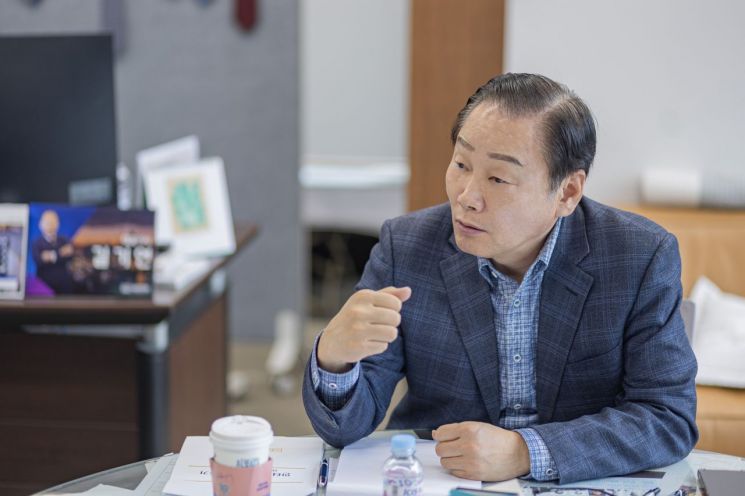 Gil Kiyeon, CEO of the Seoul Tourism Foundation, said in an interview, "Tourism is an industry based on experiences," adding, "Focusing on 'people' is essential for growth." Provided by Seoul Tourism Foundation.
Asia Economy met with CEO Gil at the foundation's headquarters in the 31 Building in Jongno-gu, Seoul, on April 16. Gil previously ran a travel agency in his 30s, served as a 5th-term Seoul Metropolitan Council member, and was CEO of KORAIL Tourism Development. He has been serving as CEO of the Seoul Tourism Foundation since July 2021.
Gil explained, "When we first travel to France, we visit Paris before going to Nice or Monaco; we don't start with the provinces. For local tourism to thrive, Seoul must do well, and for Seoul to have long-term success, the provinces must also prosper." This is why he is creating projects that foster close cooperation between Seoul and the provinces.
Gil also shared, "This July and August, our foundation will send 1,200 foreign tourists on a day-trip train to the Boryeong Mud Festival." These tourists are recruited by the foundation through the "Mud Train" product, developed in collaboration with Boryeong City in South Chungcheong Province. Gil added, "If the annual number of foreign tourists, currently around 15 million, reaches 30 million, Seoul will become saturated and difficult to manage. Without the support of local tourism resources, our country cannot become a tourism powerhouse."
The Seoul Tourism Foundation has recently signed a series of MOUs with Hoengseong County in Gangwon Province, Mungyeong City and Andong City in North Gyeongsang Province, and the Korea Institute of Spiritual Culture. The foundation also hosted the "2025 Seoul Tourism Business Briefing" in February, inviting more than 300 officials from metropolitan and basic local government tourism organizations. These efforts, including CEO Gil's frequent visits to the provinces and active signing of MOUs, are all part of this strategy.
Another key focus for Gil is "arts tourism." He noted, "World-renowned museums like the Musee d'Orsay in Paris, which attracts 3 million visitors annually, and the Tate Modern in London, with 6 million visitors, lead their cities' tourism industries by drawing countless visitors each year. As Seoul grows as a city of arts and culture, driven by the growth of performance and exhibition sectors, this is exactly what the city needs." Gil emphasized, "We shouldn't assume the Korean Wave (Hallyu) will last forever. We need to prepare for the post-Hallyu era. The alternatives are arts tourism and local co-prosperity tourism."
Will arts tourism be successful? Gil said, "We have already conducted surveys. When we asked if visitors to Seoul would be interested in attending musicals, classical concerts, ballet performances, or exhibitions, more than 95% responded, 'That sounds great.'" He explained, "We have formed alliances with 40 large institutions, including the Sejong Center for the Performing Arts, Seoul Philharmonic Orchestra, Seoul Design Foundation, and Seoul Arts Center, and plan to build collaborative networks with around 300 galleries and small and medium-sized performance venues."
Gil believes that packaging experiences and enriching content?rather than leaving foreign tourists to explore on their own?will increase added value and help related domestic industries grow.
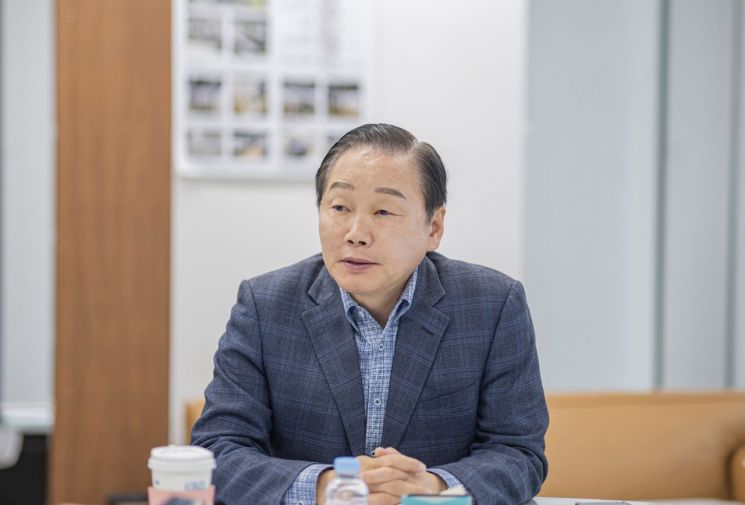 Kiyeon Gil, CEO of the Seoul Tourism Foundation, presented local co-prosperity tourism and arts tourism as the two pillars of the tourism industry revitalization strategy. Provided by Seoul Tourism Foundation.
© The Asia Business Daily(www.asiae.co.kr). All rights reserved.
![Clutching a Stolen Dior Bag, Saying "I Hate Being Poor but Real"... The Grotesque Con of a "Human Knockoff" [Slate]](https://cwcontent.asiae.co.kr/asiaresize/183/2026021902243444107_1771435474.jpg)
















