Besant: "Current Tariffs Are Unsustainable"
Mentions Possibility of Reciprocal Reductions
On April 23 (local time), U.S. President Donald Trump stated that he would reach a "fair" agreement with China, with whom the United States is engaged in a tariff war.
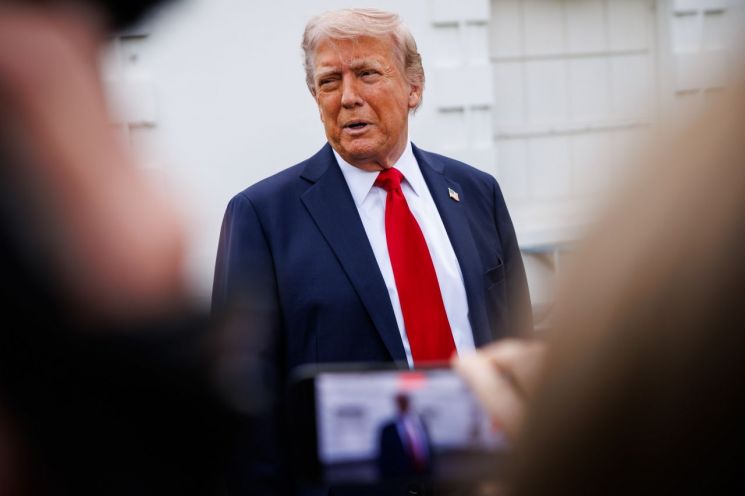
President Trump, when asked by reporters that day whether he was working on a deal with China, responded, "It will be fair."
The previous day, President Trump made conciliatory remarks, expressing his willingness to reduce tariffs on China. He said that negotiations with China were "going well" and added, "The current tariff rate of 145% is too high. It will go down considerably." In this regard, the Wall Street Journal (WSJ) reported that day that President Trump is considering a plan to reduce tariffs on China to between 50% and 65%.
While the Trump administration has indicated its willingness to lower tariffs on China, it has also emphasized that any reduction must be reciprocal.
White House spokesperson Karoline Leavitt stated in an interview with Fox News that "there will be no unilateral tariff reduction for China."
U.S. Treasury Secretary Scott Besant also dismissed the possibility of a unilateral reduction, even as he said that there is an opportunity for a "big deal" between the United States and China. When asked by reporters in Washington, D.C. whether President Trump had proposed a tariff reduction on China, he replied, "Not at all." He added, "As I have said many times, the current tariff levels are not sustainable for either side. So it would not be surprising if both sides reduced tariffs in a reciprocal manner." This suggests that both the United States and China should lower tariff rates simultaneously.
© The Asia Business Daily(www.asiae.co.kr). All rights reserved.
![Clutching a Stolen Dior Bag, Saying "I Hate Being Poor but Real"... The Grotesque Con of a "Human Knockoff" [Slate]](https://cwcontent.asiae.co.kr/asiaresize/183/2026021902243444107_1771435474.jpg)















