Proposal to Expand the Scope of Mutual Tariff-Free Treatment
The European Union (EU) focused on mutual tariff-free treatment of automobiles and the issue of excess supply of Chinese steel during its first tariff negotiations with the United States.
According to the EU Commission on the 15th (local time), Maros Sefcovic, EU Commissioner for Trade and Economic Security, held tariff negotiations the previous day in Washington D.C. with Howard Lutnick, U.S. Secretary of Commerce, and Jamison Greer, U.S. Trade Representative (USTR). Commissioner Sefcovic held meetings with his U.S. counterparts for several hours. Subsequently, a separate high-level meeting was also held with the U.S. Treasury Department.
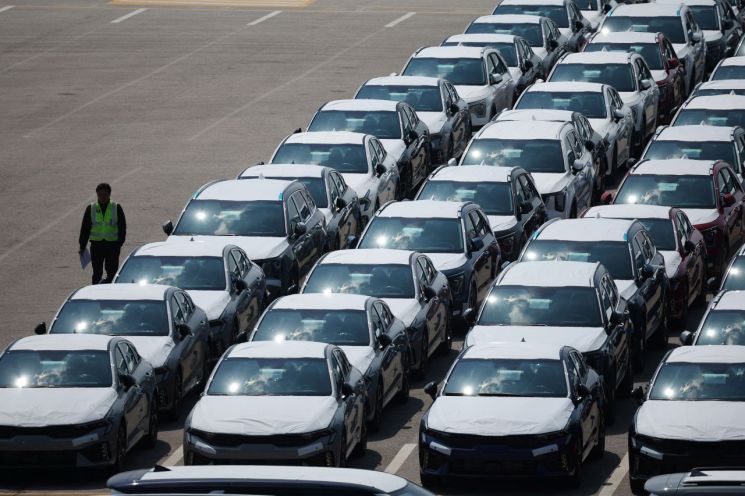
Olof Gill, EU Trade Spokesperson, stated, "We covered a wide range of topics from tariffs to non-tariff barriers during this negotiation." He explained that the EU proposed applying mutual tariff-free treatment to all manufactured goods, including automobiles, and that related discussions were intensively addressed. It is also reported that the EU conveyed a position that it may consider expanding the scope of mutual tariff-free treatment beyond automobiles and manufactured goods.
Gill explained that the meeting also included issues related to the global oversupply problem in the steel and aluminum industries, as well as supply chain resilience concerns in the semiconductor and pharmaceutical industries. The global oversupply of steel and aluminum appears to refer to the excess production of Chinese steel, which both the U.S. and EU are concerned about. The EU also proposed working-level consultations to explore a mutually beneficial scope for negotiations.
Earlier, during the process of responding to U.S. steel tariffs, the EU had planned retaliatory measures against U.S. products but postponed such actions until July 14 after the U.S. announced a 90-day suspension of mutual tariffs last week. Gill reminded of the negotiation deadline (90 days), saying, "The EU is fulfilling its role," and added, "Now it is time for the U.S. to clarify its position."
© The Asia Business Daily(www.asiae.co.kr). All rights reserved.
![Clutching a Stolen Dior Bag, Saying "I Hate Being Poor but Real"... The Grotesque Con of a "Human Knockoff" [Slate]](https://cwcontent.asiae.co.kr/asiaresize/183/2026021902243444107_1771435474.jpg)















