NAND Accounts for 30% of Global Production in China
Tariff Expansion Could Affect Finished Products
Samsung and SK Hynix Face Direct Impact Due to High China Production
Country of Origin Backtracking May Impose Tariffs on Third-Country Exports
Production Base Diversification Underway, but Short-Term Response Is Limited Due to Process Complexity
As the United States' planned imposition of 'semiconductor tariffs' is scheduled for next week, NAND flash memory is emerging as a 'trigger' among Korean companies. NAND has the highest production share in China, leading to analyses that it could be a direct target of the semiconductor tariffs. Both Samsung Electronics and SK Hynix have a significant portion of their NAND production based in China, making damage inevitable if tariffs are applied.
According to the industry on the 16th, the Trump administration has announced plans to separate semiconductors from existing electronic products as an independent category and impose separate tariffs. In this case, the scope of tariffs could expand beyond finished products to include component units.
The industry believes that the tariffs are likely to specifically target Chinese-made NAND. About 30% of global NAND flash production takes place in China, followed by South Korea (about 25%), Japan (about 20%), and the United States (about 15%). An industry insider said, "High tariffs may be used as a means to control the technological capabilities of Chinese NAND." In fact, China's Yangtze Memory Technologies Co. (YMTC) began mass production of 294-layer NAND, the world's highest level, in February, while Samsung Electronics produces 286-layer and SK Hynix produces 321-layer NAND. As China's technological catch-up accelerates, there is an interpretation that the U.S. may increase its level of checks and controls.
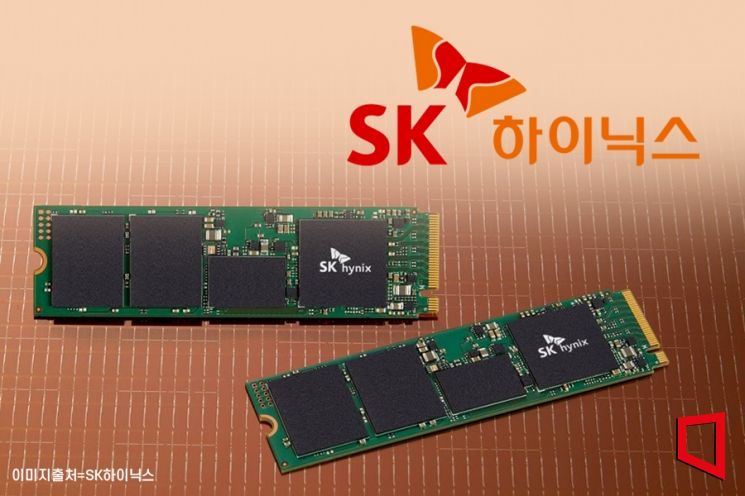
An Ki-hyun, Executive Director of the Korea Semiconductor Industry Association, explained, "China accounts for 50% of global NAND consumption." This means that most NAND produced in China is consumed locally. Samsung Electronics produces about 40% of its total NAND output in Xi'an, China, and SK Hynix produces about 20% in Dalian, with most of this volume supplied to customers within China.
As of 2023, NAND flash directly exported from China to the United States is estimated to be worth about $1 billion. This includes products from Samsung Electronics and SK Hynix, which are supplied to U.S. customers such as Apple, Dell, and HP. Most NAND is consumed within China or distributed as intermediate goods for finished product manufacturing.
There is also a possibility that the scope of NAND tariff application will broaden. If it extends beyond Chinese-made NAND to include all NAND and finished products equipped with it, the impact will be much greater. Especially if a 'country of origin backtracking' standard is introduced, tariffs could be imposed on the entire finished product if there is a history of Chinese production at the component level. The U.S. determines origin comprehensively by considering not only the importer but also the place of production, assembly, and packaging. Therefore, products using Chinese-made NAND assembled in third countries and exported to the U.S. could also be subject to tariffs. In fact, some NAND is installed in finished products that enter the U.S. via Vietnam, South Korea, India, and others. Including indirect exports, the total export volume could increase significantly. Samsung Electronics' Galaxy smartphones and Apple's iPhones also procure a certain proportion of NAND from China, making supply chain restructuring or cost increases inevitable.
The industry estimates that if a 25% tariff is imposed on 128GB NAND, the component cost could rise by about $2.5, and for high-capacity products, it could increase up to $7.5. When logistics costs, packaging, manufacturing, and distribution margins are factored in, the finished product price could rise by up to $15 per model. NAND is a key component used across front-end industries such as smartphones, laptops, servers, and automotive electronics, so if high tariffs become a reality, they will significantly affect overall production and export structures.
Companies are pursuing diversification of production bases to prepare for tariff risks, but realization in the short term is difficult. Semiconductor factories require large-scale investments ranging from hundreds of billions to trillions of won and several years of construction, making factory relocation or expansion a mid-to-long-term task. NAND, in particular, has a complex process, making relocation burdensome. However, the trend of 'production rebalancing' has already begun. Companies are considering expanding semiconductor back-end process bases in the U.S. or increasing packaging facilities. If tariffs are imposed, the pace of such restructuring is expected to accelerate. An industry official said, "Tariffs are not just a numerical issue but can act as a risk to the entire supply chain," adding, "It is time for a sophisticated strategy that considers both production and assembly countries."
© The Asia Business Daily(www.asiae.co.kr). All rights reserved.
![Clutching a Stolen Dior Bag, Saying "I Hate Being Poor but Real"... The Grotesque Con of a "Human Knockoff" [Slate]](https://cwcontent.asiae.co.kr/asiaresize/183/2026021902243444107_1771435474.jpg)
















